
On this page11
Peru customs clearance is run by SUNAT, which processes a customs declaration (DAM) filed by a licensed customs agent on the customs value. Imports pay ad valorem duty of 0%, 4%, 6% or 11%, then 16% IGV plus 2% IPM (18% combined), with an IGV perception advance of 3.5% to 10% on top. For full containers, our container shipping to Peru service is the starting point.
The tariff is low and the US-Peru Trade Promotion Agreement removes duty on almost all US industrial and consumer goods. The surprises come from the tax stack and the procedure: the IGV perception, a mandatory agent above US$2,000 FOB, and anticipated filing as the default.
Peru Customs at a Glance
| Item | Peru |
|---|---|
| Customs authority | Superintendencia Nacional de Aduanas y de Administración Tributaria (SUNAT) |
| Declaration | Declaración Aduanera de Mercancías (DAM), numbered by the customs agent |
| Tariff framework | Arancel de Aduanas by 10-digit national subheading; ad valorem bands of 0%, 4%, 6% and 11% |
| Trade agreement with the US | US-Peru Trade Promotion Agreement (PTPA), in force since February 1, 2009 |
| Duty valuation basis | Customs value (valor en aduanas) under the WTO Valuation Agreement and Andean rules |
| Sales tax | IGV 16% plus IPM 2% (18% combined) |
| Other import levies | ISC on selected goods; price-band specific duties on four farm products; antidumping and countervailing duties; IGV perception 3.5%, 5% or 10% |
| Importer ID | RUC in "habido" status |
| Broker requirement | A SUNAT-authorized customs agent is required above US$2,000 FOB |
| De minimis | The import-for-consumption procedure covers goods above US$2,000 FOB; lower values follow other regimes |
How Does Customs Clearance Work in Peru?
Import for consumption follows eight steps.
- Classify the goods. Find the 10-digit subheading in the Arancel de Aduanas, which sets the duty and tells you whether the product is prohibited or restricted.
- Confirm the RUC. The importer needs a RUC with "habido" status, meaning the registered address is confirmed.
- Hire a customs agent. For goods above US$2,000 FOB, a SUNAT-authorized agent requests the DAM number on your behalf, after you issue an electronic mandate through your SOL key, according to Peru's official procedure page.
- Choose the dispatch mode. Anticipado means the declaration is generated before the vessel or aircraft arrives and is the mandatory default. Diferido means after arrival, with a 15-day calendar window from discharge, extendable once by 15 days in justified cases. Urgente means filed before arrival and up to 7 calendar days after discharge.
- File the DAM. The agent transmits the declaration with the supporting documents.
- Receive the control channel. In anticipated dispatch, the channel is assigned once the declaration carries the cargo manifest number. In deferred and urgent dispatch, it is assigned once the debt and surcharges are paid or guaranteed.
- Clear the channel. Green means no document review and no physical inspection. Orange means documentary review. Red means physical inspection, as described on SUNAT's channel page.
- Pay, obtain release and collect. Goods count as nationalized once SUNAT grants the levante.
Documents Required for Peru Customs
The DAM is built from the following documents.
- Commercial invoice. See the commercial invoice glossary entry for the fields customs checks.
- Bill of lading or air waybill. The bill of lading is the title and transport document for ocean cargo.
- Packing list.
- Insurance letter.
- Certificate of origin, to claim PTPA or another agreement preference, and to avoid antidumping duties on US-origin products.
- Sanitary documents where the product needs them (see the permits section).
- Electronic mandate to your customs agent through SOL.
Peru Import Duty Rates by Product Category
Peru's tariff is simple: SUNAT lists four ad valorem rates, 0%, 4%, 6% and 11%, assigned by national subheading. Your HS code decides which one applies.
| Category | Duty under the official tariff |
|---|---|
| All goods, MFN | 0%, 4%, 6% or 11% by subheading |
| Rice, yellow corn, milk, sugar | Variable specific duty (price band) in USD per metric ton; duty plus ad valorem capped at 20% of CIF value |
| Certain palm and vegetable fats from Colombia | Provisional corrective duty of 29% on CIF (three listed subheadings) |
| Tobacco, alcohol, fuels and other selected goods | ISC on top, by value, fixed amount or retail price system |
| Goods under antidumping or countervailing measures | Variable amounts set by INDECOPI resolution |
| US-origin goods under the PTPA | Tariffs eliminated on almost all US consumer and industrial goods |
The band rate is on the SUNAT tax page.
How to Calculate Import Duty and Taxes in Peru
The cascade runs from customs value to duty, then ISC, IGV and IPM.
- Customs value (valor en aduanas).
- Ad valorem duty = value x band rate.
- ISC, if the subheading carries it.
- IGV (16%) = (value + duty + ISC) x 16%.
- IPM (2%) = (value + duty + ISC) x 2%. The base excludes IGV.
- IGV perception = rate x operation amount, paid in advance. The operation amount is the customs value plus all import taxes (duty, ISC, IGV and IPM) and any antidumping or countervailing duties.
Illustrative example (round numbers, not a quote): customs value USD 10,000, 6% band, no ISC, importer in the general 3.5% perception bracket.
- Duty: 10,000 x 6% = USD 600
- Base for IGV and IPM: 10,600
- IGV 16%: USD 1,696
- IPM 2%: USD 212
- Duty and taxes: USD 2,508
- Perception 3.5% on (10,600 + 1,696 + 212 = 12,508): USD 437.78, paid in advance
For the same goods with US origin under the PTPA, the duty line goes to zero and IGV plus IPM fall to USD 1,800 (10,000 x 18%).
SUNAT sets the perception at 10% for importers with an unknown domicile, a deregistered RUC, suspended activity, no RUC, a first operation or no IGV liability. Since March 2, 2026 (Legislative Decree 1714), 10% also applies to a first import for consumption, to importers that skipped IGV or income tax filings for two periods in the prior twelve, and to those listed as having no operating capacity. It is 5% for used goods and 3.5% for all other importers. Plan the cash for it, since it is paid in advance.
Importer Registration and Customs Brokers in Peru
Importers need a RUC with "habido" status. Occasional individuals are exempt from the RUC only below small thresholds (US$1,000 FOB per operation with up to three operations a year, or one operation between US$1,000 and US$3,000 FOB in a calendar year). A company importing commercial cargo has a RUC by definition.
For goods above US$2,000 FOB, only a SUNAT-authorized customs agent can request the DAM number. You grant the agent an electronic mandate through your SOL key, which the agent uses to file for you. Agree scope and fees in writing. The customs broker glossary entry lists what a broker covers.
Exemptions, Free Zones and Special Regimes in Peru
For US cargo, check preferences first. The U.S. International Trade Administration reports that the PTPA entered into force on February 1, 2009 and eliminated tariffs on most goods. Peru has also signed agreements with China, the European Union, Canada, Japan, Chile, Mexico and others, so check origin before you assume MFN duty.
Special regimes under SUNAT include:
- Admisión temporal para reexportación en el mismo estado: suspends duties and taxes for goods that return unchanged. A guarantee covers a term of up to eighteen months from the levante, per SUNAT procedure DESPA-PG.04.
- Admisión temporal para perfeccionamiento activo (DESPA-PG.06-A): for processing and repair before re-export.
- Depósito aduanero (DESPA-PG.03): storage under customs control with duties suspended.
Verify the current term and guarantee rules for each regime with your agent before filing.
Import Permits and Licensing Agencies in Peru
Prohibited goods cannot enter, and restricted goods need an authorizing document before the DAM. Two agencies cover most commercial cases.
- DIGESA (Ministry of Health) issues sanitary registration for most processed food and beverages. The application needs a sworn statement, the future label, the registration receipt and usually a Certificate of Free Sale.
- SENASA (Ministry of Agriculture) issues the sanitary certificate for animals, plants and their by-products.
Foods in their natural state, such as grains, fruits, vegetables, meats and eggs, do not need DIGESA sanitary registration. Samples without commercial value and charitable donations from foreign entities are also exempt, per the U.S. Commercial Service. Other sectors have their own regulators; your agent confirms by subheading.
Common Customs Delays in Peru and How to Avoid Them
- Late anticipated filing. Anticipated dispatch is the mandatory default, so book the agent before the cargo sails.
- Inactive RUC. A RUC that is not "habido" blocks the declaration.
- Missing or late mandate. The agent cannot request the DAM number without your SOL mandate.
- Origin proof missing. Without a certificate of origin, US goods pay MFN duty instead of PTPA zero.
- Perception surprise. A first-time importer pays 10% perception. Hold the cash.
- Red channel. Physical inspection takes longer than documentary review, so keep invoice, packing list and bill of lading consistent.
- Deferred dispatch deadline. After discharge the 15-day window is short, and storage accrues at the terminal.
Clearing Cargo to Peru With Interworld Freight
Interworld Freight has operated from Miami since 1992. Our Miami hub consolidates US suppliers into one booking, ocean FCL, LCL or air, and we coordinate customs clearance with licensed brokers at destination. For ports, routing and transit, read our shipping to Peru guide, or see container shipping to Peru. Send the commercial invoice and HS code and we quote within one business day. For definitions of each term, see the customs clearance glossary entry.
Frequently Asked Questions
What is the import duty in Peru?
Peru applies ad valorem duties of 0%, 4%, 6% or 11% by national subheading, according to SUNAT. Rice, yellow corn, milk and sugar carry a variable price-band duty instead.
What taxes do I pay on imports to Peru?
You pay IGV at 16% and IPM at 2%, 18% combined, on customs value plus duties. An IGV perception of 3.5%, 5% or 10% is collected in advance, and ISC applies to selected goods.
Does Peru have a free trade agreement with the United States?
Yes. The US-Peru Trade Promotion Agreement has been in force since February 1, 2009 and eliminated tariffs on almost all US consumer and industrial goods. Claim it with proof of origin.
Do I need a customs agent in Peru?
Yes, for goods above US$2,000 FOB. A SUNAT-authorized agent requests the DAM number after you issue an electronic mandate through your SOL key.
What are the green, orange and red channels?
Green has no document review or physical inspection. Orange sends the declaration to documentary review. Red subjects the goods to physical inspection.
What is anticipated dispatch?
Anticipado generates the import declaration before the transport arrives, and it is mandatory except in cases the procedure lists. Diferido is filed after arrival, and urgente up to 7 days after discharge.
What is the IGV perception?
It is an advance payment of IGV collected at import on the operation amount. The rate is 3.5% for most importers, 5% for used goods and 10% for first-time or irregular importers.
How long can I keep goods in Peru temporarily?
Temporary admission for re-export in the same state allows up to eighteen months from the levante, backed by a guarantee. Confirm term and conditions in SUNAT's procedure.
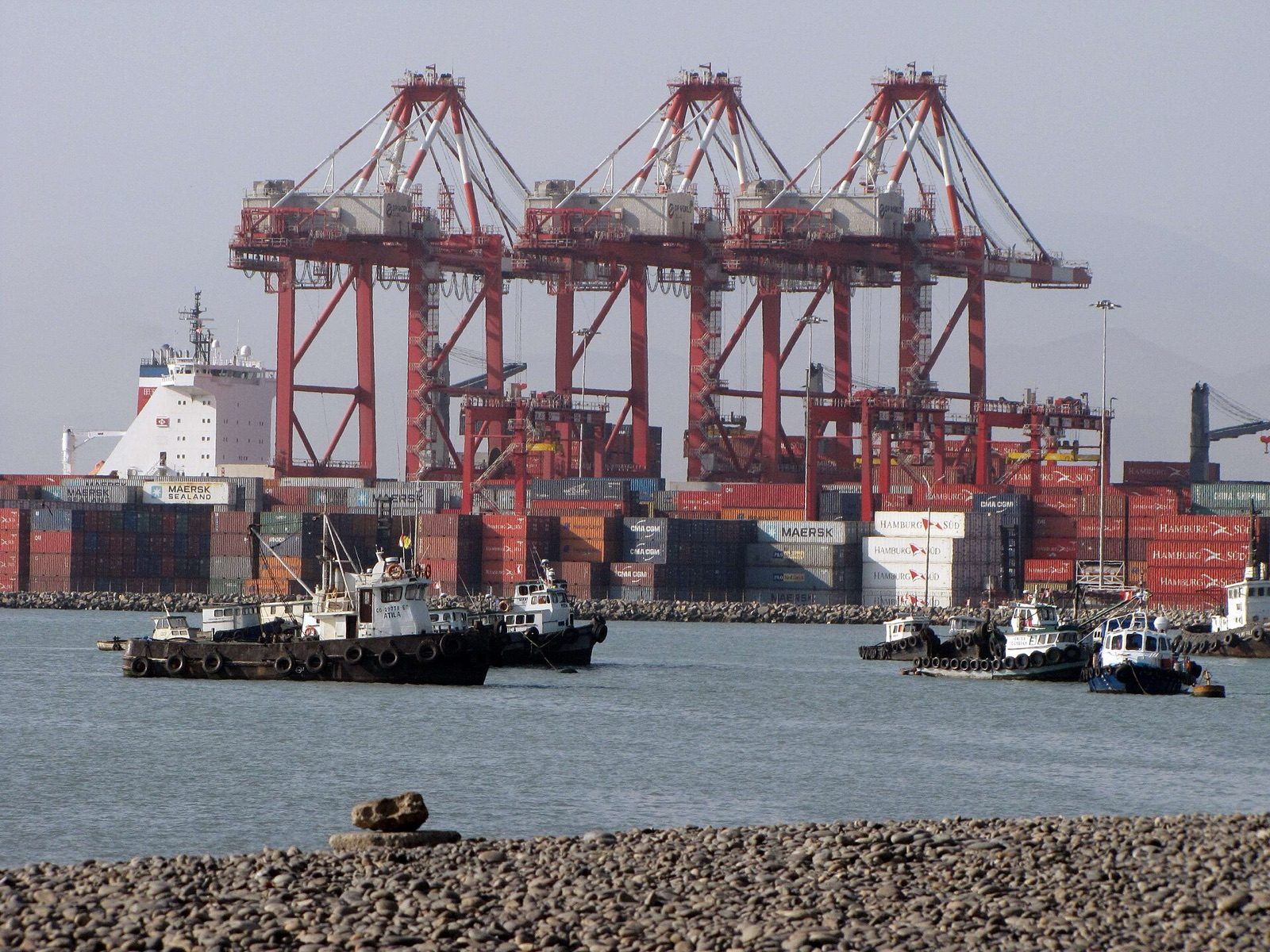
Photo: Container terminal, Port of Callao, Peru. sergejf, CC BY-SA 2.0, via Wikimedia Commons.
Ready to ship your freight?
