
On this page11
Honduras clears imports through its national customs administration, which processes the DUCA-D filed by a customs agent. Duty follows the Central American tariff, which runs from 0% to 15% for most goods and is 0% for qualifying US goods under CAFTA-DR, and the 15% sales tax (ISV) is then charged on the CIF value plus duties and other import charges.
Our Honduras container shipping service moves the cargo. Honduras differs from its neighbors on three points: the highest sales tax rate of the three northern countries, a customs administration reorganized in 2020 with reforms still under way, and separate permit procedures for agricultural imports such as rice and poultry. The regional declaration is covered in our DUCA guide.
Honduras Customs at a Glance
| Item | Detail |
|---|---|
| Customs authority | Administración Aduanera de Honduras (Aduanas Honduras), created under the Tax Code (Decree 170-2016), operating since January 1, 2020 |
| Electronic system | DUCA-D for imports from outside Central America; Single Window for importers and exporters |
| Tariff framework | Central American tariff (SAC classification); CAFTA-DR with the US; Honduras-Guatemala customs union |
| Duty valuation basis | Customs value (CIF logic): price plus freight, handling and insurance to the first port of arrival |
| VAT | 15% ISV (Impuesto sobre Ventas) |
| Other import levies | 18% on beer, spirits and tobacco; 15% on carbonated beverages; 15% selective tax on some non-essential goods |
| Importer ID required | RTN (Registro Tributario Nacional), issued by the tax authority SAR |
| Broker requirement | Customs agent files the declaration under the CAUCA and RECAUCA and the national Customs Law (Decree 212-87) |
| De minimis | Not identified for commercial cargo in the official sources reviewed |
How Does Customs Clearance Work in Honduras?
Honduras applies the regional customs regulation, supplemented by its Customs Law (Decree 212-87).
- Register the importer. The importing company holds a tax registration with an RTN and, for regulated goods, the sanitary or agricultural permits before arrival.
- Appoint the customs agent. The importer gives the agent a mandate. Under the regional regulation the agent is the importer's legal representative for the clearance and answers jointly with the importer to the tax authority.
- Classify and value. The agent assigns the SAC code and builds the customs value from the commercial invoice, adding international freight, handling and insurance to the first port of arrival.
- Transmit the DUCA-D. The declaration is filed electronically, and the regional regulation requires duties and taxes to be paid in advance by electronic means when the system allows it.
- Acceptance and risk analysis. The system validates and registers the declaration, then applies risk analysis to decide whether to verify it.
- Verification. A selected declaration gets a documentary review or a physical and documentary examination, which the regional regulation sets at 24 hours from the moment the goods are available to the officer.
- Release. After payment and clearance the cargo leaves the port. The ISV is payable when the import is nationalized, at the settlement and payment of the declaration.
The U.S. Commercial Service warns that Honduras is restructuring and modernizing its customs procedures and that incomplete documents can cause delays or heavy fines. Non-compliant first-time shipments can be held, and repeated labeling failures can end in denied entry.
Documents Required for Honduras Customs
According to the U.S. Commercial Service, the general customs documentation is the original import permit application where one applies, the commercial invoice, the bill of lading, the packing list, the certificate of origin, the phytosanitary or zoosanitary certificate and a copy of the dairy import license where relevant.
- Commercial invoice with real prices, Incoterm and detailed description
- Packing list consistent with the transport document
- Bill of lading (ocean) or air waybill (air)
- CAFTA-DR certification of origin when claiming the preference
- Phytosanitary or zoosanitary certificate for agricultural products
- Import permit from SENASA for agricultural goods, and sanitary registration for processed food, medicines and cosmetics
- Power of attorney or mandate for the customs agent
The CAFTA-DR certificate has no official form in Honduras, but it must include the certifier's name, the HS classification and product description, origin information and the date. A blanket certificate can cover identical shipments for up to one year. Animal-origin food cartons must show expiration date, lot number and production date in Spanish in the DD/MM/YYYY format.
Honduras Import Duty Rates by Product Category
Duty depends on the HS code. Tariffs on most goods from outside the Central American area fall within the 0% to 15% range, according to the U.S. Commercial Service tariff guide.
| Category | Rate |
|---|---|
| Most goods from outside the region (non-preferential) | 0% to 15% |
| Textile and apparel meeting CAFTA-DR rules of origin | Duty free and quota free |
| Yellow corn and pork (CAFTA-DR) | Tariffs eliminated in 2020 |
| Rice and chicken leg quarters (CAFTA-DR) | Phased out in 2023, with import licensing as a non-tariff barrier |
| Dairy (CAFTA-DR) | Scheduled for elimination in 2025 |
| Rough rice inside the quota | 22.6% |
| White corn | Restricted, with a price band mechanism for CAFTA-DR imports |
The same guide stresses that HS classification determines duty-free eligibility and that customs scrutinizes certificates of origin closely: even minor errors can result in fines and non-CAFTA import duties. For the exact line, use the tariff look-up in the Customs Info Database on trade.gov.
How to Calculate Import Duty and Taxes in Honduras
The Honduran sales tax law sets the import base for the ISV at the CIF value, increased by tariff duties, selective consumption taxes, specific taxes and other import charges. The tax falls on the importer or the importer's customs agent. The law is published by the Tribunal Superior de Cuentas, and the SAR explains that the ISV applies in a non-cumulative way at the import and sale stages. The U.S. Commercial Service gives the general rate as 15%.
- Customs value (CIF) = goods price + international freight + insurance
- Duty = customs value x tariff rate (0% with a valid CAFTA-DR claim)
- Selective and specific taxes, if the product carries them
- ISV = 15% x (customs value + duty + other charges)
Illustrative example for goods that do not qualify for CAFTA-DR, with a 15% duty line (USD):
| Step | Amount |
|---|---|
| Goods price | 9,000 |
| Freight and insurance | 1,000 |
| Customs value | 10,000 |
| Duty at 15% | 1,500 |
| ISV base (10,000 + 1,500) | 11,500 |
| ISV at 15% | 1,725 |
| Total duty and taxes | 3,225 |
With a valid CAFTA-DR claim, duty is zero, the ISV base is 10,000 and ISV is 1,500, so the preference saves 1,725 on this shipment.
Importer Registration and Customs Brokers in Honduras
The importer needs an RTN, which the SAR issues and describes as essential for any commercial or legal transaction in Honduras. The tax law makes the importer or its customs agent responsible for the ISV on imports.
Honduras' notification to the WTO Trade Facilitation Agreement database points to the Central American Uniform Customs Code (CAUCA), its regulation (RECAUCA) and the national Customs Law as the sources of the rules on customs auxiliaries. Under the RECAUCA, the agent's authorization is personal and non-transferable, the agent needs an annual refresher course, and the agent is the legal representative of the principal. The regulation also lists cases where an agent is not required, such as government operations and legal entities represented by a special customs attorney.
A customs broker files, pays and answers for the declaration, so appoint one before the cargo ships and confirm experience in your product category.
Exemptions, Free Zones and Special Regimes in Honduras
- CAFTA-DR: in force since 2006, it replaced the Caribbean Basin Initiative and gives duty-free entry to qualifying US goods when the importer claims the preference with a valid certification of origin.
- Temporary entry under the Customs Law: Article 73 allows commercial samples, sales displays, trade show items and items for scientific or entertainment use to enter duty free for up to 3 months, extendable by 3 months. Article 74 allows up to 6 months for products used in construction, tourism and recreation and other special works. Entry requires a deposit equal to the applicable duty, which is refunded on re-export, according to the temporary entry guide.
- Temporary Import Law (RIT): exporters can import raw materials, parts and capital equipment without duties or surcharges if the items go into a product exported outside Honduras, with authorization from the Ministry of Economic Development (SDE).
- Free trade zones and export processing zones: companies operating in them fall outside the RIT. Confirm the regime and the authorization with the zone operator before shipping.
- Customs union with Guatemala: originating regional goods move on the DUCA-F, and the two countries have run a customs union framework since 2017.
Import Permits and Licensing Agencies in Honduras
- SENASA (under the Secretariat of Agriculture and Livestock): import permits and inspection of agricultural products, issued through an online platform in less than 4 working hours when the documents are complete.
- SDE: dairy import licenses, valid for 60 days and extendable. SDE needs a copy of the SENASA permit.
- ARSA (established in 2017): sanitary registration numbers for processed foods, medicines, cosmetics and medical devices, valid for five years.
- Rice and poultry: since March 2023 importers must register annually and apply for an import permit for each shipment.
- USDA FSIS: certificate for poultry, with the additional declaration on avian influenza that SENASA requested.
Common Customs Delays in Honduras and How to Avoid Them
- Incomplete documents. The U.S. Commercial Service warns of delays or heavy fines. Match the invoice, packing list, transport document and certificate line by line.
- Certificate of origin errors. Customs scrutinizes certificates closely, and minor errors can cost the CAFTA-DR rate and trigger fines.
- Labels. Food labels must meet Honduran requirements, including Spanish dates in the DD/MM/YYYY format on animal-origin cartons. Repeated labeling failures can result in denied entry.
- Rice and poultry permits. The procedures are described as opaque and burdensome, and the Foreign Agricultural Service advises filing import documents at least 1 month in advance to avoid demurrage and added port fees.
- Classification. The HS code decides both the duty and CAFTA-DR eligibility. Classify before you place the order.
- Permit timing. Apply for SENASA and ARSA documents before the cargo sails.
Clearing Cargo to Honduras With Interworld Freight
Interworld Freight was founded in Miami in 1992 and runs a Miami hub with warehousing, ocean FCL and LCL, air freight and customs coordination with licensed brokers at destination. We check the invoice, packing list and certification of origin against the data the Honduran agent will put on the DUCA-D. Ports, routing and transit are in our Honduras shipping guide. Cargo that crosses from Guatemala follows the rules in our Guatemala customs guide. Send the shipment details and you will receive a quote within one business day.
Frequently Asked Questions
Who handles customs in Honduras?
The Administración Aduanera de Honduras (Aduanas Honduras) handles it. The Tax Code (Decree 170-2016) created it, and it has operated since January 1, 2020. It processes the DUCA-D electronically and works under the CAUCA, the RECAUCA and the national Customs Law.
What is the import duty in Honduras?
Most goods from outside the Central American area pay between 0% and 15% under the Central American tariff. Qualifying US goods enter duty free under CAFTA-DR when the importer claims the preference.
What is the ISV rate on imports in Honduras?
The general ISV rate is 15%. The base is the CIF value plus tariff duties, selective and specific taxes and other import charges. Beer, spirits and tobacco carry 18%.
Do I need a customs agent in Honduras?
Commercial importers use a customs agent, who files the DUCA-D, pays the taxes and represents the importer. The regional regulation lists a few exceptions, such as government operations.
Is there a de minimis in Honduras?
We did not find an official de minimis threshold for commercial cargo. Declare commercial shipments in full on the DUCA-D.
Which products are exempt from ISV in Honduras?
The U.S. Commercial Service lists staple foods under Decree 005-2014, fuels, medicines, agricultural chemicals, books, agricultural machinery and capital goods such as trucks, tractors, cranes and computers. It adds that the ISV still applies to many imported U.S. pork products.
Why can Honduran customs reject a CAFTA-DR claim?
Customs scrutinizes certificates of origin and can deny the preference for minor errors, such as a wrong classification or missing certifier data. The shipment then pays the non-CAFTA duty and may face fines.
How long can I keep samples or exhibit goods in Honduras?
Under the Customs Law, samples, displays and trade show items can enter duty free for up to 3 months, extendable by 3 months, against a deposit equal to the duty that is refunded on re-export.
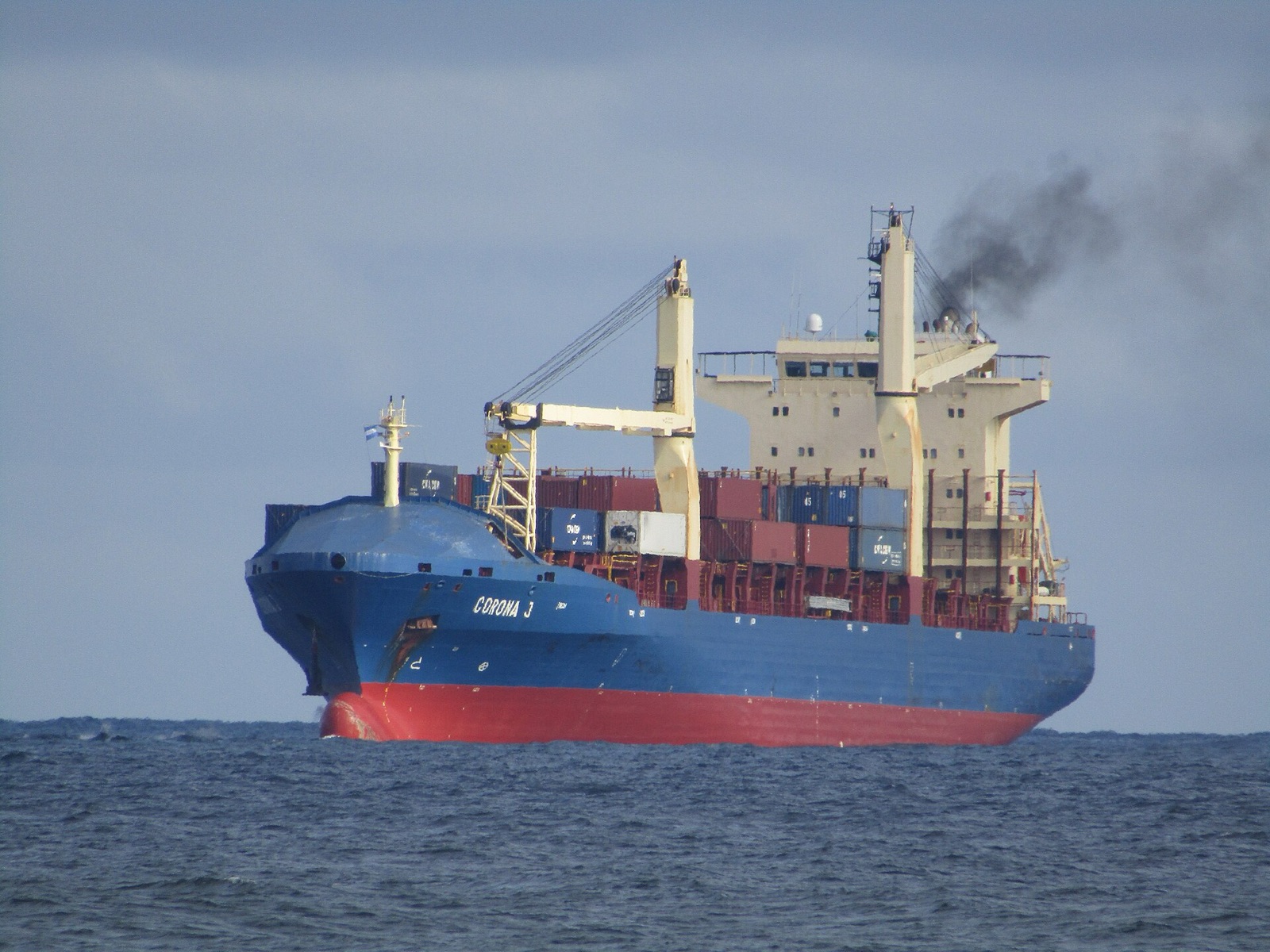
Photo: Container ship off Puerto Cortés, Honduras. Luis Alfredo Romero, CC BY-SA 4.0, via Wikimedia Commons.
Ready to ship your freight?
