
On this page13
Ship to Honduras by ocean FCL or LCL from Miami to Puerto Cortés (3 to 7 days) or by air into San Pedro Sula (SAP) in 1 to 3 days; a licensed agent files the DUCA with Aduanas Honduras in SARAH, and imports pay 15% ISV plus duty unless CAFTA-DR-qualifying. Honduras has one of the shortest ocean lanes from Florida to Central America and one of the region's most important ports. Puerto Cortés, on the Caribbean coast, is the country's largest port and the main Atlantic gateway for much of Central America, so almost every freight plan for Honduras starts there. The other defining feature is the apparel industry: Honduras is a major textile and garment producer for the US market, and a large share of its imports are fabric, yarn, trims and machinery for export plants that ship finished garments back north. That two-way flow keeps capacity on the Miami to Puerto Cortés lane frequent. On the customs side, Honduras is a CAFTA-DR member, applies the Central American common tariff, charges a 15% sales tax (ISV) at import, files on the regional DUCA through the SARAH system, and is strict about certificates of origin.
Honduras Shipping at a Glance: Transit Times and Options
Ocean freight from Miami to Puerto Cortés takes 3 to 7 days, air freight to San Pedro Sula 1 to 3 days, and Asian cargo 30 to 45 days via transshipment.
| Route & mode | Transit (typical) | Best for |
|---|---|---|
| Miami / US East Coast to Puerto Cortés, ocean FCL | 3 to 7 days | apparel inputs, distributors, industrial supplies |
| Miami to Honduras, ocean LCL | 7 to 14 days | mixed purchases under about 15 CBM |
| USA to San Pedro Sula (SAP), air freight | 1 to 3 days | urgent trims, spare parts, samples |
| China to Puerto Cortés, ocean FCL or LCL | 30 to 45 days via transshipment | fabric, machinery, consumer goods |
| Europe to Puerto Cortés, ocean FCL | 20 to 35 days | equipment, chemicals, specialty inputs |
Transit depends on carrier rotation and connections, so use the ranges for planning and request a firm quote.
How to Ship to Honduras: Step by Step
Shipping to Honduras follows eight steps, and the certificate of origin in step 4 is the document Honduran customs checks hardest.
- Classify the goods under the Central American tariff (SAC), and check the CAFTA-DR rule of origin and whether SENASA or ARSA requirements apply.
- Secure permits and regimes: a SENASA import permit for food and agricultural inputs, an ARSA sanitary registration for processed food, medicines and cosmetics, and the plant's temporary import or free zone authorization for export-plant inputs.
- Choose mode and Incoterm: FCL or LCL from Miami to Puerto Cortés, or air freight into San Pedro Sula (SAP) or Palmerola (XPL) for Tegucigalpa.
- Prepare the documents: commercial invoice, packing lists that reconcile with each supplier invoice, and the specific Honduran certificate of origin for CAFTA-DR treatment (a blanket certificate covers repeat shipments for up to one year).
- File the US export data: the exporter or forwarder files the Electronic Export Information (EEI) in AES when the shipment requires it, and the cargo sails or flies.
- Advance declaration and transit: the agent files the advance declaration (DUA anticipada) in SARAH while the cargo makes the 3 to 7 day sailing to Puerto Cortés.
- Customs declaration on the DUCA-D: the declaration is selected for documentary or physical review or released, and duties and 15% ISV are paid.
- Release and final delivery: the cargo leaves the port by truck to San Pedro Sula, the Sula Valley industrial parks or Tegucigalpa.
For most shippers, the process starts on the Miami to Puerto Cortés lane.
Shipping From the USA to Honduras
From the US, most freight sails from Miami or the East Coast to Puerto Cortés, with air freight into San Pedro Sula for urgent cargo. Miami to Puerto Cortés is one of the busiest short-sea lanes in the Caribbean basin, with frequent sailings from Florida and the US East Coast and transit of three to seven days. From the port, cargo moves by truck to San Pedro Sula, to the industrial parks of the Sula Valley, or south to Tegucigalpa. Puerto Cortés also serves as a gateway for cargo to El Salvador and Nicaragua by land, a routing covered in our guides to shipping to El Salvador and shipping to Nicaragua.
Container shipping to Honduras works as FCL for factories, distributors and project cargo, and as LCL for smaller importers who consolidate purchases from several US suppliers in Miami and pay only for the space used. For apparel plants, mixed loads of fabric, trims and spare parts for sewing equipment are common, and accurate packing lists per supplier make the customs entry much easier.
Air freight into Ramón Villeda Morales International (SAP) in San Pedro Sula lands in one to three days and serves the industrial north. Tegucigalpa is served by Palmerola International (XPL), which replaced Toncontín as the capital's main international airport.
Shipping From China, Asia and Europe to Honduras
Asian and European cargo reaches Honduras at Puerto Cortés after a transshipment: 30 to 45 days from China for FCL, longer for LCL, and 20 to 35 days from Europe. Asian cargo transships at a Caribbean or Panamanian hub and continues on feeder service into Puerto Cortés. Asian fabric for the apparel sector deserves special care: under CAFTA-DR the textile rules of origin require yarn and fabric from the region or the US, with limited exceptions such as the short supply list, so finished garments made with Asian fabric lose duty-free entry into the US unless an exception applies. Check the rule for each garment before buying the fabric.
European cargo arrives at Puerto Cortés with a Caribbean transshipment on most services. Honduras is part of the EU and Central America Association Agreement, so EU-origin goods with valid proof of origin qualify for preferential tariffs. Both flows converge on the gateways below.
Which Ports and Airports Handle Cargo in Honduras?
Puerto Cortés handles most Honduran container trade, supported by Puerto Castilla, San Lorenzo on the Pacific, and the airports of San Pedro Sula (SAP) and Palmerola (XPL).
- Puerto Cortés, Cortés (HNPCR): Honduras' largest port, about 60 km from San Pedro Sula. Its container and general cargo terminal is operated under concession by Operadora Portuaria Centroamericana (OPC), a subsidiary of ICTSI, and the port is certified under the US Container Security Initiative (CSI), so laden containers can reach US ports pre-screened.
- Puerto Castilla, Colón: Caribbean port in the east, used mainly for fruit and agricultural cargo.
- San Lorenzo, Valle: the Pacific port on the Gulf of Fonseca.
- Ramón Villeda Morales International, San Pedro Sula (SAP): the main air cargo gateway for the industrial north.
- Palmerola International (XPL): the international airport serving Tegucigalpa.
- Land borders: integrated posts with Guatemala (Agua Caliente, El Florido, Corinto) and with El Salvador (El Amatillo) link Honduras to its customs union partners; for the western neighbor, see our guide to shipping to Guatemala.
How Does Customs Clearance Work in Honduras?
Imports are cleared by the Administración Aduanera de Honduras (Aduanas Honduras) in the SARAH electronic system, on the regional DUCA filed by a licensed customs agent. SARAH (Sistema Automatizado de Rentas Aduaneras de Honduras), now with a SARAH Web 2.0 platform, includes an advance declaration (DUA anticipada) so agents can file before the cargo arrives. The DUCA is the single Central American customs declaration, in force since 2019 across the six integration countries, with the DUCA-D used for imports from outside the region.
- Customs agent: customs agents are regulated as auxiliaries of the customs function under the Central American Uniform Customs Code (CAUCA), its regulation (RECAUCA) and the Honduran Customs Law (Decree 212-87), as Honduras notified to the WTO Trade Facilitation Agreement database. Commercial imports are filed by a licensed agente aduanero authorized at the customs office of entry; confirm with the agent whether your shipment's value or regime allows direct filing.
- Advance declaration: filing before arrival in SARAH reduces dwell time at Puerto Cortés.
- Classification and origin: goods are classified under the Central American tariff (SAC), and preference claims are checked against the certificate of origin.
- Inspection: declarations are selected for documentary or physical review or released.
- Payment and release: duties and ISV are paid before the cargo leaves the port.
Honduran customs is very strict when evaluating certificates of origin. Even minor errors can result in fines and in non-CAFTA duties being charged, so the certificate deserves the same review as the invoice. Honduras requires a specific certificate of origin for US goods claiming CAFTA-DR treatment, and a blanket certificate can cover repeat shipments of the same goods for up to one year, according to the U.S. Commercial Service. A valid certificate is what turns the duty line below to zero.
What Are the Import Duties and Taxes in Honduras?
Honduras charges 15% ISV on most imports, and qualifying US goods enter duty free under CAFTA-DR, according to the U.S. Commercial Service's Honduras tariff guide.
- US goods under CAFTA-DR: qualifying US goods enter duty free, and the HS code determines each product's tariff elimination schedule. Nearly all textile and apparel goods that meet the agreement's rules of origin receive duty-free and quota-free treatment.
- Non-preferential goods: tariffs on most goods from outside the Central American integration system are within the zero to 15% range, with special treatment for some agricultural products: white corn from outside CAFTA-DR faces a price band, and rice moves under quotas and import licensing.
- ISV (Impuesto Sobre Ventas): a general 15% sales tax applies to most imports. Exemptions cover staple foods listed in Decree 005-2014, fuels, medicines, agricultural chemicals, books and educational materials, agricultural machinery, and capital goods such as trucks, tractors, cranes and computers.
- Higher rates: 18% on alcoholic beverages and tobacco; a 15% selective consumption tax on some non-essential goods, and a 15% tax on carbonated beverages.
- Temporary import regimes: export-oriented plants operate under free zone and temporary import regimes that suspend duties and taxes on inputs that are processed and re-exported.
The ISV is the main source of customs revenue, so even when duty is zero, budget 15% on top of the CIF value for most goods unless the importer operates under a suspension regime.
What Documents and Customs Forms Are Required to Ship to Honduras?
A Honduran import needs a commercial invoice, packing list, bill of lading or air waybill, a CAFTA-DR certificate of origin when claiming preference, and any SENASA or ARSA permit the goods require.
- Commercial invoice with description, quantities, unit and total values and Incoterm
- Packing list with weights, dimensions and package marks
- Bill of lading (ocean) or air waybill (air)
- CAFTA-DR certification of origin, or other proof of origin for preferential rates
- Sanitary or phytosanitary certificates for food and agricultural products
- Import permits or registrations for regulated goods (medicines, agrochemicals, food)
- Authorization for the customs agent
Restricted Goods and Import Permits in Honduras
Food, agricultural inputs, medicines and cosmetics are the regulated categories that need permits or registration before a Honduran import.
- Food and agricultural products: importers of food products, additives, pesticides and food-processing inputs must obtain an import permit from SENASA (the national agricultural health and food safety service), presenting the phyto- or zoosanitary certificate issued by a US federal or state authority, the certificate of origin and a pro forma invoice. Dairy imports also need an import license.
- Rice and white corn: subject to tariff-rate quotas, licensing and price-band mechanisms.
- Processed food, medicines and cosmetics: require a sanitary registration number from ARSA (Agencia de Regulación Sanitaria, created in 2017) before import. Agrochemicals are registered through the agricultural authorities.
- Textiles for export plants: inputs entering under a temporary import or free zone regime must match the plant's authorization; quantities and descriptions on the invoice must reconcile with the regime records.
- Wood packaging: must meet ISPM 15.
- Hazardous materials: move under IMO and IATA rules with dangerous goods declarations.
LCL, FCL or Air Freight to Honduras: Which to Choose?
For Honduras, use air under 2 CBM or when a production line is waiting, LCL from 2 to 15 CBM, and FCL above 15 CBM.
- Under 2 CBM, or line-stopping: air freight to SAP. Missing trims or machine parts that halt a sewing line justify the cost.
- 2 to 15 CBM: LCL from Miami. Short transit to Puerto Cortés keeps consolidation competitive.
- 15 CBM and above: compare a 20ft FCL; most apparel plants and distributors on regular programs ship full 40ft containers.
- Rolls of fabric: light for their volume, so a 40ft high cube gives the lowest cost per roll.
Key Industries Shipping Freight to Honduras
Apparel inputs for export plants are the defining freight flow into Honduras, and textiles and apparel are the backbone of Honduran trade with the US. Export plants in the Sula Valley and San Pedro Sula import yarn, fabric, trims, labels, packaging and sewing equipment, assemble or knit garments, and ship them north under CAFTA-DR. Other imports include fuels, machinery, vehicles and parts, electrical equipment, plastics, pharmaceuticals and processed food, with the United States as the main supplier.
Exports include apparel, coffee, bananas, palm oil, shrimp and melons, much of it through Puerto Cortés. The input side of the apparel business, how to ship fabric and trims so the garments keep their CAFTA-DR qualification, is the topic of our follow-up guide, which also covers HS codes for clothing and textiles.
Choosing a Freight Forwarder for Honduras
The right forwarder for Honduras wins on documents, because on the Puerto Cortés lane short transit is available to everyone. It should consolidate cleanly in Miami, produce packing lists that reconcile with each supplier invoice, and help the importer get the certificate of origin right before the agent files in SARAH. Interworld Freight was founded in Miami in 1992 and runs a Miami hub with warehousing, ocean FCL and LCL, air freight and customs coordination with licensed Honduran agents, with coverage on every major trade lane from Asia and Europe. For regional routing beyond Honduras, see our guide to shipping from Miami to Latin America. Send your cargo details and you will receive a quote within one business day.
Frequently Asked Questions
How long does shipping from Miami to Honduras take?
Ocean freight from Miami to Puerto Cortés takes three to seven days, and air freight to San Pedro Sula one to three days. LCL adds a few days for consolidation and deconsolidation.
Which port is used for shipping to Honduras?
Puerto Cortés, the country's largest port, handles most Honduran imports. Puerto Castilla and the Pacific port of San Lorenzo handle smaller volumes.
Do I need a customs broker to import into Honduras?
Yes, for commercial imports. Licensed customs agents file the DUCA in SARAH and are regulated under CAUCA, RECAUCA and the Honduran Customs Law; the agent can confirm whether a specific low-value shipment or regime allows direct filing.
What customs form do I need to import into Honduras?
Commercial cargo from outside Central America is declared on the DUCA-D, filed electronically in SARAH by the customs agent and supported by the commercial invoice, packing list, bill of lading or air waybill, and any certificate of origin or permit.
What taxes apply to imports in Honduras?
Most imports pay 15% ISV (sales tax), plus import duty under the Central American tariff for non-preferential goods. Qualifying US goods under CAFTA-DR pay no duty but still pay ISV unless the importer operates under a suspension regime.
Why are certificates of origin so important in Honduras?
Honduran customs reviews them closely, and even minor errors can lead to fines and to non-CAFTA duties. Check every field, especially the preference criterion, before the cargo ships.
Can apparel plants import fabric from Asia?
Yes, but garments made with non-regional fabric lose duty-free entry into the US under CAFTA-DR unless an exception applies, because the agreement requires yarn and fabric from the region or the US. Check the rule of origin for each garment before sourcing.
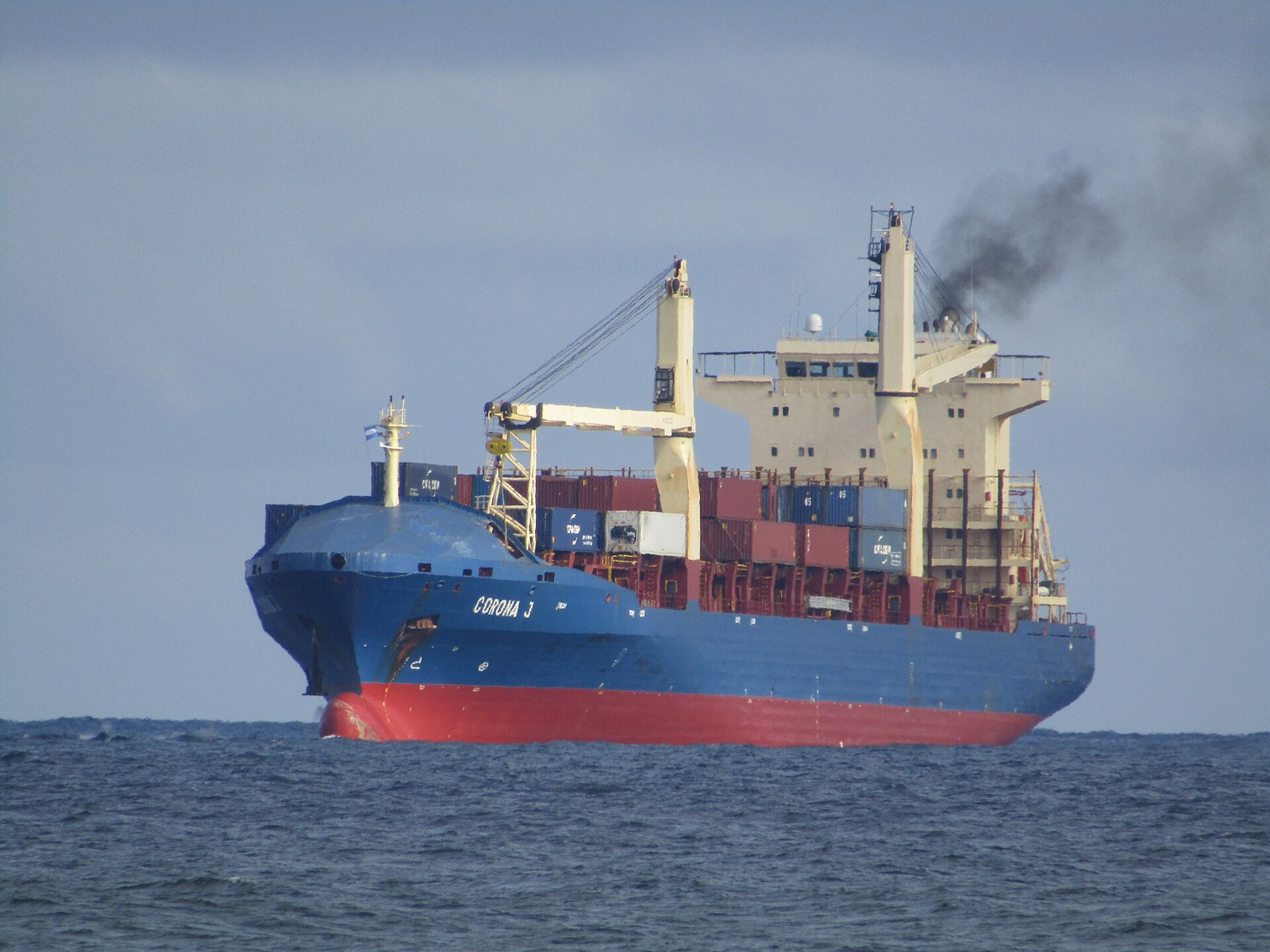
Photo: Container ship off Puerto Cortés, Honduras. Luis Alfredo Romero, CC BY-SA 4.0, via Wikimedia Commons.
Ready to ship your freight?
