On this page11
El Salvador's Dirección General de Aduanas (DGA), part of the Ministerio de Hacienda, clears imports on the electronic DUCA-D, which a customs agent files. Duty follows the Central American tariff, capped at 15% for most goods and 0% for qualifying US goods under CAFTA-DR, and 13% IVA is then charged on the CIF value plus duties.
That order matters. A small error in the customs value moves both the duty and the IVA base, and a missing origin certificate removes the CAFTA-DR preference entirely. Our El Salvador container shipping service moves the cargo. This guide covers the Salvadoran side: the DGA process, documents, rates, the IVA cascade, permits and where cargo stalls. The regional declaration is explained in our DUCA guide.
El Salvador Customs at a Glance
| Item | Detail |
|---|---|
| Customs authority | Dirección General de Aduanas (DGA), Ministerio de Hacienda |
| Electronic system | DUCA-D and DUCA-F, exchanged with the Central Bank's CIEX single window; P@GOES-DGA for online payment of duties and taxes |
| Tariff framework | Central American tariff (SAC classification); CAFTA-DR with the US |
| Duty valuation basis | Customs value, anchored on the commercial invoice, with freight and insurance to the first port of arrival |
| VAT | 13% IVA (Article 54 of the IVA law) |
| Other import levies | Alcohol excise (specific tax plus 8% ad valorem), vehicle duties |
| Importer ID required | Tax registration with the Ministerio de Hacienda; importers are IVA taxpayers regardless of sales volume |
| Broker requirement | Customs agent files the declaration under the regional customs code |
| De minimis | USD 300, but only for non-commercial online purchases; 13% IVA still applies |
How Does Customs Clearance Work in El Salvador?
The DGA's own process model shows the sequence for a commercial import.
- Prepare the declaration. The customs agent assembles the invoice, transport document and any permits, classifies the goods and builds the value.
- Transmit the DUCA-D. The declaration is registered in the DGA system and linked to the CIEX single window, which connects the DGA with the Central Reserve Bank.
- Pay. Duties and IVA are paid electronically through P@GOES-DGA, which the U.S. Commercial Service reports is available around the clock. Taxpayers have four days to pay duties and taxes.
- Selectivity. The customs officer generates the selectivity result from the risk management system.
- Green channel. A green result releases the cargo.
- Red channel. A red result sends the container through the non-intrusive scanner, and the radioscopic image is analyzed remotely. If the image is satisfactory, the cargo is released. If it shows irregularities or inconsistencies, customs performs a physical inspection.
- Time limits. The U.S. Commercial Service reports that non-intrusive inspections must be completed within 24 hours, and that the 2018 amendments to the Customs Simplification Law cut the statutory clearance time from 48 hours to 24 hours.
- Release. The cargo leaves the port or terminal for the importer's warehouse.
The regional model behind these customs clearance steps is described in our DUCA guide. What changes in El Salvador is the electronic infrastructure around it: the CIEX window and the scanner network.
Documents Required for El Salvador Customs
The DGA requires a commercial invoice, a bill of lading and an import license when the product needs one, according to the U.S. Commercial Service. The customs authority also offers an online tariff query tool that shows the tariff, whether permits are required, any restrictions and the agency that issues each permit.
- Commercial invoice with real prices, Incoterm and detailed description
- Packing list consistent with the transport document
- Bill of lading (ocean) or air waybill (air)
- CAFTA-DR certification of origin when claiming the preference
- Import license for products under license, such as basic grains and dairy
- Sanitary registration or free sale certificate for food, medicines and cosmetics
- Power of attorney or mandate for the customs agent
El Salvador Import Duty Rates by Product Category
Duty depends on the HS code, and El Salvador applies the Central American tariff with a standard maximum of 15% for countries without a trade agreement, according to the U.S. Commercial Service tariff guide.
| Category | Rate |
|---|---|
| Most goods from countries without a trade agreement | Up to 15% |
| Dairy, rice, pork and poultry products (some lines) | 40% |
| Alcoholic beverages | 20% to 40%, plus a specific tax and 8% ad valorem tax |
| Motor vehicles | 25% to 30% |
| US consumer and industrial goods meeting origin rules (CAFTA-DR) | 0% |
The same page publishes WTO average applied rates by product group, which give a sense of where the weight sits: dairy products 17.7%, beverages and tobacco 17.2%, clothing 14.9%, textiles 8.2%, transport equipment 3.6%, electrical machinery 3.2%, chemicals 1.7% and mechanical machinery 0.7%. These are averages, so the legal rate for your line is the one in the tariff schedule.
Two policy points matter here. Under CAFTA-DR, 100% of US consumer and industrial goods enter duty free from 2015 when they meet the rules of origin, and tariff rate quotas for sensitive agricultural lines open each January 1 under an import licensing system. In July 2024, duties were suspended for 10 years on more than 120 products in the expanded food basket and agricultural inputs.
How to Calculate Import Duty and Taxes in El Salvador
Article 48 (g) of the IVA law sets the import tax base: the CIF or customs value, plus tariff duties, plus the specific consumption taxes that apply. The IVA itself is never part of its own base, and the rate is 13% (Article 54). The law text is available at the Ministerio de Hacienda's transparency portal.
- Customs value (CIF) = goods price + international freight + insurance
- Duty (DAI) = customs value x tariff rate (0% with a valid CAFTA-DR claim)
- Specific consumption taxes, if the product carries them
- IVA = 13% x (customs value + duty + specific taxes)
Illustrative example for goods that do not qualify for CAFTA-DR, with a 5% duty line (USD):
| Step | Amount |
|---|---|
| Goods price | 18,000 |
| Freight and insurance | 2,000 |
| Customs value | 20,000 |
| Duty at 5% | 1,000 |
| IVA base (20,000 + 1,000) | 21,000 |
| IVA at 13% | 2,730 |
| Total duty and taxes | 3,730 |
With a valid CAFTA-DR claim, duty is zero, the IVA base is 20,000 and IVA is 2,600. The preference saves 1,130 on this shipment.
Importer Registration and Customs Agents in El Salvador
The importer needs tax registration with the Ministerio de Hacienda. The IVA law excludes small sellers from taxpayer status by sales volume, but that exclusion does not apply to importers (Article 28), so every commercial importer is an IVA taxpayer.
The declaration itself is filed by a licensed customs agent. The regional regulation (RECAUCA) makes the agent the importer's legal representative, requires an annual refresher course, and lists the cases where an agent is not required, such as government operations and legal entities represented by a special customs attorney. The DGA's process diagram shows the agent presenting the documents and receiving the selectivity result. A customs broker carries joint liability with the importer for duties, so confirm authorization and experience in your product category.
Valuation is anchored on the commercial invoice. The U.S. Commercial Service reports that if the stated price looks doubtful, the DGA assesses the value itself, and that El Salvador applies the WTO Customs Valuation Agreement.
Exemptions, Free Zones and Special Regimes in El Salvador
- CAFTA-DR: entered into force on March 1, 2006, and has given duty-free entry to all qualifying US consumer and industrial goods since 2015. The agreement is described by the Office of the U.S. Trade Representative.
- Temporary entry: customs can authorize temporary entry with a suspension of duties for specific purposes. Goods must be re-exported within the allowed time without modification, and a bond guarantees the re-export.
- Free zones and inward processing: the DGA's regime list includes free zones, international service parks, duty-free shops, active processing admission, customs warehouses and transit. The U.S. Commercial Service notes that exporting from a duty-free zone is cumbersome, and the government is piloting an online procedure.
- Customs union: El Salvador's adhesion protocol to the customs union with Guatemala and Honduras was approved in July 2018. Integrated border posts at El Amatillo and Anguiatú-La Ermita operate, and coffee, sugar and goods with different FTA rules of origin or tariffs are excluded.
- Regional goods: originating Central American goods move on the DUCA-F instead of the DUCA-D.
Import Permits and Licensing Agencies in El Salvador
Permits are issued before arrival, and the CIEX single window lets applicants file them in one place for food and beverages.
- Superintendencia de Regulación Sanitaria (SRS): product registration for food, beverages, pharmaceuticals, medical devices, supplements, dental products, cosmetics and hygiene products. Registration is valid for five years and is requested through the SISAM system. Since August 2024 the SRS replaced the Ministry of Health in food and beverage registration.
- Ministry of Agriculture: sanitary certificate for fresh food, agricultural commodities and live animals, and import licenses for basic grains and dairy.
- Registration by risk category: for low-risk products in categories B and C, the SRS accepts the export sanitary certificate issued by the official institution of the country of origin (April 2025), and accredited third-party laboratories can run category A analyses (May 2025).
- US meat: the FSIS 9060-5 export certificate replaces the certificate of free sale.
Common Customs Delays in El Salvador and How to Avoid Them
- Discretionary application. The U.S. Commercial Service reports that U.S. companies face inconsistent and discretionary application of customs regulations, which leads to unpredictable delays and administrative fines. A complete, consistent file reduces exposure.
- Valuation disputes. An invoice that looks low invites DGA assessment. Keep proof of payment and the purchase order with the file.
- Express shipments. The valuation process for express imports is unclear, so route commercial goods as cargo.
- Wrong classification. A misclassified HS code changes the duty, the IVA base and the permits required. Check the DGA tariff query before sailing.
- Missing registration. Food and cosmetics without SRS registration cannot clear. Start the registration weeks before the first shipment.
- Payment deadline. Duties and taxes must be paid within four days. Demurrage starts at discharge.
Clearing Cargo to El Salvador With Interworld Freight
Interworld Freight was founded in Miami in 1992 and runs a Miami hub with warehousing, ocean FCL and LCL, air freight and customs coordination with licensed brokers at destination. We check the invoice, packing list and certification of origin against the data the Salvadoran agent will put on the DUCA-D. Routing and transit details are in our El Salvador shipping guide. Send the shipment details and you will receive a quote within one business day.
Frequently Asked Questions
Who is in charge of customs in El Salvador?
The Dirección General de Aduanas (DGA), under the Ministerio de Hacienda. It runs the electronic declaration system and exchanges data with the CIEX single window at the Central Reserve Bank.
What is the import duty in El Salvador?
Duty follows the Central American tariff, with a standard maximum of 15% for countries without a trade agreement. Some dairy, rice, pork and poultry lines reach 40%, and qualifying US goods enter at 0% under CAFTA-DR.
What is the IVA rate on imports in El Salvador?
IVA is 13%. The base is the CIF or customs value plus tariff duties and specific consumption taxes, and the IVA does not tax itself.
Is there a de minimis in El Salvador?
USD 300 applies to non-commercial online purchases, which are exempt from tariffs but still pay 13% IVA. Commercial cargo does not use that threshold.
How long does customs clearance take in El Salvador?
The statutory clearance time is 24 hours after the 2018 amendments to the Customs Simplification Law, and non-intrusive inspections must be completed within 24 hours, according to the U.S. Commercial Service. Missing permits or valuation reviews extend it.
Do I need a customs agent in El Salvador?
Commercial importers use a customs agent, who files the DUCA-D and represents the importer. The regional regulation lists a few cases where an agent is not required, such as government operations.
Do US goods pay duty in El Salvador?
US consumer and industrial goods that meet the CAFTA-DR rules of origin enter duty free, and the importer must claim the preference with a certification of origin. IVA at 13% still applies.
What happens if my container is selected for the red channel?
It goes through the non-intrusive scanner, and customs analyzes the image. A satisfactory result releases the cargo, and irregularities lead to a physical inspection.
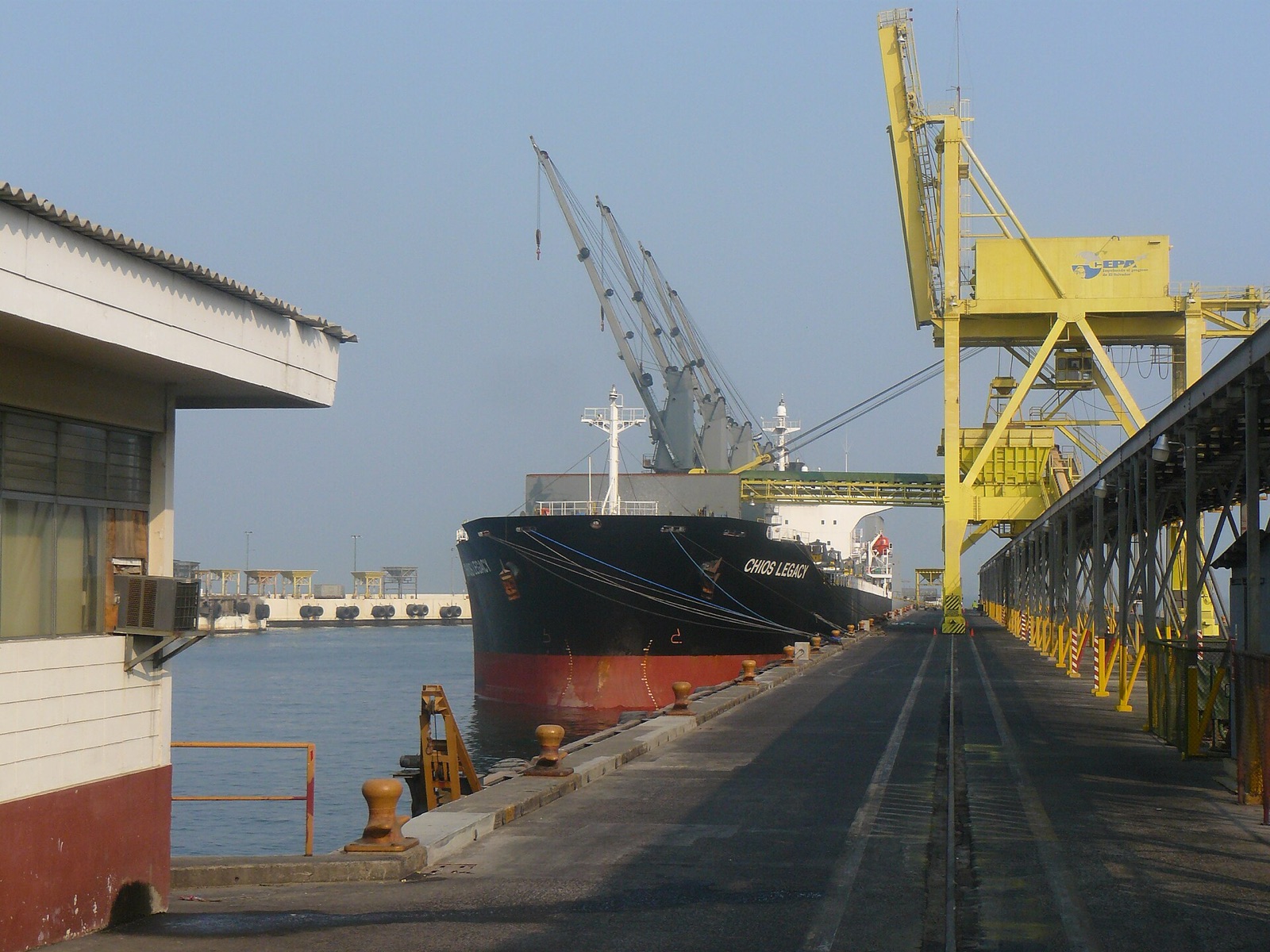
Photo: Port of Acajutla, El Salvador. Erickssonr, CC BY-SA 3.0, via Wikimedia Commons.
Ready to ship your freight?
