
On this page13
Ship to El Salvador by ocean from Miami via Panama to Acajutla (8 to 12 days), through a Guatemalan or Honduran port plus truck (5 to 10 days), or by air into SAL (1 to 3 days); DGA clears the DUCA, and imports pay 13% IVA plus non-CAFTA-DR duty. El Salvador is the only Central American country without a Caribbean coastline, and that single fact shapes how freight reaches it. Ocean cargo from Florida, the US East Coast and Europe either sails through the Panama Canal to the Pacific port of Acajutla, or lands on the Caribbean side in Guatemala or Honduras and crosses into El Salvador by truck. Both routes work, and cargo type, urgency and the destination inside the country decide between them. El Salvador is also in the middle of a port overhaul: since December 2024, Acajutla and La Unión are run under a 50-year concession by a partnership of Yilport (80%) and the state port authority CEPA (20%), with a committed investment of $1,615 million. On the customs side, the country is a CAFTA-DR member, declares on the regional DUCA, charges 13% IVA at import, and since June 1, 2026 requires importers to declare that goods were not made with forced or child labor.
El Salvador Shipping at a Glance: Transit Times and Options
From Miami, all-water service to Acajutla takes 8 to 12 days, a Caribbean port plus truck 5 to 10 days door to door, and air freight 1 to 3 days.
| Route & mode | Transit (typical) | Best for |
|---|---|---|
| Miami / US East Coast to Acajutla, ocean FCL (via Panama) | 8 to 12 days | construction materials, industrial inputs, distributors |
| Miami to Santo Tomás (Guatemala) or Puerto Cortés (Honduras), then truck to San Salvador | 5 to 10 days door to door | time-sensitive full loads from Florida |
| Miami to El Salvador, ocean LCL | 10 to 18 days | mixed purchases under about 15 CBM |
| USA to San Salvador (SAL), air freight | 1 to 3 days | urgent parts, electronics, pharmaceuticals |
| China to Acajutla, ocean FCL | 30 to 45 days | machinery, steel, consumer goods |
| Europe to El Salvador, ocean FCL | 25 to 40 days | equipment, specialty building materials |
Ranges depend on carrier rotations, canal transit and border crossing times, so use them for planning and request a firm quote.
How to Ship to El Salvador: Step by Step
Shipping to El Salvador follows eight steps, and the route decision in step 2 (all-water or overland) shapes transit, documents and cost.
- Classify the goods under the Central American tariff (SAC), and check CAFTA-DR origin, any permits, and whether the machinery IVA exemption applies (form F-16-22 filed at least 30 days before import).
- Choose route, mode and Incoterm: all-water from Miami through the Panama Canal to Acajutla, a short sailing to Santo Tomás de Castilla or Puerto Cortés plus a truck transit, or air freight into SAL.
- Prepare the documents: commercial invoice with the data customs requires, packing list, CAFTA-DR certification of origin, permits, and the sworn forced labor declaration.
- File the US export data: the exporter or forwarder files the Electronic Export Information (EEI) in AES when the shipment requires it, and the cargo sails or flies.
- Transit: all-water cargo arrives at Acajutla in 8 to 12 days; overland cargo crosses at El Amatillo or Anguiatú under customs transit control.
- Customs declaration on the DUCA: a licensed agente de aduanas, or the company's authorized apoderado especial aduanero, files the DUCA through the DGA's teledespacho service, and risk selection routes it to inspection or release.
- Pay duties and taxes: duties and 13% IVA are paid online through P@GOES-DGA, within the four days allowed, against a 24-hour statutory clearance time.
- Release and final delivery: the cargo is released and trucked to San Salvador, the project site or the warehouse.
From the US, step 2 is where most of the planning goes.
Container Shipping From the USA to El Salvador
From Miami there are two practical ocean routes, all-water to Acajutla or a short Caribbean leg plus a truck transit, and air freight covers urgent cargo. The first is all-water: container shipping to El Salvador through the Panama Canal to Acajutla, the main Pacific port. The second is a sea and land combination: the container sails a short Caribbean leg to Santo Tomás de Castilla in Guatemala or Puerto Cortés in Honduras (the ports covered in our guides to shipping to Guatemala and shipping to Honduras) and is trucked across the border (for example through El Amatillo with Honduras or Anguiatú with Guatemala), moving in transit under customs control until it is cleared in El Salvador. The land route is the faster option from Florida (5 to 10 days door to door against 8 to 12 days port to port all-water); the all-water route avoids border handling and suits heavy or out-of-gauge cargo.
For smaller importers, LCL consolidation in Miami lets several US purchases move under one bill of lading. Full containers make sense for distributors and contractors on regular programs; FCL shipping also protects fragile finishes and fixtures from extra handling at consolidation warehouses.
Air freight from Miami lands at El Salvador International Airport (SAL), south of San Salvador, in one to three days. It is the right choice for spare parts, electronics, pharmaceuticals and anything holding up a project.
Shipping From China, Asia and Europe to El Salvador
Asian cargo reaches El Salvador on the Pacific at Acajutla in 30 to 45 days for a full container, and European cargo arrives through the Panama Canal or overland from a Caribbean port in 25 to 40 days. El Salvador's Pacific coast is an advantage for Asian cargo: transpacific services reach Acajutla directly or via a transshipment in Panama or Mexico, and LCL runs longer. Steel, machinery, electrical equipment, tiles and consumer goods are common Asian imports on this route.
European cargo comes either through the Panama Canal to Acajutla or to a Caribbean port in Guatemala or Honduras and overland. El Salvador is part of the EU and Central America Association Agreement, so EU-origin goods with valid proof of origin qualify for preferential tariffs. Both routes end at the gateways below.
Which Ports and Airports Handle Cargo in El Salvador?
Acajutla on the Pacific is El Salvador's main port, La Unión is being reactivated on the Gulf of Fonseca, and El Salvador International (SAL) handles air cargo.
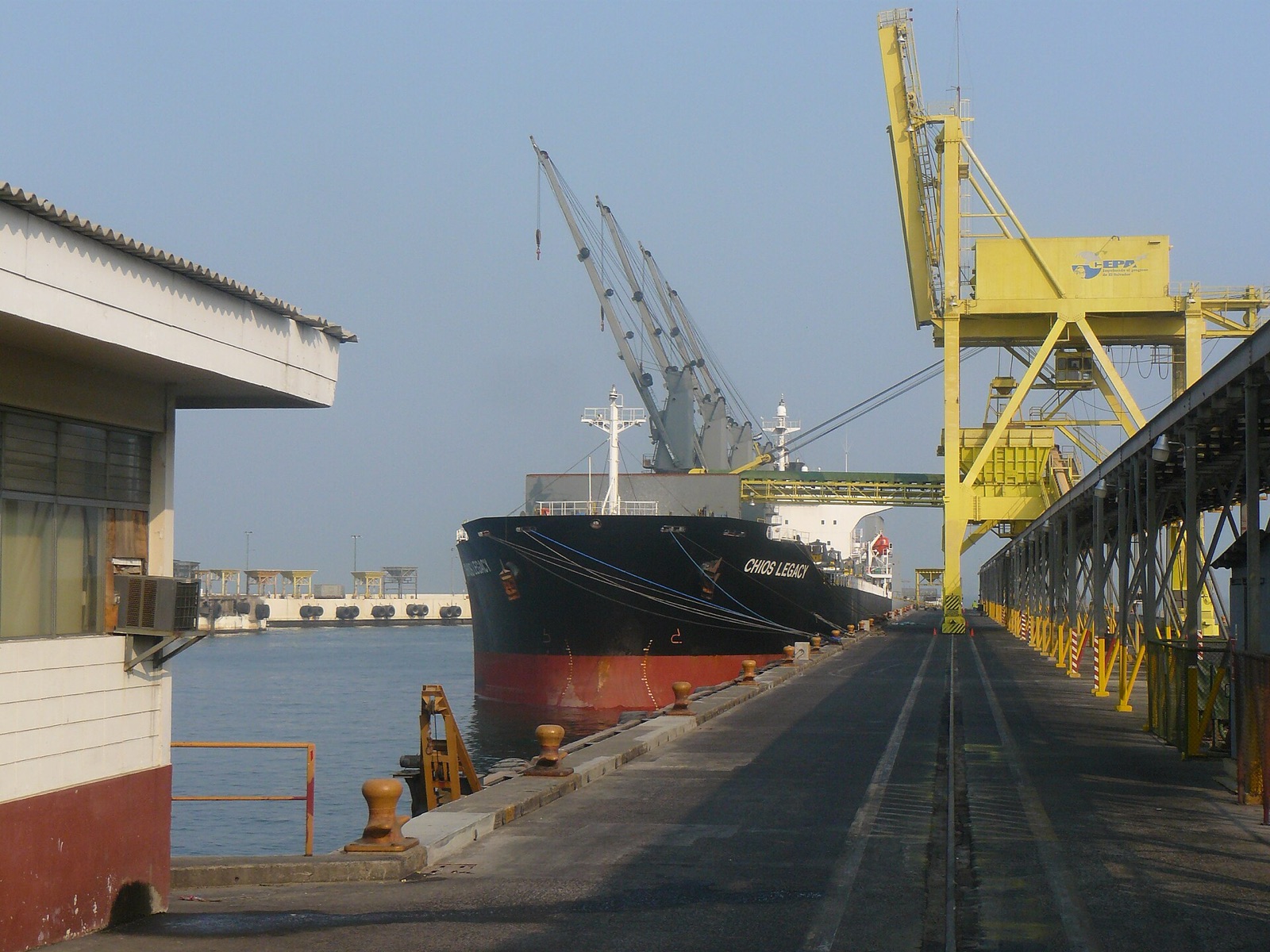
- Port of Acajutla, Sonsonate (SVAQJ): the main commercial port for containers, general cargo and bulk. Operated since December 2024 by Unión Portuaria del Pacífico (UPdP), the mixed company in which Yilport holds 80% and the port authority CEPA 20%; CEPA reports a Yilport investment commitment of $1,615 million to modernize Acajutla and activate La Unión.
- Port of La Unión, La Unión: deep-water port on the Gulf of Fonseca, under the same concession, being reactivated with dredging and new equipment. The gulf is shared with Honduras and Nicaragua; for the southern market, see our guide to shipping to Nicaragua.
- El Salvador International Airport Saint Óscar Arnulfo Romero y Galdámez (SAL): the international air cargo gateway.
- Land borders: integrated border posts with Honduras (El Amatillo) and Guatemala (Anguiatú and La Ermita, among others) handle cargo routed through Caribbean ports in neighboring countries.
How Does Customs Clearance Work in El Salvador?
Imports are cleared by the Dirección General de Aduanas (DGA) of the Ministerio de Hacienda on the electronic DUCA, and a customs agent is optional for companies authorized to file their own declarations. The DUCA (Declaración Única Centroamericana) is the single online regional declaration El Salvador adopted in 2019, with the other SIECA members, to replace three paper forms, and it is filed through the DGA's internet clearance service (teledespacho). Duties and taxes can be paid online, 24/7, through P@GOES-DGA. The statutory clearance time is 24 hours (down from 48), importers have four days to pay duties and taxes, and non-intrusive inspections must be completed within 24 hours, according to the U.S. Commercial Service.
- Declaration: filed electronically on the DUCA. Under Article 9 of the Ley de Simplificación Aduanera, using a customs agent is optional for goods destined for processing or sale when the importer is a legal entity authorized by the DGA to file on its own behalf, through an authorized customs representative (apoderado especial aduanero). Individuals and companies without that authorization file through a licensed agente de aduanas, which is what most commercial importers do.
- Documents: the customs declaration, invoice, transport documents, certificate of origin, licenses or permits, and proof of payment of duties and taxes.
- Forced labor declaration: a reform to the Ley Orgánica de la DGA approved by the Asamblea Legislativa on March 3, 2026 (new Article 27-A) requires importers to declare in writing that the goods were not made with forced, compulsory or child labor. It became mandatory on June 1, 2026 for definitive import, inward processing and free zone regimes, and the DGA can request supply chain documentation when it sees warning signs.
- Risk selection: declarations are routed to documentary or physical inspection or released.
- Payment and release: duties and IVA are paid and the cargo is released.
El Salvador participates in the customs integration process with Guatemala and Honduras, which simplifies transit and clearance of cargo routed overland from their Caribbean ports. Goods on the agreed free circulation list cross with the QR-coded FYDUCA (invoice and DUCA in one document), and in June 2025 El Salvador and Guatemala began integrated operations at the Anguiatú-La Ermita crossing. Once the DUCA clears, the tax bill below is what remains.
What Are the Import Duties and Taxes in El Salvador?
US goods that meet CAFTA-DR rules of origin enter El Salvador duty free, and imports pay 13% IVA, the rate set by Article 54 of the IVA Law.
- US goods under CAFTA-DR: since January 1, 2015, 100% of US consumer and industrial goods that meet the rules of origin enter duty free, according to the U.S. Commercial Service's El Salvador tariff guide; about 80% did so from the agreement's entry into force in 2006. A valid certification of origin is required to claim the preference, under the CAFTA-DR rules of origin.
- Non-preferential goods: for countries without a trade agreement with El Salvador, most tariffs do not exceed the 15% maximum standard external tariff of the Central American Common Market.
- IVA (value added tax): 13% at import, calculated on the customs value plus duties.
- IVA exemption for machinery: qualifying production machinery can be imported free of IVA if the importer files form F-16-22 with the Ministerio de Hacienda at least 30 days before the import.
- Other levies: specific excise taxes apply to goods such as alcoholic beverages, tobacco and fuels.
For CAFTA-DR-qualifying construction and project cargo from the US, duty is zero, and IVA becomes the main import cost. Confirm whether the machinery exemption or another project-level incentive applies before quoting a landed price.
What Documents Are Required to Ship to El Salvador?
A Salvadoran import needs a commercial invoice, packing list, transport document, certificate of origin where preference is claimed, any permits, and the forced labor declaration in the DUCA.
- Commercial invoice with the seller's and buyer's names and addresses, city and date, description of goods, quantity, unit, total value and payment terms
- Packing list with weights and dimensions
- Bill of lading (ocean), air waybill (air) or land transport document for overland legs
- Certificate of origin (CAFTA-DR certification for US goods claiming preference)
- Licenses or permits for regulated goods
- Sworn forced labor declaration, filed as part of the DUCA
- Authorization for the customs agent
Restricted Goods and Import Permits in El Salvador
Food, medicines, cosmetics and chemicals need permits or registration before shipment, and oversized cargo needs route planning.
- Food, plants and animal products: require sanitary or phytosanitary certificates and permits from the Salvadoran agricultural and health authorities.
- Medicines, cosmetics and chemicals: require registration or import authorization before shipment.
- Construction materials: steel, cement products and electrical equipment require technical compliance documentation when the tariff line calls for it.
- Wood packaging: crates and pallets must follow ISPM 15 wood packaging requirements.
- Oversized cargo: machinery, transformers and structural steel that do not fit a standard container need flat racks or breakbulk shipping instead of containers, which favors the all-water route to Acajutla.
- Hazardous materials: move under IMO and IATA rules with dangerous goods declarations.
LCL, FCL or Air Freight to El Salvador: Which to Choose?
For El Salvador, use air under 2 CBM or when time matters, LCL from 2 to 15 CBM, and FCL above 15 CBM.
- Under 2 CBM, or urgent: air freight to SAL.
- 2 to 15 CBM: LCL from Miami, consolidated with other shippers.
- 15 CBM and above: compare a 20ft FCL; at 25 CBM and above, a 40ft is the cheaper unit per cubic meter on most lanes.
- Heavy loads (rebar, tile, cement products): weight limits the container and, on the overland route, the truck, so check road weight limits as well as container payload.
- Route choice: overland via Guatemala or Honduras for speed from Florida; all-water to Acajutla for oversized cargo, Asian origins and shipments that should avoid border handling.
What Are the Main Imports of El Salvador? Key Industries Shipping Freight
Construction materials, industrial inputs and consumer goods are El Salvador's main import flows, with construction and infrastructure among the most active segments. Public works, the port investments at Acajutla and La Unión, commercial real estate, hotels and housing pull in structural steel, rebar, cement products, tiles, glass, electrical and plumbing materials, HVAC equipment and heavy machinery, from the US and Asia. Industry adds a steady flow of fabric, yarn and trims for apparel plants, plastics, paper, chemicals and food ingredients.
On the export side, El Salvador ships apparel, coffee, sugar, plastics and processed food, mostly to the United States and its Central American neighbors. How to move building materials, steel and project equipment into El Salvador, including route and container choices for heavy cargo, is the subject of our follow-up guide.
Choosing a Freight Forwarder for El Salvador
The right forwarder for El Salvador prices both routes (all-water to Acajutla, or a Caribbean port plus an overland transit) and files a DUCA that clears on the first pass. It should price both, account for border handling and road limits, and prepare a DUCA file (including the new forced labor declaration) that clears on the first pass. Interworld Freight was founded in Miami in 1992 and runs a Miami hub with warehousing, ocean FCL and LCL, air freight and customs coordination with licensed Salvadoran agents, with coverage on every major trade lane from Asia and Europe. For regional routing, see our guide to shipping from Miami to Latin America. Send your shipment details and you will receive a quote within one business day.
Frequently Asked Questions
How long does shipping from Miami to El Salvador take?
All-water service through the Panama Canal to Acajutla takes 8 to 12 days. Routing through a Caribbean port in Guatemala or Honduras and trucking to San Salvador is faster, at 5 to 10 days door to door. Air freight takes one to three days.
Why do some shipments to El Salvador go through Guatemala or Honduras?
El Salvador has no Caribbean coast, so cargo from Florida and the US East Coast can land at Santo Tomás de Castilla or Puerto Cortés and cross by truck under customs transit. From Florida it saves days compared with sailing through the Panama Canal to Acajutla.
Do US goods pay duty in El Salvador?
US consumer and industrial goods that meet CAFTA-DR rules of origin enter duty free with a valid certification of origin. IVA at 13% still applies at import.
What is the forced labor declaration?
Since June 1, 2026, importers under definitive import, inward processing and free zone regimes must declare in writing, with the customs declaration, that the goods were not produced with forced, compulsory or child labor. The DGA can request supply chain documentation if it sees warning signs.
Do I need a customs broker to import into El Salvador?
Not always. A company authorized by the DGA can file its own DUCA for goods it will process or sell, under the Ley de Simplificación Aduanera; everyone else, and most importers, file through a licensed customs agent.
What are the main imports of El Salvador?
Construction materials, machinery, fuels, electrical equipment, fabric and trims for apparel plants, plastics, chemicals, food and consumer goods, with the United States as the main supplier. The DGA of the Ministerio de Hacienda clears them on the DUCA.
Can I ship oversized construction equipment to El Salvador?
Yes. Out-of-gauge machinery and structural steel move on flat racks or as breakbulk on the all-water route to Acajutla to avoid overland weight and size limits.
Photo: Port of Acajutla, El Salvador. Erickssonr, CC BY-SA 3.0, via Wikimedia Commons.
Ready to ship your freight?
