
On this page12
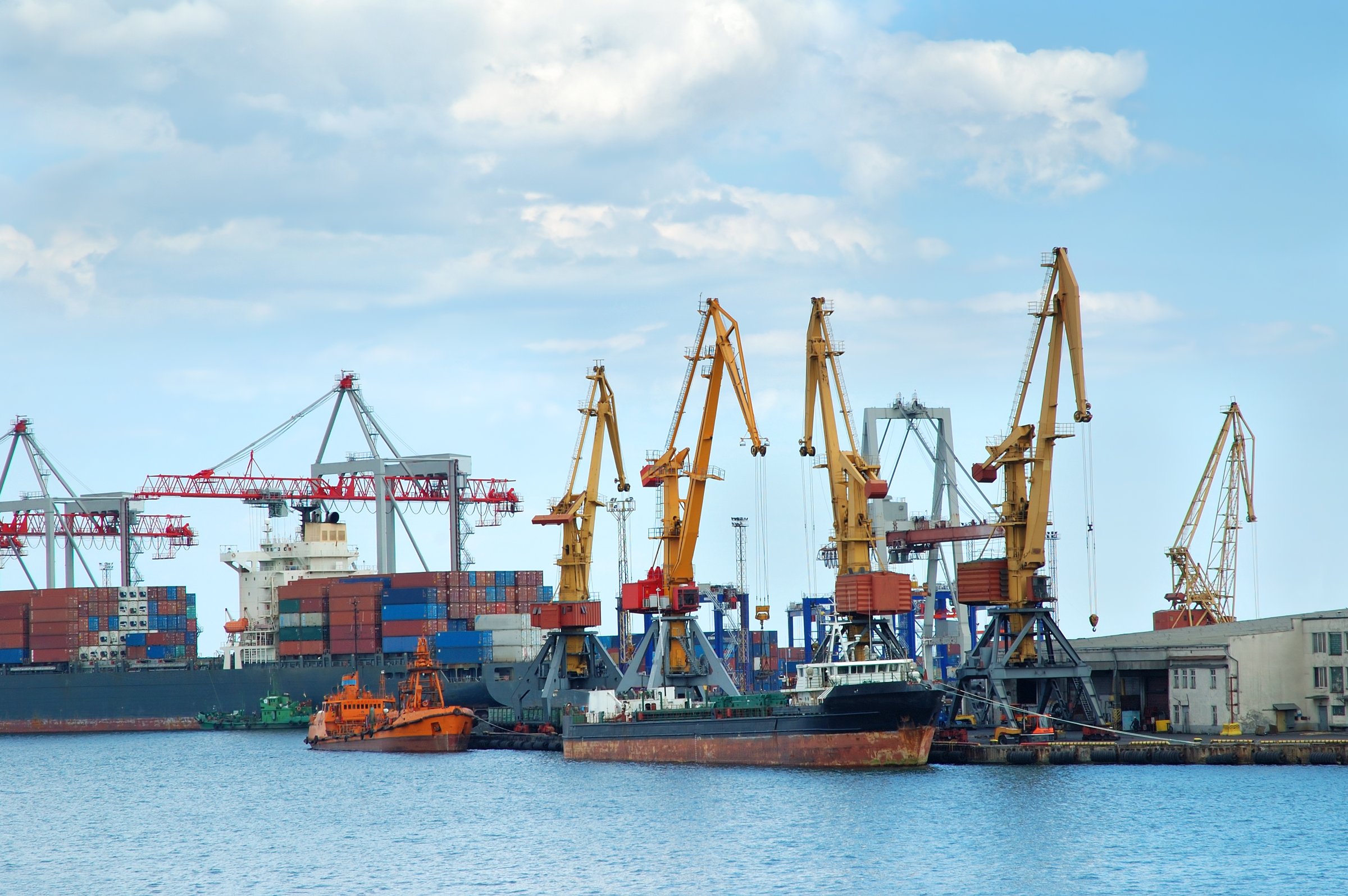
Terminal handling charge, written THC, is the terminal's fee for the physical work of receiving, moving, stacking and loading your container. It appears on the origin side and again at destination, the terminal sets it locally, and it is one of the fixed lines on a freight invoice.
What the charge actually covers
At the load port: receiving the container at the gate, moving it in the yard, storing it for the allowed window, and lifting it onto the vessel. At the discharge port: lifting it off, yard movement, storage within free time, and gate out.
It does not cover customs work, inspection charges, the shipping line's documentation fee, or anything after the gate. Those are separate lines with separate causes.
Why it appears at both ends
Two terminals do work, so two terminals charge. Ocean freight pays for the sea leg only. The Incoterm and the way the carrier's tariff is structured on the trade decide whether both THCs land on you.
| Incoterm | Origin THC | Destination THC |
|---|---|---|
| EXW | Buyer | Buyer |
| FOB | Seller | Buyer |
| CFR and CIF | Seller | Buyer, unless the contract of carriage includes it |
| DAP | Seller | Seller |
| DDP | Seller | Seller |
The common surprise is on CIF purchases. Buyers assume the C covers everything to the destination port and then receive an invoice for destination THC, release fees and delivery order charges. That is the contract working as written, not an overcharge, and it belongs in the budget from the start.
Who sets the charge and where it is published
The terminal sets the THC, and the carrier or NVOCC collects it from you. Three US rules from the Federal Maritime Commission (FMC) define how that works:
- Terminal schedules: a marine terminal operator can publish a schedule of its rates, regulations and practices, and a published schedule is enforceable by a court as an implied contract between the terminal and the party receiving the services, without proof that the party knew its provisions (46 CFR 525.2).
- Access: terminal operators give access to their schedules through the internet and keep a complete set for 5 years (46 CFR 525.3).
- No markup: an ocean common carrier or NVOCC that acts as collection agent for terminal services must not mark those charges up above cost (46 CFR 520.8(b)(4)). An NVOCC that passes on a carrier's surcharges lists the named charges in its own tariff and does not mark them up (46 CFR 520.7).
The same part sets the notice period. A new charge or a change that raises the cost to a shipper cannot take effect earlier than 30 calendar days after publication, and a change in a charge outside the carrier's control, such as terminal services, takes effect on publication (46 CFR 520.8). The rates that apply to a shipment are those in effect on the date the carrier or its agent receives the cargo (46 CFR 520.7(c)). Ask for the date the THC was published, and check it against your receipt date.
Why THC differs so much by port
Labor agreements, equipment, land cost, congestion and local regulation all feed into it. The same carrier publishes different THC at two ports on the same rotation. Small island terminals charge more per box than large hubs when they move less volume across similar fixed costs.
That is one reason a lane with a higher ocean rate can land cheaper overall: the port pair matters. Look at the total, using the checklist in how to compare ocean freight quotes.
THC versus the charges around it
A destination invoice stacks several local lines, and each has a different cause:
| Charge | What triggers it | Related reference |
|---|---|---|
| Terminal handling (THC) | Lifting, yard movement and gate-in or gate-out of the container | This article |
| Documentation and release fee | The carrier's work on the bill of lading and the delivery order | Bill of lading types |
| Demurrage and detention | Container or terminal space used beyond free time | Demurrage and detention |
| Inland haulage | Trucking or rail from the port to the consignee | Inland haulage charges |
| Chassis usage | The trailer under the container on the road leg | Chassis usage fee |
| Congestion surcharge | Port delays that the carrier passes on | Congestion surcharge |
| Customs exam fees | CBP selecting the shipment for examination, paid by the importer | Customs clearance |
The THC is the one line that follows the box through the terminal gate, and the others follow time, paperwork or the road. Keep them apart in your budget, because each one has a different way to control it.
THC and LCL
On consolidated cargo the terminal charge is levied on the container, then apportioned across the shipments inside it, per cubic meter with a minimum. That is one of the reasons a very small LCL shipment carries a high cost per unit, as covered in what drives LCL shipping costs. The consolidation warehouse also charges for its own handling, listed in the consolidation fee and container freight station entries.
The minimum charge on small LCL loads
A per-CBM THC with a minimum charge produces a step in the cost curve. Write the charge as the larger of two numbers: the per-CBM rate multiplied by the shipment volume, or the minimum. Below the volume where the two meet, every shipment pays the minimum, so a 0.5 CBM carton load and a 1 CBM pallet pay the same THC. Above that volume, the charge grows with each CBM. A shipper with several small purchases saves the repeated minimum by consolidating them into one shipment, which is the logic of one Miami warehouse receiving every supplier delivery before the booking.
Where the charge appears by direction of trade
| Movement | Origin terminal | Destination terminal | Where the rules sit |
|---|---|---|---|
| US export to the Caribbean | US terminal: FMC rules on carrier tariffs and terminal schedules apply | Caribbean terminal: the destination port's own tariff | 46 CFR 520 and 525 at origin, local port tariff at destination |
| China to the US | Chinese terminal tariff | US terminal: FMC rules apply | Local tariff at origin, 46 CFR 520 and 525 at destination |
| China to the Caribbean through Miami | Chinese terminal tariff | Caribbean terminal, with a US consolidation step in between | Each end follows its own port tariff |
For a Caribbean destination, ask the forwarder for the destination terminal's published tariff or the line's local-charges notice, and check the effective date on it. The quote shows the number and the tariff shows the basis.
A checklist before you book
- Name the load port and the discharge port on the quote, because the THC belongs to the port.
- Confirm which Incoterm governs the sale and which THC you pay under it.
- Confirm whether the ocean rate is all-in or port to port.
- Request origin and destination THC as separate lines, each with its basis (container, CBM or shipment).
- Request the effective date of each THC tariff.
- Request free time at destination, in days, so the storage clock is known before the container lands.
- Add the documentation, release and delivery lines to the total.
- Compare the all-in totals of at least two routings.
How to read the THC line on a quote
- Find both ends. The quote lists origin THC and destination THC as separate lines, each with the port named.
- Find the basis. Per container, per CBM with a minimum, or per shipment. A per-CBM basis with a minimum favors large LCL loads.
- Find the currency and date. The tariff date decides the rate that applies (46 CFR 520.7(c)).
- Find the all-in total. Add ocean freight, both THCs, documentation, release and delivery. Compare totals, because two quotes with the same ocean rate differ by the local lines.
- Find what is excluded. Demurrage, inspection and inland haulage are separate lines that start after the gate.
What you can do about it
The terminal's tariff is fixed, and you control three things. Choose the port pair deliberately instead of accepting the default routing. Avoid storage beyond free time, because the terminal bills beyond it at a different rate. And require the quote to state both THCs, so a low ocean rate does not hide a high local charge.
When a late invoice arrives, check the clock: for demurrage and detention, the billing party must issue the invoice within 30 calendar days from the date the charge was last incurred, and a billed party has at least 30 calendar days from issuance to request mitigation, refund or waiver (46 CFR 541.7 and 541.8). THC is a different charge, but the same discipline applies to every local line: ask for the tariff date and the basis in writing.
FAQ
Is THC included in the ocean freight rate?
Only when the quote says all-in. Port to port rates list THC separately. Ask which applies before you compare two quotes.
Who pays terminal handling charges?
The Incoterm decides. On FOB the seller pays origin THC and the buyer pays destination THC.
Why is THC different at each port?
Terminals set their own tariffs based on labor, equipment, land and volume. Hub ports and small island terminals price differently because they spread fixed costs over different volumes.
Is THC negotiable?
The terminal tariff is not. The rest of the quote and the routing you choose are negotiable.
Does THC apply to LCL shipments?
Yes, apportioned across the cargo in the container, per cubic meter with a minimum charge.
Can a carrier mark up the terminal handling charge?
No, under US rules a carrier or NVOCC acting as collection agent for terminal services must not mark them up above cost (46 CFR 520.8(b)(4)).
How much notice does a THC increase require?
A change in a carrier's charge that increases the cost to a shipper takes effect no earlier than 30 calendar days after publication. Changes in charges outside the carrier's control, such as terminal services, take effect on publication (46 CFR 520.8).
Is the THC the same as the documentation fee?
No. THC pays the terminal for moving the container. The documentation fee pays the carrier for processing the bill of lading, and the release fee pays for the delivery order. They are separate lines with separate causes.
Why does my quote show two THC lines?
One terminal handles the container at the load port and another at the discharge port, and each charges for its own work. The Incoterm decides which of the two you pay.
Want a quote where every local charge is visible? Ask us for the breakdown before you book.
Ready to ship your freight?
