
On this page13
You ship to Jamaica by ocean (FCL or LCL) into the Port of Kingston or by air into Kingston (KIN) and Montego Bay (MBJ); LCL from Miami takes about 4 days, and the Jamaica Customs Agency clears entries on ASYCUDA World, charging CARICOM CET duty plus 15% GCT. Kingston is also a regional transshipment hub run by Kingston Freeport Terminal Ltd. (KFTL) under a 30-year concession from the Port Authority of Jamaica, which gives Jamaican importers more direct sailings and more Asia connections than smaller islands get. The difficulty sits on the landside: JCA assesses import duty, General Consumption Tax and several fees and levies on the CIF value, and commercial entries of US$5,000 or more must go through a licensed customs broker. Since Category 5 Hurricane Melissa hit the island in late October 2025, reconstruction has added steady demand for building materials and equipment. Shippers who classify correctly and file a clean electronic entry clear Kingston in days; those who do not pay storage while documents are fixed.
Jamaica Shipping at a Glance: Transit Times and Options
Miami to Kingston is the fastest and most frequent ocean lane into Jamaica, at about 4 days for LCL; air takes 1 to 3 days and Asia 25 to 40 days.
| Route & mode | Transit | Indicative cost | Best for |
|---|---|---|---|
| Miami to Kingston, LCL (5 CBM / 1,500 kg) | about 4 days | about $1,000 (IWF published LCL rate, September 2026; excludes destination duties, taxes and local charges) | pallets, distributor restocks, project materials under a full box |
| USA (Miami, East Coast) to Kingston, FCL 20ft/40ft | 3 to 7 days from Florida | quote on request | full loads, building materials, FF&E |
| Miami to Kingston (KIN) or Montego Bay (MBJ), air | 1 to 3 days | quote on request | urgent spares, high-value goods, perishables |
| China / Asia to Kingston, FCL or LCL | 25 to 40 days | quote on request | factory orders, furniture, fixtures |
| Europe to Kingston, FCL or LCL | 2 to 4 weeks | quote on request | UK and EU equipment, food and beverage |
Transit is port to port and moves with sailing day, transshipment connections and season. The process behind those transit times follows the same eight steps on every lane.
How to Ship to Jamaica: Step by Step
Shipping to Jamaica follows eight steps, from HS classification at origin to release at Kingston or Montego Bay.
- Classify the goods and check licences. Assign the HS code under the CARICOM Common External Tariff and check the Jamaica Trade Information Portal for any Trade Board licence, Veterinary Services or Plant Quarantine permit, which must be in hand before the goods ship.
- Choose the mode and Incoterm. LCL from Miami covers 2 to 15 CBM, FCL covers larger or heavy loads, and air to KIN or MBJ covers urgent cargo; the Incoterm fixes who pays freight and insurance, which sets the CIF value Customs taxes.
- Book from Miami or origin. Deliver LCL cargo to a Miami CFS for weekly consolidation, or book an FCL from a US, Asian or European port to Kingston.
- Prepare the documents. Collect the supplier's commercial invoice, packing list, certificate of origin for CARICOM preference, any sanitary or phytosanitary certificate, and the importer's TRN, Tax Compliance Certificate and GCT certificate.
- File the US export record. For US-origin cargo, the exporter or forwarder files Electronic Export Information (EEI) in AES when a Schedule B line exceeds US$2,500 or the goods need an export licence.
- Transit to Kingston. The vessel discharges at Kingston Freeport Terminal or Kingston Wharves (about 4 days from Miami for LCL), or the flight lands at KIN or MBJ.
- Lodge the customs declaration. A licensed broker, authorized on a C73 form, files the eSAD (IM4 or IMS4) in ASYCUDA World with supporting documents; the broker is mandatory at US$5,000 CIF and above.
- Pay duties and take delivery. Duty, GCT, levies and fees are paid on the declaration, the validated bill of lading or air waybill is presented with the customs reference number, and the cargo is released for final delivery.
Most of the time and cost in steps 3 and 6 is decided by the US leg, which is where the majority of Jamaican imports start.
Shipping From the USA to Jamaica
US cargo for Jamaica moves through Miami, where LCL to Kingston runs about 4 days in transit on the IWF published lane. Weekly consolidation and frequent container services cover the short run from South Florida into Kingston. That short hop is why Jamaican distributors, contractors and hotel groups hold stock or consolidate purchases in Miami rather than buying full containers from each US supplier.
For less-than-container loads, cargo is received at a Miami CFS (container freight station), consolidated with other shippers' freight and loaded into a Kingston-bound box. The published IWF reference is about $1,000 for 5 CBM / 1,500 kg (IWF published LCL rate, September 2026; excludes destination duties, taxes and local charges), quoted FCA Miami CFS to Kingston. If you buy from several US vendors, including online B2B suppliers that only deliver inside the US, route everything to one Miami warehouse, consolidate, and ship one entry instead of five. The mechanics of shared container space are covered in how LCL container shipping works. The same Miami consolidation model runs for neighbouring markets, as our guides to shipping to the Cayman Islands and shipping to Turks and Caicos show.
Full containers pay off once volume passes 15 CBM or the goods are heavy. Interworld Freight runs container shipping to Jamaica from Miami and the wider US, with a dedicated lane page for . For a breakdown of what drives a box rate on this lane (base freight, terminal handling, destination charges), see the cost to ship a 20ft container to Jamaica.
Air freight goes into Norman Manley International (KIN) in Kingston or Sangster International (MBJ) in Montego Bay. Use MBJ when the consignee sits on the north coast tourism belt, KIN for Kingston and the south. Air freight to Jamaica fits replacement parts, electronics, pharmaceuticals and anything where a week of downtime costs more than the airfreight premium. Cargo from outside the Americas reaches Jamaica on longer, relayed routings.
Shipping From China, Asia and Europe to Jamaica
Asian cargo reaches Jamaica in 25 to 40 days port to port, without a stop in the US, because Kingston itself is a transshipment hub. Services relay through Kingston or through Panama, so Jamaica sees more Asia connections than most Caribbean islands, and transit depends on the origin port and whether the routing needs a second relay. Neighbouring Hispaniola works differently, as our guide to shipping to Haiti explains. Detail on origins, consolidation from Chinese CFS points and FCL versus LCL from China sits in our dedicated guide to shipping from China to Jamaica.
A second option many buyers overlook: ship Asian or European goods to Miami first, then forward to Jamaica with US-origin cargo. That works when an order must be split across several Jamaican consignees, combined with US purchases, or held until a site is ready to receive it.
From Europe, Jamaica is served by transatlantic services into the Caribbean, with transit of two to four weeks. UK and EU shippers of food, beverage, equipment and hotel supplies move LCL unless volume fills a 20ft. Whatever the origin, the cargo lands at one of a handful of Jamaican gateways.
Which Ports and Airports Handle Cargo in Jamaica?
Kingston is the main cargo gateway for Jamaica by sea and air, with Montego Bay serving the north coast.
- Port of Kingston (JMKIN): Kingston Freeport Terminal (KFTL), the container and transshipment terminal operated by a CMA CGM group company under concession from the Port Authority of Jamaica; and Kingston Wharves Ltd., a multipurpose terminal handling containers, breakbulk, vehicles, bulk cargo, warehousing and reefer plugs. Most import cargo for the island lands here.
- Port of Montego Bay (JMMBJ): secondary cargo port on the north coast, relevant for consignees in Montego Bay, Negril and Ocho Rios.
- Specialized bulk terminals: serve bauxite and alumina exports and other dry bulk; not relevant for general importers.
- Norman Manley International Airport (KIN), Kingston: main air cargo gateway for the capital and the south.
- Sangster International Airport (MBJ), Montego Bay: the north coast gateway, aligned with the resort corridor.
At every one of these gateways, release depends on the same customs process.
How Does Customs Clearance Work in Jamaica?
Commercial imports clear through the Jamaica Customs Agency (JCA) on ASYCUDA World, filed as an electronic Single Administrative Document (eSAD), and goods worth US$5,000 or more CIF need a licensed customs broker, according to the JCA commercial import clearance rules.
- Broker rule: goods with a CIF value equivalent to US$5,000 or more must be cleared by a licensed customs broker.
- Broker authorization: when a broker or local agent acts for you, the importer completes a C73 form and pays a JA$5,000 processing fee.
- Declaration type: commercial goods are declared on an IM4 or simplified IMS4 declaration; the full IM4 is mandatory above US$5,000.
- Steps: the broker prepares the eSAD in ASYCUDA with supporting documents uploaded, duties and taxes are paid on the declaration, the declaration is processed (documentary check or physical examination where selected), and the validated bill of lading or air waybill is presented with the customs reference number at the port or airport for release.
ASYCUDA computes duty, taxes, levies and fees once the officer confirms the tariff classification (HS code), quantity and CIF value, which is why the classification decision drives both speed and cost.
What Are the Import Duties and Taxes in Jamaica?
Jamaica charges CARICOM Common External Tariff (CET) duty by HS code on the CIF value of non-CARICOM imports, then 15% General Consumption Tax on the duty-inclusive value, plus a short list of fees and levies. Qualifying CARICOM-origin goods enter duty-free with a certificate of origin. The U.S. International Trade Administration notes that duties on some lines can reach as high as 180% compounded, so landed-cost modeling by HS code is not optional. The charges you will see on a Jamaican entry:
- Import duty: CET rate by HS code on the CIF value.
- General Consumption Tax (GCT): 15% standard rate since April 2020, collected by Customs on the same entry as the duty, according to Tax Administration Jamaica; some goods are zero-rated or exempt.
- Special Consumption Tax (SCT): on alcoholic beverages, most tobacco products and certain petroleum products.
- Additional Stamp Duty (ASD): on specific items such as chicken, pork and beef products, select aluminum goods, alcoholic beverages and cigarettes.
- Stamp duty: J$100 on shipments with a CIF value over J$5,500.
- Customs Administrative Fee (CAF): per entry, for cost recovery.
- Standards Compliance Fee (SCF): 0.3% of CIF, collected for the Bureau of Standards Jamaica.
- Environmental Levy: 0.5% of CIF.
The rates for the SCF, Environmental Levy and stamp duty are published on the JCA duties and taxes page. Duty waivers and concessions exist for approved projects and sectors, including tourism developments, but they must be granted before the goods arrive.
Hurricane Melissa relief (ended): from October 29, 2025, the Government suspended import duty and GCT on a specified list of hurricane relief items. The window opened for 30 days, was extended to December 31, 2025, and closed with a hard stop on January 15, 2026, as confirmed by the Ministry of Finance and the Public Service. Reconstruction cargo now pays normal duty and GCT unless it holds a separate approved concession. A regional comparison of how CET, consumption taxes and levies stack across islands is in our guide to Caribbean import duties and taxes. Every one of these charges is assessed from the documents the broker uploads.
What Documents Are Required to Ship to Jamaica?
A Jamaican commercial entry needs the transport document, an authentic supplier invoice, the importer's tax registrations and any licence the commodity requires:
- Supplier's commercial invoice (authentic, with Incoterm and values that reconcile to CIF)
- Packing list
- Bill of lading (ocean) or air waybill (air)
- eSAD customs declaration (IM4 or IMS4), prepared by the broker
- C73 broker authorization form
- Taxpayer Registration Number (TRN), Tax Compliance Certificate (TCC) and GCT certificate of the importer
- Import licence or permit where the commodity requires one
- Certificate of origin when claiming a preferential rate (CARICOM or other trade agreement)
- Sanitary or phytosanitary certificate for regulated food, plant and animal products
The licence line on that list is where most Jamaican delays start.
What Items Cannot Be Shipped to Jamaica Without a Permit?
Restricted goods need a permit from the Trade Board, the Veterinary Services Division or the Plant Quarantine authority before they ship, and the importer is responsible for confirming whether a line is licensed, per the U.S. Commercial Service guide to Jamaica import requirements.
- Trade Board import licences: the Trade Board (Ministry of Industry, Investment and Commerce) issues permits for specified items, including meats, fish, coconut products, edible oils, soaps, milk powder, refined sugar, plants and plant parts for perfume or pharmaceutical use, certain chemicals, motor vehicles and parts, arms and ammunition, and certain toys. The licence must be in hand before the goods are imported. The Jamaica Trade Information Portal shows the licensing requirement by commodity code.
- Motor vehicles: require a Trade Board import licence and are subject to age limits under the Motor Vehicle Import Policy, which vary by vehicle type; confirm eligibility before purchase.
- Food, plants and animal products: need sanitary or phytosanitary certification and permits from the Veterinary Services Division or Plant Quarantine, and are subject to inspection on arrival.
- Hazardous materials: must be declared and packed to IMDG (ocean) or IATA DGR (air) rules; carriers refuse undeclared dangerous goods.
- Used goods: declared at transaction value; customs challenges undervalued used equipment, so keep purchase evidence.
Once the goods are cleared to ship, the remaining decision is the mode.
LCL, FCL or Air Freight: What Is the Cheapest Way to Ship to Jamaica?
LCL from Miami is the cheapest way to ship 2 to 15 CBM to Jamaica, FCL wins above 15 CBM, and air is for small or urgent cargo.
- Under 2 CBM, or urgent: air to KIN or MBJ, or LCL if the timeline allows a week.
- 2 to 15 CBM: LCL from Miami. With a 4-day lane and weekly sailings, LCL is the default for distributors and project buyers.
- 15 CBM and up, or heavy cargo: a 20ft FCL beats LCL per unit; above 30 CBM, price a 40ft.
- Multiple suppliers: consolidate in Miami and ship one entry, which also cuts per-entry fees and broker charges in Kingston.
Key Industries Shipping Freight to Jamaica
Tourism drives the largest share of Jamaica's import demand. All-inclusive resorts along the north coast (Montego Bay, Negril, Ocho Rios) and hotel developments across the island import furniture, fixtures and equipment (FF&E), kitchen and laundry equipment, building materials and operating supplies, on tight opening dates. Construction, retail distribution and food and beverage follow, with most consumer and capital goods sourced from the US and Asia, and post-Melissa rebuilding keeps roofing, lumber, electrical and generator shipments high.
On the export side, bauxite and alumina move through dedicated bulk terminals, while agro-processed foods, spirits and specialty products ship to the US, UK and Canada. For hotel owners and contractors, the next step is planning the phased delivery of FF&E and construction materials to resort sites, which our follow-up on shipping hotel FF&E and construction materials to Jamaica's resorts covers in detail.
Choosing a Freight Forwarder for Jamaica
The right forwarder for Jamaica combines a reliable Miami consolidation schedule, correct CARICOM classification, and a clean handover to a licensed Jamaican broker so the eSAD and duties are ready when the box lands. Interworld Freight was founded in Miami in 1992 and runs ocean FCL and LCL, air freight, Miami warehousing and customs coordination from a single hub, with coverage on every major trade lane into Kingston and Montego Bay. Send your cargo details and quotes are answered within one business day.
Frequently Asked Questions
How long does shipping from Miami to Jamaica take?
LCL from Miami to Kingston takes about 4 days in transit on the IWF published lane. Full containers from Florida take 3 to 7 days, and air freight to Kingston or Montego Bay arrives in 1 to 3 days. Add time for customs clearance and delivery.
What is the cheapest way to ship to Jamaica?
For commercial cargo of 2 to 15 CBM, the cheapest way is LCL consolidation from Miami: the IWF published rate is about $1,000 for 5 CBM / 1,500 kg to Kingston (September 2026), excluding Jamaican duties, taxes and local charges. Combining several suppliers into one Miami consolidation also saves on per-entry broker and customs fees. Air is only cheaper for very small or very urgent shipments.
How much does it cost to ship a 20ft container to Jamaica?
A 20ft container rate to Kingston is quoted per shipment, because it depends on origin, sailing, terminal handling at both ends and destination charges. From Florida it is one of the shorter and more competitive lanes in the Caribbean. Duties, GCT and levies in Jamaica are paid on top of the freight.
Do I need a customs broker to import into Jamaica?
Yes for commercial cargo of US$5,000 CIF or more. Jamaica Customs Agency requires a licensed customs broker for goods with a CIF value equivalent to US$5,000 or more, and the importer authorizes the broker on a C73 form. Below that value a simplified declaration can be used.
How do I calculate import duty and GCT for Jamaica?
Apply the CET duty rate for the HS code to the CIF value (cost, insurance and freight), then add 15% GCT on the duty-inclusive value. Add the Standards Compliance Fee (0.3% of CIF), the Environmental Levy (0.5% of CIF), stamp duty and, where they apply, SCT and Additional Stamp Duty. ASYCUDA computes the final amount once Customs confirms the classification and value.
What items cannot be shipped to Jamaica without a permit?
Meats, fish, edible oils, milk powder, plants, certain chemicals, motor vehicles and parts, arms and ammunition and certain toys all need an import licence or permit before shipment. Food, plant and animal products also need sanitary or phytosanitary certificates. Undeclared dangerous goods are refused by carriers.
What goods are exempt from customs duty in Jamaica?
Qualifying CARICOM-origin goods enter duty-free with a certificate of origin, and approved projects (for example in tourism) can obtain duty concessions granted in advance. The Hurricane Melissa relief on duty and GCT ended on January 15, 2026. Everything else pays CET duty, and GCT applies unless the item is zero-rated or exempt.
Which port should I ship to in Jamaica?
Kingston, which handles most import cargo through Kingston Freeport Terminal and Kingston Wharves. Montego Bay is an option for north coast consignees, but sailing frequency is higher into Kingston, so confirm the service before routing there.
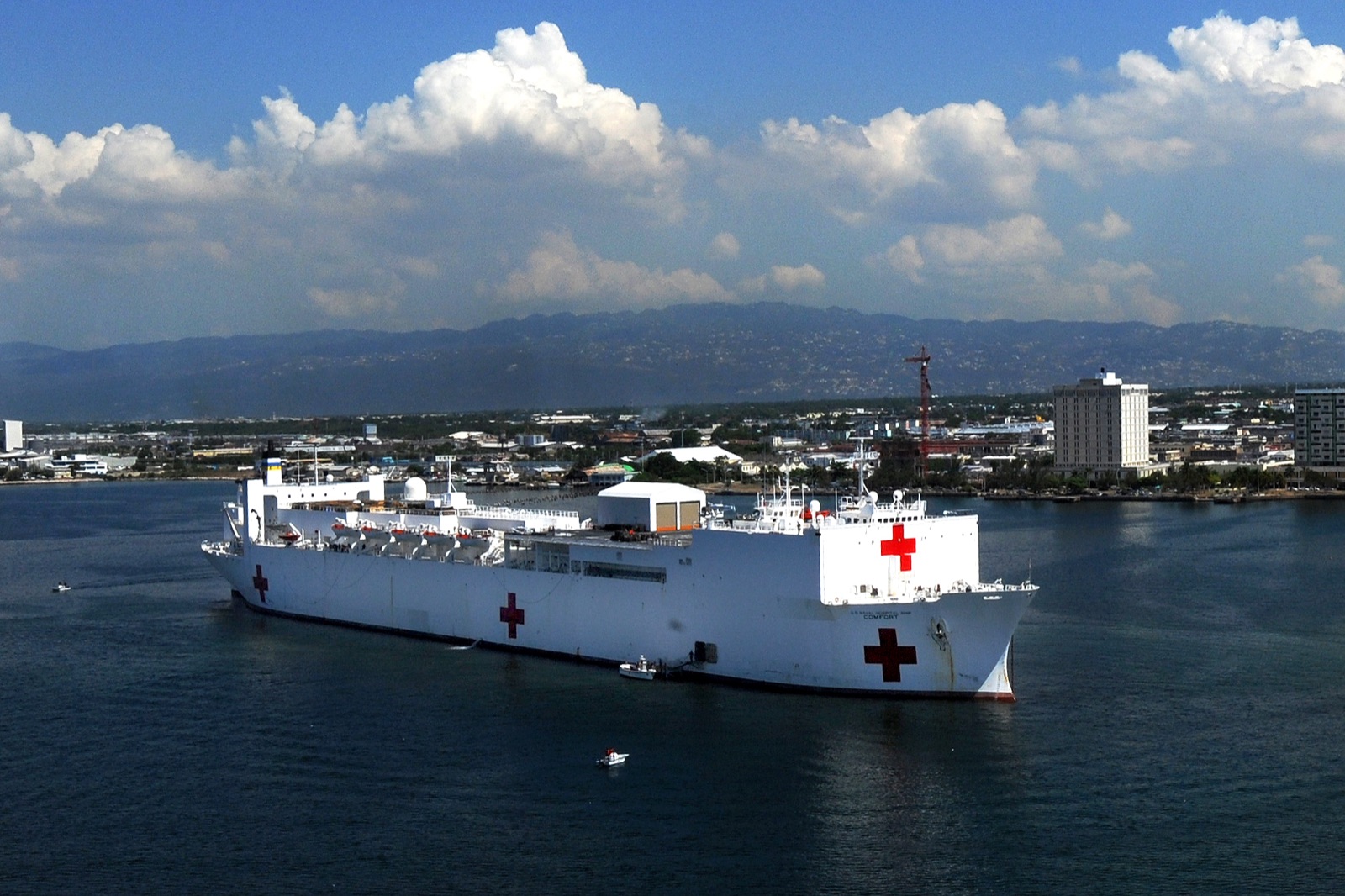
Photo: Kingston Harbour, Jamaica. Staff Sgt. Alesia D. Goosic, Public domain, via Wikimedia Commons.
Ready to ship your freight?
