
On this page11
Customs clearance in Jamaica runs through the Jamaica Customs Agency (JCA), which processes electronic declarations on ASYCUDA World and assesses CARICOM Common External Tariff (CET) duty on the CIF value, followed by General Consumption Tax (GCT) at 15%. Duty is by HS code, GCT is added on top of the duty-inclusive value, and the JCA requires a licensed customs broker for commercial goods worth more than US$5,000 CIF.
Cargo from Miami reaches Kingston or Montego Bay in days, but it only leaves the terminal once the declaration is clean. Interworld Freight ships containers and LCL from Florida on its container shipping service to Jamaica; the forms, taxes and permits below are what hold a shipment or release it.
Jamaica Customs at a Glance
| Item | Jamaica |
|---|---|
| Customs authority | Jamaica Customs Agency (JCA), which also performs border functions for other agencies |
| Electronic system | ASYCUDA World, declaration filed as an electronic Single Administrative Document (eSAD) |
| Tariff framework | CARICOM Common External Tariff (CET) on non-CARICOM goods; CARICOM-origin goods enter duty-free |
| Trade agreement with the US | No reciprocal free trade agreement; US preferences run one way under CBERA and apply to Jamaican exports |
| Duty valuation basis | CIF value (cost, insurance and freight) |
| Consumption tax | General Consumption Tax (GCT), 15% standard rate since April 2020 |
| Other import levies | Environmental levy (0.5% of CIF in the tariff; see calculation section); Special Consumption Tax and Additional Stamp Duty on specified goods |
| Importer ID required | Taxpayer Registration Number (TRN); Tax Compliance Certificate can be requested |
| Broker requirement | Licensed customs broker for goods above US$5,000 CIF, and for all motor vehicles |
| De minimis | Not stated in the official sources reviewed |
How Does Customs Clearance Work in Jamaica?
Commercial clearance follows a fixed sequence on ASYCUDA World:
- Confirm the tariff line and any licence. The HS code decides the duty rate and whether a Trade Board, Veterinary Services or Plant Quarantine permit is needed. Permits must be in hand before the cargo ships.
- Appoint a broker. When a broker or agent acts for the importer, the importer signs a C73 form, valid for one year, with a processing fee of J$5,000.
- Collect the shipping documents. The broker needs the supplier invoice, the bill of lading or air waybill, the packing list and the importer's tax registrations.
- File the eSAD. The broker keys the declaration in ASYCUDA World and uploads the supporting documents. The system assigns a customs reference number.
- Selection and assessment. Customs checks classification, quantity and CIF value, then sends the entry to documentary review or physical examination at its own discretion.
- Pay duty and taxes. Duty, GCT and levies are paid against the declaration. Tax Administration Jamaica states that GCT on imports is collected by Customs on the same document as the customs duty.
- Release. The validated bill of lading or air waybill is presented with the customs reference number at the port or airport, and the cargo is released for delivery.
Classification and value drive every number on the entry. A wrong HS code changes the duty rate, and an invoice that does not reconcile to the Incoterm changes the CIF base. The terms used here are defined in the glossary entry on customs clearance.
Documents Required for Jamaica Customs
The U.S. International Trade Administration lists the core set as a supplier invoice, certificate of origin, bill of lading or airway bill, and a declaration of value, plus an import licence where the commodity requires one. A Jamaican commercial entry is built from:
- Supplier's commercial invoice, with Incoterm and values that reconcile to the CIF figure
- Packing list
- Bill of lading (ocean) or air waybill (air)
- eSAD declaration prepared in ASYCUDA World by the broker
- C73 broker authorization form
- Importer's Taxpayer Registration Number (TRN) and, where Customs asks for it, a Tax Compliance Certificate
- Import licence or permit where the commodity is controlled
- Certificate of origin for CARICOM-origin goods claiming duty-free entry
- Sanitary or phytosanitary certificate for regulated food, plant and animal products
Documents travel with the declaration electronically, so a missing page stops the entry at selection. Check the invoice in Miami, before the cargo sails.
Jamaica Import Duty Rates by Product Category
Jamaica applies the CARICOM CET to goods from outside CARICOM. The rate is set per HS code, not per product family, so a table cannot replace a tariff lookup. The U.S. International Trade Administration notes that duties on some lines reach as high as 180 percent compounded, and that the government has committed to reducing them over time.
| Category | How duty is set | Source to check |
|---|---|---|
| Goods of CARICOM origin | Duty-free with a certificate of origin | Jamaica Customs Agency |
| General merchandise from the US, Asia, Europe | CET rate for the HS code on CIF value | Jamaica Trade Information Portal tariff search |
| Agricultural and food lines | CET rate for the HS code, plus a Trade Board, Veterinary Services or Plant Quarantine permit where required | Jamaica Trade Information Portal |
| Motor vehicles and parts | CET rate for the HS code, plus a Trade Board licence | Jamaica Trade Information Portal |
| Alcohol, tobacco, specified petroleum products | CET rate plus Special Consumption Tax | Jamaica Customs Agency |
The Jamaica Trade Information Portal organizes the customs tariff by HS code and shows duties, fees, taxes and levies for each line. Run the line through it, or through your broker's ASYCUDA classification, before you quote a landed price.
How to Calculate Import Duty and Taxes in Jamaica
The order is fixed: CIF value, then duty, then levies, then GCT on the duty-inclusive value. Tax Administration Jamaica defines the GCT value of an import as the customs value plus customs duty, plus Additional Stamp Duty and Special Consumption Tax where those apply.
Illustrative example (round numbers, not a quote): a Miami supplier ships tools with a CIF value of US$10,000, and the HS line carries a 20% CET rate.
- CIF value: US$10,000
- Import duty at 20% of CIF: US$2,000
- GCT base (CIF plus duty): US$12,000
- GCT at 15%: US$1,800
- Duty and GCT payable at the port: US$3,800, plus the environmental levy on CIF
The environmental levy is charged on CIF value and sits outside the GCT base above. Jamaica Customs Agency guidance and the Trade Information Portal tariff show it at 0.5%. The Jamaica Information Service reports that the House of Representatives passed a bill on September 22, 2026 to raise it to 0.85% from October 1, 2026, so check which rate is in force on the day you file.
Registered commercial importers also pay an additional 5% Advanced GCT at the port on eligible goods. It is a prepayment recovered as input tax, and Tax Administration Jamaica excludes petroleum products, capital goods, telephone instruments, exempt goods and raw foodstuffs from it. Unregistered commercial importers face an uplift on value instead. Ask the broker which treatment your registration gets before you set a margin.
Importer Registration and Customs Brokers in Jamaica
A commercial importer needs a Taxpayer Registration Number from Tax Administration Jamaica, and the U.S. International Trade Administration notes that Customs can ask for a Tax Compliance Certificate as well. GCT registration follows the Tax Administration Jamaica rules for businesses above its registration threshold.
On the filing side, the JCA requires a licensed customs broker for goods with a CIF value above US$5,000, and for all motor vehicles regardless of value; below that, the importer may clear the goods at the port. The importer authorizes the broker on the C73 form. The JCA requires brokers to be registered with the agency and to hold a valid licence to practise, and the Jamaica Trade Information Portal lists approved customs brokers. A customs broker prepares the eSAD, uploads the documents and handles payment, so choose one who knows your commodity. Interworld Freight coordinates with licensed brokers at destination rather than filing in Jamaica itself.
Exemptions, Free Zones and Special Regimes in Jamaica
Goods of CARICOM origin enter duty-free with a certificate of origin. Everything else pays the CET, including goods from the United States: the U.S. International Trade Administration describes Jamaica's US preferences as arrangements under the Caribbean Basin Economic Recovery Act, which cover Jamaican exports to the US and do not reduce Jamaican duty on US goods.
Duty relief exists for specified projects and importers, and Tax Administration Jamaica refers to "goods under certain duty relief" when it lists what is excluded from Advanced GCT. Relief is a separate approval; have your broker confirm eligibility before the cargo ships.
Hurricane Melissa relief has ended. The Ministry of Finance and the Public Service waived import duty and GCT on a specified list of relief items, extended the cutoff from December 31, 2025 and fixed a hard stop of January 15, 2026. Items arriving after that date go through normal import channels and pay normal duty and GCT. Reconstruction cargo for commercial projects, including building materials, follows the standard rules above.
Import Permits and Licensing Agencies in Jamaica
The Country Commercial Guide on import requirements names three licensing bodies: the Trade Board, the Veterinary Services Division and the Plant Quarantine Division. They sit under the Ministry of Industry, Investment and Commerce and the Ministry of Agriculture, Fisheries and Mining. Licences and permits must be obtained before the item is imported and sold, and the importer is responsible for confirming whether a line is controlled.
- Trade Board: licences for controlled items such as meats, fish, edible oils, milk powder, refined sugar, motor vehicles, arms and ammunition and certain toys.
- Veterinary Services Division and Plant Quarantine Division: permits and health certification for animal and plant products.
- Prohibited goods: toy guns and firecrackers cannot be imported at all, and restricted goods such as meats and plants need a permit.
The Jamaica Trade Information Portal shows the licensing requirement by commodity code, which makes it the first stop for any new product.
Common Customs Delays in Jamaica and How to Avoid Them
Five causes account for most Jamaican delays, and each has a direct fix.
- Missing licence or permit. Cargo arrives without a Trade Board or health permit and sits in the terminal. Fix: confirm the requirement by HS code on the trade portal before booking.
- HS misclassification. The wrong tariff line produces a wrong duty and triggers a correction. Fix: agree the code with the broker before the invoice is issued.
- Invoice and value mismatches. An invoice that does not reconcile to the Incoterm or looks undervalued draws a valuation query. Fix: show freight and insurance separately and keep purchase evidence for used equipment.
- Selected for examination. Entries picked for physical inspection wait for a slot. Fix: pack and label so the container can be opened and resealed quickly.
- Broker not authorized. Without a signed C73 the broker cannot file. Fix: complete the form before arrival.
Storage and demurrage run while any of these is open. Give the broker the full document set before the vessel sails.
Clearing Cargo to Jamaica With Interworld Freight
Interworld Freight was founded in Miami in 1992 and runs ocean FCL and LCL, air freight, Miami warehousing and customs coordination with licensed brokers at destination. Routing, transit and port details are in our guide to shipping to Jamaica. Cargo starting in Asia is covered in shipping from China to Jamaica, and duties across the region are compared in Caribbean import duties and taxes. Send the commodity, HS code and value and a quote comes back within one business day.
Frequently Asked Questions
What is the import duty rate in Jamaica?
It depends on the HS code. Jamaica applies the CARICOM Common External Tariff to non-CARICOM goods, and the U.S. International Trade Administration notes that duties on some lines can reach 180 percent compounded. Look up the code on the Jamaica Trade Information Portal before pricing.
What is the GCT rate on imports in Jamaica?
15%, the standard rate since April 2020. It is collected by Customs on the same document as the import duty and is calculated on the customs value plus duty and any Additional Stamp Duty or Special Consumption Tax.
Do I need a customs broker to import into Jamaica?
Yes for commercial goods worth more than US$5,000 CIF and for all motor vehicles; at US$5,000 or less it is optional. The importer authorizes the broker on a C73 form, valid for one year, with a J$5,000 processing fee.
How is import duty calculated in Jamaica?
Duty is the CET rate for the HS code applied to the CIF value. Levies such as the environmental levy (0.5% of CIF in the tariff) are added, then GCT is charged on the CIF value plus duty.
What documents are needed to clear goods in Jamaica?
A supplier invoice, bill of lading or air waybill, packing list, the broker's eSAD declaration and C73 form, the importer's TRN, and any licence or certificate for controlled goods. A certificate of origin supports duty-free CARICOM entry.
Are US goods duty-free in Jamaica?
No. Jamaica has no reciprocal free trade agreement with the United States, so US-origin goods pay the CET like other non-CARICOM goods. CBERA preferences apply to Jamaican exports entering the US.
Is the Hurricane Melissa duty relief still available?
No. The relief on import duty and GCT for specified items ended with a hard stop on January 15, 2026. Later shipments pay normal duty and GCT.
Which agency issues import licences in Jamaica?
The Trade Board issues licences for controlled goods, while the Veterinary Services Division and the Plant Quarantine Division issue health and plant permits. Obtain them before the cargo ships.
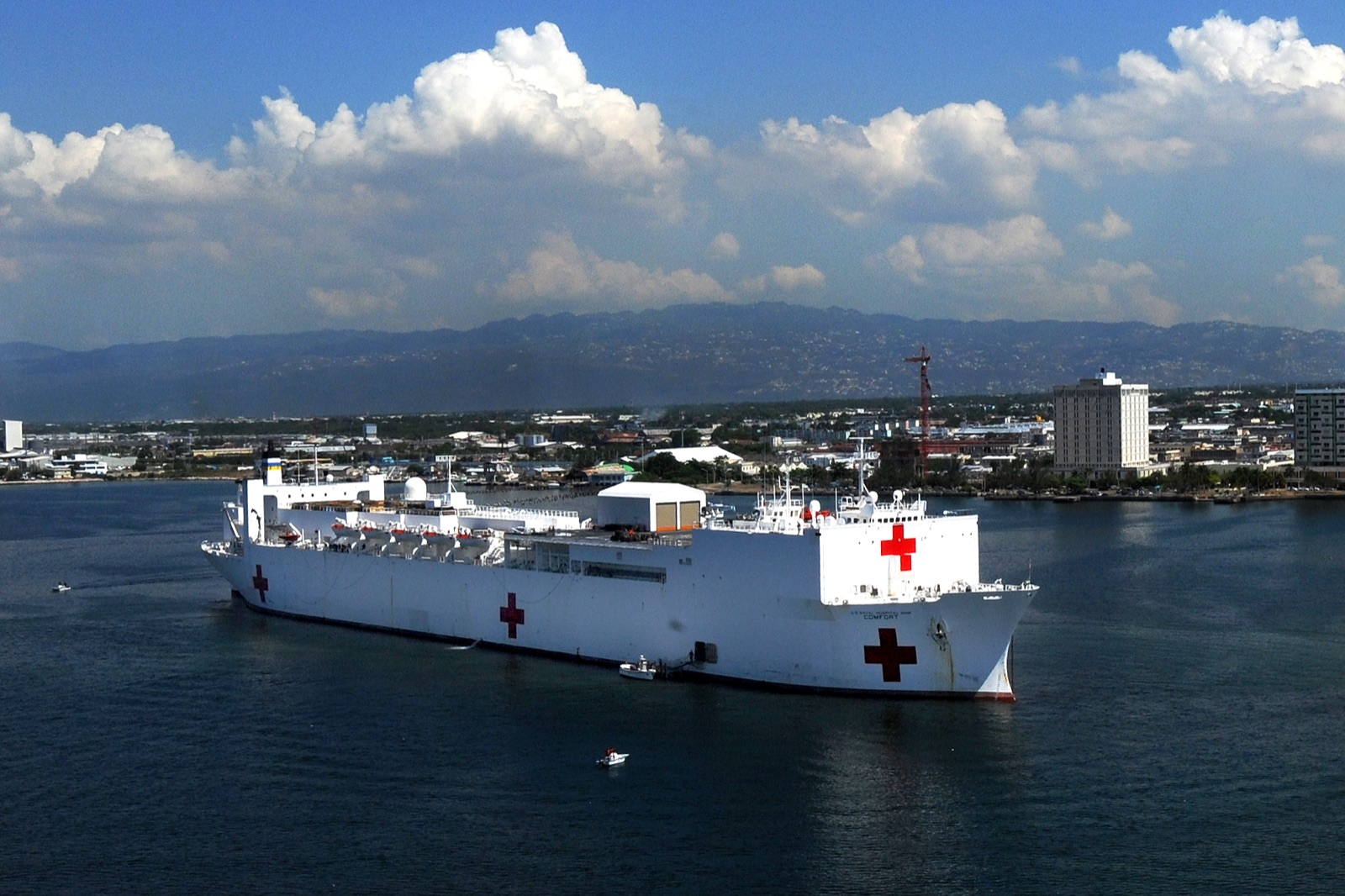
Photo: Kingston Harbour, Jamaica. Staff Sgt. Alesia D. Goosic, Public domain, via Wikimedia Commons.
Ready to ship your freight?
