
On this page13
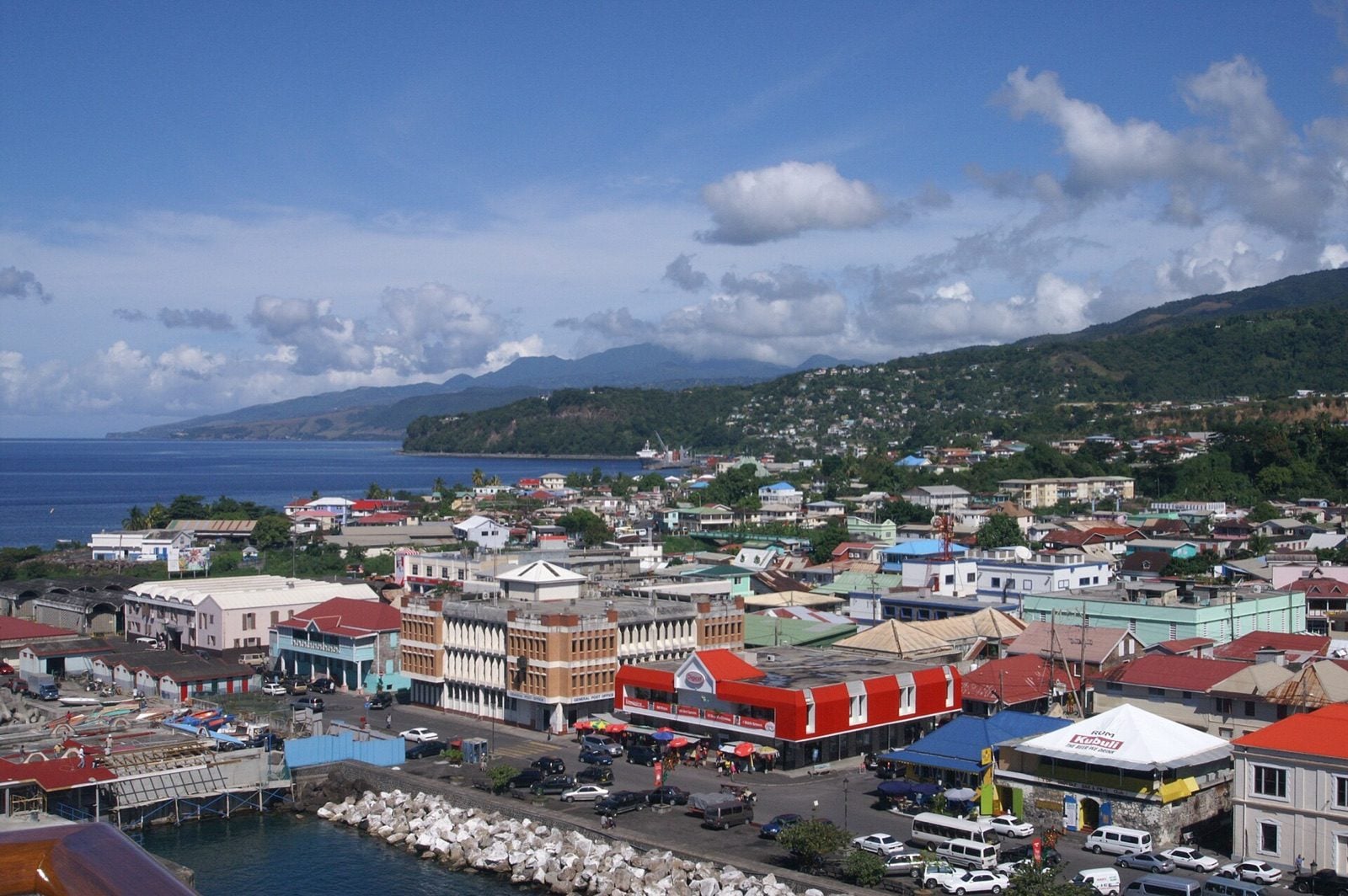
You ship to Dominica by ocean LCL or FCL into Woodbridge Bay Port or by air into Douglas-Charles (DOM): LCL from Miami takes about 4 days, and cargo clears Customs and Excise on ASYCUDA World with CARICOM CET duty, a 4% service charge, an Environmental Levy and 15% VAT. Dominica is a rugged, mountainous island with little flat land, and its logistics reflect that. Almost all commercial cargo comes through Woodbridge Bay, just north of Roseau, and from there it travels on winding coastal roads to towns and project sites across the island. The Dominica Air and Sea Ports Authority (DASPA) does all container handling itself, from discharge to storage and delivery. Since Hurricane Maria in September 2017, reconstruction and climate-resilient building have shaped what the island imports: roofing systems, hurricane-rated windows and doors, structural steel, cement and generators move alongside the food and consumer goods any small island needs. The country is also building a new international airport at Wesley, targeted for completion in 2027. Since October 1, 2026, VAT and excise on imports are calculated on the CIF value alone instead of compounding on duty and charges.
Dominica Shipping at a Glance: Transit Times and Options
LCL from Miami reaches Woodbridge Bay in about 4 days, air freight to Douglas-Charles takes 1 to 3 days, and Asian cargo needs 35 to 50 days through a transshipment hub.
| Route & mode | Indicative cost | Transit | Best for |
|---|---|---|---|
| Miami to Woodbridge Bay, ocean LCL | About $1,220 for 5 CBM / 1,500 kg (IWF published LCL rate, September 2026; excludes destination duties, taxes and local charges) | About 4 days (CFS Miami to port) | Retail stock, hardware, project supplies under 15 CBM |
| Miami to Woodbridge Bay, ocean FCL 20ft / 40ft | On request | 4 to 10 days, depending on direct or relay sailing | Building materials, food, equipment |
| Miami to Douglas-Charles (DOM), air freight | On request | 1 to 3 days, depending on flight connections | Spare parts, medical supplies, urgent cargo |
| China / Asia to Dominica, ocean (via transshipment) | On request | 35 to 50 days, depending on the feeder connection | Steel, roofing, fixtures, consumer goods |
| Europe (UK / Netherlands) to Dominica, ocean | On request | 12 to 20 days on the direct UK and Netherlands service | UK and EU goods, vehicles, machinery |
Rates move with fuel, season and space. Use the table for planning and request a firm quote.
How to Ship to Dominica: Step by Step
Shipping to Dominica takes eight steps, from HS classification to collection at Woodbridge Bay inside the 7-day free period.
- Classify and check permits. Classify the goods on the CARICOM tariff and confirm Ministry of Agriculture, Veterinary Division or police permits before the cargo sails.
- Choose the mode and Incoterm. LCL from Miami fits loads under 15 CBM, FCL fits full loads, flat racks or breakbulk fit long steel and trusses, and air to Douglas-Charles fits urgent cargo.
- Book from Miami or origin. Deliver to the Miami CFS for the weekly consolidation to Woodbridge Bay, or book FCL space on a direct or relay sailing.
- Prepare the documents. Issue the commercial invoice with HS codes and Incoterm, a packing list with weights and dimensions, the bill of lading or air waybill, and any certificate of origin, permit or concession approval.
- File the US export data. File the Electronic Export Information in AES when any Schedule B line exceeds $2,500 or the goods need an export license.
- Lodge the entry in ASYCUDA World. A customs broker declares the goods within 14 days of landing for sea cargo and 7 days for air cargo.
- Pay duty and taxes. Duty, the 4% Customs Service Charge, the Environmental Levy, excise and 15% VAT (on CIF since October 1, 2026) are assessed and paid.
- Release and deliver. DASPA releases the cargo after payment; collect inside the 7 rent-free days and plan the road leg to Roseau or the project site.
Most of the bookings in step 3 start in Miami.
Shipping From the USA to Dominica
US cargo for Dominica is consolidated in Miami. Vendors across the US deliver to the Miami CFS, freight is received, measured and documented, and it sails for Woodbridge Bay directly or via a relay port. On the IWF consolidation service, a 5 CBM / 1,500 kg shipment moves FCA Miami CFS to Dominica in about 4 days, at about $1,220 (IWF published LCL rate, September 2026; excludes destination duties, taxes and local charges).
Most Dominican importers buy below container volume, so LCL consolidation is the standard mode: one booking, one house bill and one customs entry for goods bought from several US suppliers. For contractors and distributors with larger orders, container shipping to Dominica in 20ft and 40ft boxes makes sense once volume passes 15 CBM, and earlier for heavy loads such as rebar, cement products or tiles, which hit the weight limit before they fill the space. Long or oversized items (structural steel, roof trusses, poles) move as breakbulk or on flat racks; our comparison of breakbulk vs container shipping sets out the trade-offs.
Air freight lands at Douglas-Charles Airport (DOM) on the northeast coast, a long drive from Roseau. Book air freight to the Caribbean for spare parts, medical and lab supplies and anything where a delay costs more than the air premium, and add the road leg to Roseau or the project site to the plan. Asian and European cargo follows longer routings into the same port.
Shipping From China, Asia and Europe to Dominica
Asian cargo reaches Dominica only through a transshipment hub, while Europe has a direct fortnightly liner service to Roseau.
Shipping From China and Asia to Dominica
Asian cargo reaches Dominica by transshipment, with no direct mainline service. Containers from Chinese and Southeast Asian ports connect at a hub such as Kingston, Cartagena, the Panama Canal ports or the French Caribbean, then continue on a feeder vessel to Woodbridge Bay; our overview of Caribbean transshipment hubs explains how those connections work. Port to port transit runs 35 to 50 days, and a missed feeder connection adds a week.
Dominica's Asian imports are weighted toward building materials, steel products, roofing, fixtures and consumer goods. Full containers can move direct via a hub. For smaller orders, routing into Miami first lets the importer consolidate Asian and US goods into one shipment, inspect or relabel cargo, and file one entry in Dominica instead of two.
Shipping From Europe to Dominica
Europe has a direct fortnightly link: Geest Line serves Dominica from Portsmouth (UK) and Vlissingen (Netherlands), with about 12 days of sailing time to Roseau. Plan on 12 to 20 days port to port depending on the sailing. The service carries dry and reefer containers, breakbulk, vehicles and project equipment. Cargo from continental Europe also routes through Martinique or Guadeloupe on the larger carriers' Caribbean networks; our guide to shipping to Martinique covers those French Caribbean hubs on either side of Dominica. Every origin then discharges at the island's single main port.
Which Ports and Airports Handle Cargo in Dominica?
Woodbridge Bay is the only port that matters for most commercial cargo, and Douglas-Charles is the air cargo gateway until the new international airport opens.
- Woodbridge Bay Port, near Roseau: the main commercial cargo port, on the west coast just north of the capital, with container storage capacity of about 1,500 TEU and general cargo sheds. DASPA handles all container loading, discharge, storage and delivery. UN/LOCODE DMRSU (Roseau).
- Portsmouth, northwest coast: receives smaller cargo vessels and occasional containers, which are discharged directly onto trucks; useful for the north of the island.
- Roseau cruise terminal: passenger traffic, not cargo.
- Douglas-Charles Airport (DOM), Melville Hall: the current international air cargo gateway.
- Canefield Airport (DCF), near Roseau: small regional aircraft.
- Dominica International Airport, Wesley (under construction): a 2,850 m runway designed for wide-body aircraft, funded under the Citizenship by Investment program and targeted for completion in 2027.
Cargo leaves any of these gateways only after customs release.
How Does Customs Clearance Work in Dominica?
Imports into Dominica clear through the Customs and Excise Division of the Ministry of Finance on ASYCUDA World, and the Invest Dominica Authority customs guide sets the declaration deadlines at 14 days after landing for sea cargo and 7 days for air cargo. Entries are classified on the HS-based CARICOM tariff and valued on CIF.
- Manifest and arrival: the carrier or vessel agent files the manifest; for LCL, the house bills link each consignment to its importer.
- Declaration: a customs broker lodges the entry in ASYCUDA World with the commercial invoice, bill of lading and permits. Using a broker is recommended; a well-prepared entry clears the same day when it is not selected for inspection.
- Assessment: classification under the CARICOM tariff, valuation on CIF, and calculation of duty, service charge, levy, excise and VAT.
- Inspection: selected cargo is examined; building materials and machinery with clear specifications move faster.
- Release and delivery: after payment, DASPA releases the cargo. Goods can stay at the port for 7 days without rent; storage charges apply after that.
The 7-day free period is short. Plan documents and payment so collection happens inside it, starting with the duty and tax calculation.
What Are the Import Duties and Taxes in Dominica?
A non-CARICOM shipment into Dominica pays five layers: CET import duty, a 4% Customs Service Charge, an Environmental Levy, excise on specific goods and 15% VAT. Dominica is a CARICOM and OECS member, so the duty line follows the CARICOM Common External Tariff:
- Import duty (CARICOM Common External Tariff): set by HS code on CIF value. CARICOM-origin goods with a certificate of origin enter duty free.
- Customs Service Charge: 4% of CIF value on almost all goods, including many duty-free lines.
- Environmental Levy: on CIF value, at 1% on most goods and 1.5% on goods packed in plastic, glass, metal, paperboard or wooden containers. Used vehicles pay fixed amounts that rise with age (EC$3,000 for 5 to 10 years, EC$4,000 for 10 to 15 years, EC$10,000 above 15 years).
- Excise tax: on alcohol, tobacco, fuel and motor vehicles.
- VAT at 15%: charged on taxable imports at the port of entry.
The calculation base changed on October 1, 2026. Under the 2026/2027 budget, excise tax and VAT on imports are now calculated solely on the CIF value, ending the practice of applying them on top of duty and other customs charges, as KPMG's summary of the Dominica budget sets out. For importers of dutiable goods this lowers the effective VAT bill, so landed-cost models built before October 2026 should be recalculated. The temporary VAT and import-duty relief on selected essential foods ran until September 30, 2026, according to the Government of Dominica announcement published by ECLAC; check with your broker whether it has been renewed before pricing food imports.
Several targeted exemptions exist: renewable energy equipment is duty free, agricultural vehicles are exempt, manufacturers can import production machinery and labeling materials without duty, and qualifying new businesses can obtain VAT and duty concessions. All of these need approval before arrival. The CET duty line is common to the OECS, so the same HS code carries the same base duty when shipping to St Lucia or shipping to Antigua and Barbuda; the national charges stacked on top are what differ. For a regional comparison of duty structures, see Caribbean import duties and taxes.
What Documents Are Required to Ship to Dominica?
A standard commercial import into Dominica needs an invoice, a packing list, the transport document and, where relevant, origin and permit papers.
- Commercial invoice with HS code, values, currency and Incoterm
- Packing list with weights and dimensions (essential for long and heavy building materials)
- Bill of lading or air waybill; house bill for LCL
- Certificate of origin for CARICOM preference
- Import licence or permit where required
- Phytosanitary or veterinary certificate for plants, produce and animal products
- Exemption or concession approval where a waiver is claimed
- Broker authorization for the ASYCUDA World entry
The permit lines apply to a defined set of restricted goods.
Restricted Goods and Import Permits in Dominica
Food, plants, animals, firearms, vehicles and hazardous goods need prior permits or special handling in Dominica, so confirm requirements before the cargo sails.
- Agricultural products: plants, soil, fresh produce, meat and dairy require permits from the Ministry of Agriculture and health certificates from the exporting country.
- Wood products and packaging: lumber must travel with treatment documentation, and pallets and crates must meet ISPM 15 wood packaging requirements to avoid quarantine holds.
- Live animals: need an import permit from the Veterinary Division before shipment.
- Motor vehicles: high import duty and excise, plus an environmental levy that rises steeply with vehicle age (see Duties and taxes).
- Firearms and ammunition: prior police authorization.
- Hazardous cargo: paints, solvents, compressed gases and batteries must be declared under IMDG or IATA rules; confirm acceptance before booking LCL.
- Oversized cargo: check road clearances and weight limits from Woodbridge Bay to the site before booking flat racks.
LCL, FCL or Air Freight to Dominica: Which to Choose?
LCL from Miami is the right default for Dominica below 15 CBM; above that, compare a 20ft or 40ft container, and keep air for urgent cargo.
- Under 15 CBM: LCL from Miami, about 4 days to Dominica.
- 15 to 28 CBM, or dense cargo such as cement, tiles or rebar: a 20ft container, which fills on weight before volume.
- Above 28 CBM, or bulky light cargo such as insulation and roofing panels: a 40ft or 40ft high cube.
- Long or oversized items: flat rack or breakbulk.
- Air: urgent parts, medical supplies and anything blocking a project.
For sites in the north, ask whether discharge at Portsmouth is possible; it can save a long road haul from Woodbridge Bay.
Key Industries Shipping Freight to Dominica
Construction and reconstruction lead the non-food import flow. Since Hurricane Maria in 2017, Dominica has pursued a climate-resilient rebuilding program, and housing, schools, hospitals, roads and public buildings are being rebuilt or upgraded to stronger standards. That drives steady imports of roofing systems and fasteners, impact-rated windows and doors, structural steel, cement, generators, solar and battery systems and water storage. The new international airport and related infrastructure add heavy equipment and materials.
Food and consumer goods make up the other major flow, largely from US distributors through Miami. Exports are smaller: bananas and other agricultural products, bottled water, soaps and other light manufactures, shipped mainly to regional markets. Because building materials are the most technical shipments on this lane, our next guide covers shipping hurricane-resilient building materials to Dominica.
Choosing a Freight Forwarder for Dominica
The best shipping service for Dominica is a forwarder that handles heavy, awkward cargo as well as routine consolidation. Building projects mix dense loads, long items and small parts from many suppliers, and each wrong declaration or missing permit risks storage once the 7-day free period runs out. Interworld Freight was founded in Miami in 1992 and runs ocean FCL and LCL, air freight, Miami warehousing and customs coordination, with coverage on every major trade lane into the Caribbean. We consolidate supplier deliveries in Miami, choose the right equipment (dry box, high cube or flat rack) and prepare documents so the Dominican broker can file a clean ASYCUDA World entry. Request a quote and we answer within one business day.
Frequently Asked Questions
How long does shipping to Dominica take from Miami?
LCL cargo moves from the Miami CFS to Dominica in about 4 days on the IWF consolidation service. Air freight to Douglas-Charles takes 1 to 3 days, plus clearance and the road leg to Roseau.
How much does it cost to ship LCL to Dominica?
IWF's published LCL rate for 5 CBM / 1,500 kg from Miami to Dominica is about $1,220 (September 2026). It excludes duty, VAT, the Customs Service Charge, the Environmental Levy and local port and broker charges. For commercial cargo below 15 CBM, LCL consolidation through Miami is the cheapest way to ship from the USA.
Which port handles cargo in Dominica?
Woodbridge Bay, just north of Roseau, handles almost all commercial cargo, with DASPA doing the container handling. Portsmouth in the northwest receives smaller vessels and occasional containers.
What are the import duties in Dominica?
Dominica charges CARICOM Common External Tariff duty by HS code, plus a 4% Customs Service Charge, an Environmental Levy of 1% or 1.5%, excise on specific goods and VAT at 15%. Since October 1, 2026, VAT and excise are calculated on the CIF value alone. CARICOM-origin goods with a certificate of origin are duty free.
How long can cargo stay at the port in Dominica?
Goods can stay at the port for 7 days without rental charges. After that, storage accrues, so have the declaration and payment ready on arrival.
What items are exempt from customs duty in Dominica?
Renewable energy equipment is duty free, agricultural vehicles are exempt, and manufacturers can import production machinery, packaging and labeling materials without duty. Approved new businesses can obtain VAT and duty concessions. Every concession must be approved before the cargo arrives.
What documents are needed to import goods into Dominica?
Importing into Dominica requires a commercial invoice with HS codes and Incoterm, a packing list and the bill of lading or air waybill. Add a certificate of origin to claim CARICOM preference, plus any import licence, phytosanitary or veterinary certificate the goods require.
Can I ship building materials from China to Dominica?
Yes. Containers transship at a regional hub and take 35 to 50 days. Mixed or smaller orders move better via Miami, consolidated with US-sourced materials.
Photo: Roseau and Woodbridge Bay seaport, Dominica. reivax from Washington, DC, USA, CC BY-SA 2.0, via Wikimedia Commons.
Ready to ship your freight?
