
On this page11
Panama clears imports through the Autoridad Nacional de Aduanas (ANA), which processes declarations in its SIGA system. Duties are assessed on the CIF value and capped at 15% for nearly every product, ITBMS (Panama's 7% transfer tax) applies on top, and the US-Panama Trade Promotion Agreement removed duties on about 87% of US exports.
Panama is a low-tariff market, so the duty rate is rarely where the work is. Classification, origin evidence and permits for food, pharmaceutical and agricultural lines take the time. Interworld Freight moves full containers from Miami under its container shipping to Panama service, and the clearance rules below apply to that cargo.
Panama Customs at a Glance
The table covers a commercial import from the United States. Rates depend on the HS code, so confirm the tariff line before quoting landed cost.
| Item | Panama |
|---|---|
| Customs authority | Autoridad Nacional de Aduanas (ANA) |
| Electronic system | SIGA |
| Tariff framework | Harmonized System, with RECAUCA modifications; maximum duty of 15% for most products |
| Trade agreement with the US | US-Panama Trade Promotion Agreement (TPA), in force since October 31, 2012 |
| Valuation basis | CIF value, under the WTO Customs Valuation Agreement |
| VAT | ITBMS 7% on CIF plus duty and other customs charges |
| Other import levies | Selective consumption tax (ISC) on specific goods |
| Importer ID | Commercial license for the business activity; no import license |
| Broker requirement | Customs brokers (corredores de aduana); ANA publishes the requirements |
| Declaration | Pedimento, filed with the regime declared |
How Does Customs Clearance Work in Panama?
Every good entering or leaving Panama is assigned a customs regime, and the regime is declared on an official document, the pedimento, according to the Autoridad Nacional de Aduanas. ANA gives access to SIGA from its site, which also links the customs broker requirements and a broker search tool.
- Classify the goods. Assign the HS code in the official tariff. The code sets the duty, the selective tax if any, and the permits.
- Secure permits and certificates. Sanitary and phytosanitary certificates, free-sale certificates and special permits must be ready before shipment.
- Choose the regime. For goods that stay in Panama, that is definitive import. Reexport, transshipment and internal transit are separate regimes with their own paperwork.
- Appoint a customs broker (corredor de aduana). The broker receives the invoice, the transport document and the origin evidence.
- Transmit the declaration in SIGA. The broker declares value, classification, origin and the preference claimed.
- Pay duty and ITBMS. The amounts are calculated on the declared CIF value and paid before release.
- Release and delivery. After payment and any inspection, ANA releases the cargo to the consignee.
Valuation drives everything else. According to the Panama customs regulations chapter of the Country Commercial Guide, duties are assessed ad valorem on the declared CIF value, and historical price information is sometimes used as a reference. Understated freight or insurance on an FOB invoice is a valuation risk, not a saving. Our glossary entry on customs clearance explains how the steps fit together.
Documents Required for Panama Customs
Two documents are essential according to the Country Commercial Guide; the rest depend on the product.
- Original commercial invoice.
- Bill of lading for ocean cargo or air waybill for air cargo.
- Packing list matching the invoice.
- Certificate of origin to claim TPA preference. Under Article 4.15 of the agreement, the claim can rest on a certification by the importer, exporter or producer, or on the importer's own knowledge of origin. The certification needs no prescribed format but must carry the certifier's name, the HS classification and description, information showing the good is originating and the date. A blanket certification covers multiple shipments of identical goods for up to 12 months, and it is valid for four years. It can be in English or Spanish, although the customs authority may require a translation.
- Sanitary or phytosanitary certificates for food and agricultural products.
- Certificate of free sale for pharmaceutical products.
- Special import permits for firearms, ammunition and fertilizers.
- Pedimento declaring the customs regime of the goods.
Panama Import Duty Rates by Product Category
Panama lowered its tariffs to a maximum of 15%, except for a few agricultural products, with an overall average of 12%, according to the Panama import tariffs chapter. The exact rate sits in the official tariff for the HS code.
| Product category | Duty (non-preferential) | US origin under the TPA |
|---|---|---|
| Most industrial and consumer goods | Up to 15%, set by HS code | 0% since the ten-year phase-out ended |
| Agricultural and food products | Up to 15%, with higher rates on some sensitive lines | Duty phased out over time; some lines run to January 1, 2031 |
| Pharmaceuticals, food, school supplies | Duty by HS code; ITBMS exempt | Same, with ITBMS exemption kept |
| Firearms, ammunition, fertilizers | Duty by HS code | Special permit required regardless of origin |
The TPA removed duties on about 87% of US exports on implementation, covering nearly all industrial and consumer goods, according to the trade agreements chapter. The remaining non-agricultural tariffs phased out over ten years, and some agricultural lines run to January 1, 2031. Confirm the schedule line for your HS code before promising a duty-free price.
How to Calculate Import Duty and Taxes in Panama
The order is short: CIF value, duty, then ITBMS on the sum of the two. The Country Commercial Guide states that the 7% ITBMS applies to the CIF value plus import duty and other handling charges, and the DGI's ITBMS form defines the import base as the CIF value plus all customs taxes and duties.
- Customs value: invoice value plus freight and insurance to Panama (CIF).
- Duty: CIF x duty rate.
- Selective consumption tax (ISC): only on listed goods; confirm the rate for your HS code.
- ITBMS: (CIF + duty + handling charges + any selective tax) x 7%.
Illustrative example (round numbers, not a quote). A non-preferential shipment with CIF USD 10,000, a duty rate of 10%, no selective tax and handling charges ignored for simplicity:
- Duty: 10,000 x 10% = USD 1,000
- ITBMS base: 10,000 + 1,000 = USD 11,000
- ITBMS: 11,000 x 7% = USD 770
- Total taxes: USD 1,770
If the same goods qualify as US origin under the TPA with duty at 0%, the base is USD 10,000 and the ITBMS is USD 700. The saving is the duty plus the ITBMS charged on that duty, so on high-value lots a clean origin certificate pays for itself.
Importer Registration and Customs Brokers in Panama
No import license is required in Panama. Any company with a commercial license can import, and a person or company doing commercial or industrial activity needs a commercial or industrial license, according to the import requirements chapter of the Country Commercial Guide.
ANA publishes the requirements for the customs broker (agente corredor de aduanas) and a broker search tool on its site. Match the broker to your product. A pharmaceutical or food importer needs one who handles health-authority paperwork daily, and our glossary entry on the customs broker explains the role. If you source in Asia, our guide to shipping from China to Panama covers the origin side.
Exemptions, Free Zones and Special Regimes in Panama
ANA lists several regimes beyond definitive import: reexport certificates, overland transshipment (transbordo terrestre), internal transit (tránsito interno) and tariff-rate quotas (contingentes arancelarios). Each has its own filing and guarantee rules, so declare the regime before the goods arrive.
The Colón Free Zone is a separate subject, and our guide to the Colón Free Zone and re-export from Panama covers it in full.
For preferences, the TPA is the main route for US suppliers. Panama also has free trade agreements covering goods and services with El Salvador, Costa Rica, Honduras, Guatemala and Nicaragua, so goods from those origins can qualify for preferential treatment with the right origin evidence.
How Panama Relates to DUCA
The Country Commercial Guide says Panama's tariff nomenclature carries the RECAUCA modifications tied to the Central American customs union, and ANA lists the DUCA among its online services. For US cargo, the pedimento with the TPA claim is the declaration this guide follows; ask your broker which format applies to regional shipments. Our explainer on DUCA, the Central American single customs declaration covers the three forms.
Import Permits and Licensing Agencies in Panama
Permits depend on the product. The Country Commercial Guide names the documents, and the sanitary and phytosanitary certificates come from the competent health and agriculture authorities.
- Food and agricultural products: sanitary or phytosanitary certificates.
- Pharmaceutical products: certificate of free sale.
- Firearms, ammunition and fertilizers: special import permits.
- Preferential claims: certificate of origin under the TPA.
Because the guide does not name the issuing agency for each permit, ask your broker which health or agriculture authority handles your HS code before the goods ship. Permit validity and format change by product, and a permit issued after the declaration is too late.
Common Customs Delays in Panama and How to Avoid Them
Four problems cause most holds.
- Undervaluation. ANA checks declared CIF against price references. Missing freight or insurance on an FOB invoice triggers a valuation query.
- HS misclassification. The code sets the duty and the permits. Disputes over a code reopen the whole declaration.
- Incomplete origin evidence. A TPA claim needs the data elements Article 4.15 lists. Without them the importer pays full duty.
- Missing health certificates. Food and pharmaceutical cargo without the right certificate waits in the terminal while storage accrues.
Send the final document set before the vessel or flight arrives, because storage and demurrage run while the broker waits for papers.
Clearing Cargo to Panama With Interworld Freight
Interworld Freight has operated from Miami since 1992. The Miami hub and warehouse receive and consolidate US cargo for ocean FCL and LCL and for air freight, and we coordinate customs with licensed brokers at destination. Our guide to shipping to Panama covers the freight side. We answer quotes within one business day.
Frequently Asked Questions
What is the import duty in Panama?
Panama caps its tariff at 15% for most products, with an overall average of 12%, and assesses duty on the CIF value. Some agricultural lines sit above that cap. US-origin industrial and consumer goods enter duty free under the TPA.
What is ITBMS in Panama?
ITBMS is Panama's transfer tax, 7% on imports. It applies to the CIF value plus duty and other customs charges. Pharmaceuticals, foods and school supplies are exempt.
Do I need an import license in Panama?
No. Panama requires no import license, and any company with a commercial license can import. Firearms, ammunition and fertilizers need special permits.
What is SIGA?
SIGA is the Sistema Integrado de Gestión Aduanera, the electronic system that ANA uses to process customs declarations in Panama.
Does Panama have a free trade agreement with the United States?
Yes. The US-Panama TPA took effect on October 31, 2012, and removed duties on about 87% of US exports on implementation. Some agricultural lines phase out over a longer period.
Do I need a certificate of origin in Panama?
Under the TPA, a certificate of origin may be required, although the importer's knowledge of origin can be enough. It has no fixed format but must contain the elements listed in Article 4.15 of the agreement.
How does Panama relate to the Central American customs union?
Panama's tariff nomenclature carries RECAUCA modifications tied to the Central American customs union, and ANA lists the DUCA among its online services. Ask your broker which declaration applies to a given shipment.
Which documents does a Panama import need at minimum?
An original commercial invoice and a bill of lading or air waybill. Food, agricultural and pharmaceutical goods add sanitary, phytosanitary or free-sale certificates.
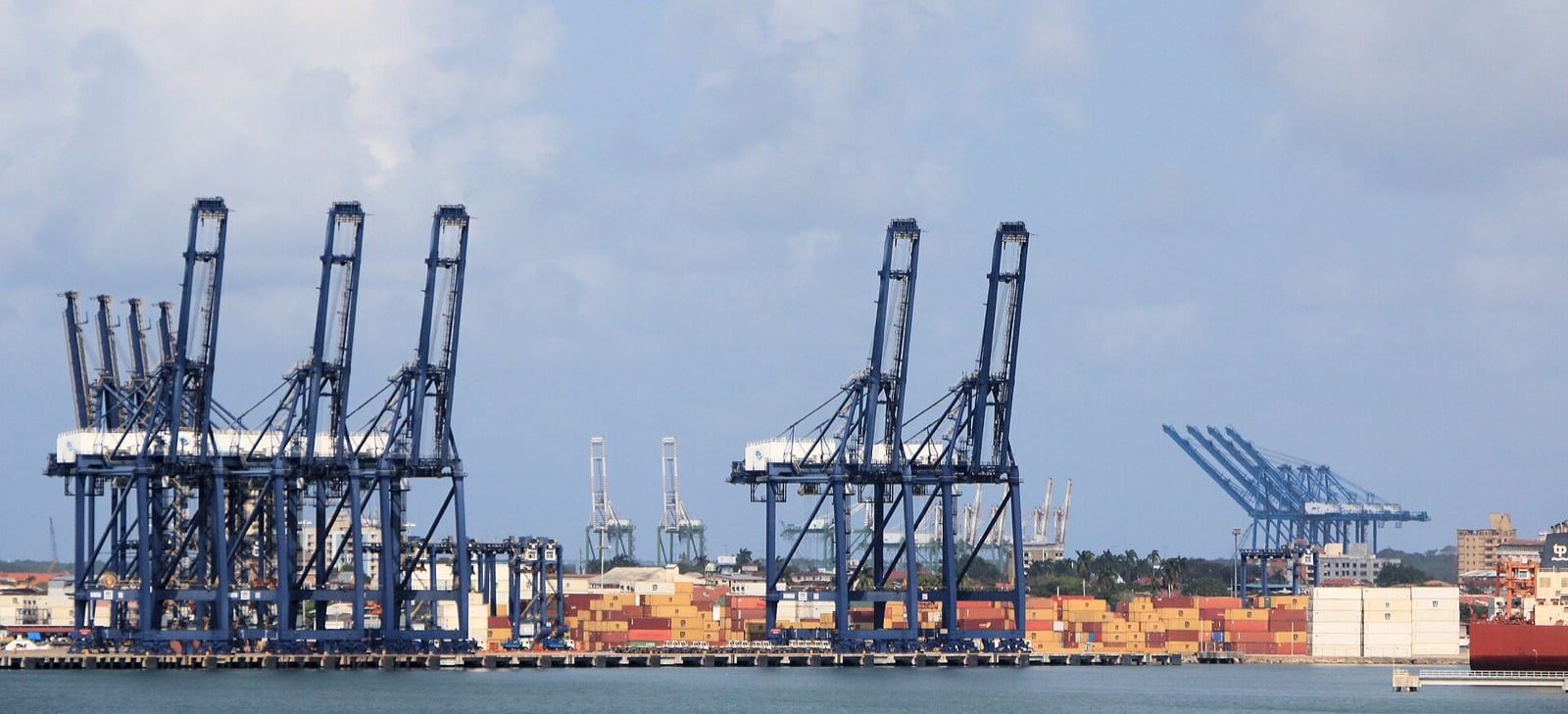
Photo: Container port, Colón, Panama. ImagePerson, CC BY-SA 4.0, via Wikimedia Commons.
Ready to ship your freight?
