
On this page13
Ship to Venezuela, after OFAC and BIS screening, by ocean FCL or LCL into Puerto Cabello or La Guaira, or by air into Caracas (CCS): 7 to 14 days by sea from Miami, 1 to 3 by air, SENIAT clearance on SIDUNEA World, 16% IVA, 5% to 35% duty.
Venezuela is a market where compliance comes before freight. Before a shipper compares rates or transit times, it has to confirm that the transaction is permitted under US sanctions rules, that no party in the chain is a blocked person, and that the goods do not require an export license. Once that check is done, the logistics are familiar: Venezuela is close to Miami, Puerto Cabello and La Guaira are within a week to ten days of South Florida by sea, and food, medicine and consumer goods make up a large share of the cargo moving south. Clearance runs through the Servicio Nacional Integrado de Administración Aduanera y Tributaria (SENIAT), and importers and suppliers who handle the compliance steps first find the lane workable and predictable.
Venezuela Shipping at a Glance: Transit Times and Options
Ocean freight from Miami reaches Puerto Cabello in 7 to 14 days port to port, air freight to Caracas takes 1 to 3 days depending on routing, and Asian cargo needs 35 to 50 days via transshipment hubs.
| Route & mode | Transit | Best for |
|---|---|---|
| Miami to Puerto Cabello / La Guaira, ocean LCL | 10-20 days, including consolidation | food and consumer goods restocks under 15 CBM |
| Miami / US East Coast to Puerto Cabello, ocean FCL | 7-14 days port to port, depending on the service | full loads of food, consumer goods, spare parts |
| Miami to Caracas (CCS), air freight | 1-3 days, depending on available routings | medicines, spare parts, urgent cargo |
| China / Asia to Puerto Cabello, ocean FCL | 35-50 days, via transshipment hubs | consumer goods, machinery, inputs |
| Europe to Puerto Cabello / La Guaira, ocean FCL | 18-30 days, direct or via hubs | food products, machinery, chemicals |
Transit times are indicative and depend on carrier schedules, which change more frequently on this lane than on others in the region. Venezuela is not part of the IWF published LCL rate table, so request a quote for current pricing. On this lane the schedule only starts once the compliance step at the top of the process is closed.
How to Ship to Venezuela: Step by Step
Shipping to Venezuela follows eight steps, and the first one is a US compliance check, not a booking.
- Screen the transaction. Check every party (buyer, consignee, notify party, banks, intermediaries) against the SDN List, and confirm the current OFAC general licenses and BIS export classification for the goods.
- Classify the goods and check the legal regime. Assign the HS code under the Arancel de Aduanas; its legal regime code states whether a SACS, INSAI or COMEX permit is required before arrival.
- Confirm the importer. The consignee needs a RIF and a licensed Venezuelan customs agent.
- Choose mode and Incoterm. LCL or FCL into Puerto Cabello or La Guaira, or air into CCS, subject to the routings available at booking.
- Book from Miami and prepare documents. Commercial invoice, packing list, bill of lading or air waybill, certificate of origin, the importer's RIF and any permits, plus the internal sanctions screening record.
- File the US export. EEI is filed in AES where required (shipments over $2,500 per Schedule B line or any licensed cargo), with the export license number when one applies.
- Clear customs on SIDUNEA World. The customs agent files the declaration with SENIAT, and the selectivity module assigns release, documentary review or physical inspection.
- Pay duty, IVA and fees, then deliver. Duty on the CIF value, 16% IVA and the customs service fee are paid before release, and the cargo moves to Valencia, Caracas or the final consignee.
Shipping From the USA to Venezuela
US cargo for Venezuela moves through Miami after a sanctions and export control check, then sails to Puerto Cabello or La Guaira in seven to fourteen days. The compliance step comes first.
Compliance check before booking. This is a compliance checklist, not legal advice. US persons shipping to Venezuela must follow the Venezuela Sanctions Regulations (31 CFR Part 591), administered by the Treasury Department's Office of Foreign Assets Control under its Venezuela-related sanctions program, and US export controls administered by the Commerce Department's Bureau of Industry and Security (BIS).
- The Venezuelan people are not subject to comprehensive US sanctions, according to OFAC's Venezuela sanctions FAQs (FAQs 519 and 520). Exports to Venezuela are possible when the transaction does not involve sanctioned persons or prohibited activities.
- Food and medicine: OFAC states that no specific license is needed to send US-origin food or medicine to Venezuela as long as the transaction does not involve property or interests in property of a Specially Designated National (SDN), and the export is authorized by BIS.
- General licenses: OFAC General License 4C authorizes certain transactions related to the export or reexport of agricultural commodities, medicine, medical devices and related parts. OFAC also issues and amends sector-specific general licenses; on September 28, 2026, for example, it issued amended General Licenses 46E (Venezuelan-origin oil and petrochemical products), 48D (supply of certain items and services to Venezuela) and 49B (contingent contracts for certain investment). Always check the current version on OFAC's website before shipping.
- Screen every party: buyer, consignee, notify party, banks, freight agents and any intermediary should be screened against the SDN List and other US restricted party lists.
- Export classification: confirm the export control classification of the goods with BIS rules; some items need an export license regardless of the buyer.
Licensing positions change, so the check has to be repeated for each new customer and periodically for repeat shipments.
Miami is the main US gateway for Venezuela-bound cargo. Suppliers deliver to Miami warehouses, where food, consumer goods and spare parts are consolidated into containers for Puerto Cabello or La Guaira. Major container lines and regional carriers operate services to Puerto Cabello, several of them as part of Caribbean feeder networks, and port-to-port transit from South Florida runs seven to fourteen days depending on the service and any intermediate calls.
LCL consolidation suits the many Venezuelan importers who buy from several US suppliers in volumes below a full container; our explainer on how LCL container shipping works covers the process. Full loads move as container shipping to Venezuela, with 40ft high cubes the standard for light consumer goods and 20ft containers for dense products such as canned food or oils. Food shipments benefit from storage that meets food safety standards while orders are consolidated, which is what food-grade warehousing in Miami provides.
Air cargo enters through Simón Bolívar International Airport (CCS) at Maiquetía, which serves Caracas. Routings and capacity between the US and Venezuela have changed several times in recent years, so confirm the available service, direct or via a connecting hub, at the time of booking. Air suits medicines, medical supplies, electronics and spare parts. Distributors that also sell across the western border plan each market separately: shipping to Colombia runs on DIAN's 48-hour advance declaration and a trade agreement with the US, and carries no sanctions screening layer.
Shipping From China, Asia and Europe to Venezuela
Asian cargo reaches Venezuela through transshipment hubs in the Caribbean or Panama, in 35 to 50 days from Chinese ports to Puerto Cabello. The same hub-and-feeder pattern serves Venezuela's eastern neighbor, as our guide to shipping to Guyana shows for Georgetown. LCL from Asia takes longer because it waits for consolidation at origin and the hub connection. Buyers who also source in the US can route Asian goods through Miami, complete sanctions screening and document checks there, and ship one consolidated container south.
European cargo arrives at Puerto Cabello and La Guaira on direct or relayed services in 18 to 30 days. European exporters should note that EU and US sanctions rules differ; any US person involved in the transaction, including a US-based forwarder or bank, brings US rules into play. Whatever the origin, the cargo ends at one of four Venezuelan ports or the Maiquetía airport.
Which Ports and Airports Handle Cargo in Venezuela?
Puerto Cabello is Venezuela's main container port, La Guaira serves Caracas, and Simón Bolívar International (CCS) at Maiquetía is the main air cargo gateway.
- Puerto Cabello (VEPBL), Carabobo state: Venezuela's main container port and the closest to the industrial center of Valencia. Served by major container lines and regional carriers.
- La Guaira (VELAG), La Guaira state: the port closest to Caracas, handling containers and general cargo. Confirm current container service with the carrier at booking.
- Maracaibo (VEMAR), Zulia state: serves western Venezuela.
- Guanta, Anzoátegui state: serves the eastern region.
- Simón Bolívar International Airport (CCS), Maiquetía: the main air cargo gateway for Caracas.
Port operations are administered by Bolivariana de Puertos (Bolipuertos).
How Does Customs Clearance Work in Venezuela?
Venezuelan imports clear through the Servicio Nacional Integrado de Administración Aduanera y Tributaria (SENIAT), the national tax and customs authority, via a licensed customs agent filing on SIDUNEA World, the UNCTAD ASYCUDA platform SENIAT first adopted in 2002 and later upgraded. Its selectivity module assigns each declaration to release, documentary review or physical inspection.
- Importer registration: the importer must hold a RIF (Registro de Información Fiscal), Venezuela's tax identification number.
- Customs agent: declarations are filed through a licensed Venezuelan customs agent, who handles classification, valuation and the electronic entry.
- Valuation: duties are calculated on the CIF value.
- Inspection and release: SENIAT selects shipments for documentary review or physical inspection; duties, IVA and customs fees are paid before release.
- Permits: food, medicines, agricultural products and other regulated goods require permits or registrations from the competent Venezuelan authority before arrival. Each tariff subheading carries a legal regime code that states which permit applies, and since January 2026 sanitary permits are processed through the Automated COMEX System.
Because documents are checked closely, the invoice, packing list and bill of lading must match exactly in descriptions, quantities and values. Our guide to commercial invoice requirements lists the details customs authorities expect. The declared CIF value then sets the tax bill.
What Are the Import Duties and Taxes in Venezuela?
Venezuela grants US goods no preferential treatment, so imports pay the full tariff of 5% to 35% on the CIF value plus 16% IVA.
- Tariff schedule: duties are set by the Arancel de Aduanas promulgated in April 2024 and partially amended by Decree 5,198, in force since January 5, 2026, which changed 1,371 subheadings, raised protection for several domestically produced goods and replaced the Regime 9 import license with a COMEX permit.
- Import duty: Venezuela's customs duties range from 5% to 35% based on product classification: about 5% on capital goods, 10% to 15% on raw materials and intermediate goods, and 15% to 35% on finished products. Duties are calculated on the CIF value.
- IVA: 16% general rate, applied on imports. A reduced 8% rate applies to listed items, including certain meats, and an additional 15% luxury rate applies to high-value goods such as vehicles valued at $40,000 or more.
- Customs handling charge: a customs service fee applies in addition to duty and IVA.
- IGTF: the tax on large financial transactions applies at 3% to payments made in foreign currency, which affects importers settling local charges in US dollars.
Because no preferential treatment applies, classification determines the duty. Neighboring markets work differently: shipping to Curaçao, off the Venezuelan coast, runs on its own tariff with a 9% sales tax (OB) at import. Classification also decides which documents and permits the entry needs.
What Documents Are Required to Ship to Venezuela?
A Venezuelan import needs the commercial invoice, packing list, bill of lading or air waybill, certificate of origin, the importer's RIF and any permit its legal regime requires; on the US side, keep export filings and sanctions screening records.
- Commercial invoice
- Packing list
- Bill of lading (ocean) or air waybill (air)
- Certificate of origin
- Importer's RIF
- Sanitary, phytosanitary or other permits for regulated goods
- US export documentation, including Electronic Export Information filed in AES where required, and any applicable export license
- Internal compliance record showing sanctions screening of all parties
Restricted Goods and Import Permits in Venezuela
Restrictions on Venezuela run on two tracks: US export controls and sanctions on the way out, and Venezuelan sanitary, phytosanitary and COMEX permits on the way in.
- US export controls: some goods require a BIS export license for Venezuela regardless of the buyer. Classify before you quote.
- Processed food: imported food products need a sanitary registration from the Servicio Autónomo de Contraloría Sanitaria (SACS), the Ministry of Health's sanitary control service, which publishes its requirements for registering imported foods, plus the sanitary import permit tied to the product's legal regime.
- Agricultural products and inputs: plants, seeds, animal products and agricultural inputs need importer registration and phytosanitary or zoosanitary import certificates from INSAI, the national agricultural health institute.
- Medicines and medical devices: require SACS health registration in Venezuela and fall under OFAC's food and medicine guidance on the US side.
- Vehicles and luxury goods: the 15% luxury IVA rate applies above set value thresholds.
- Hazardous materials: require full dangerous goods documentation and carrier acceptance, which differs by service.
LCL, FCL or Air Freight to Venezuela: Which to Choose?
Most Venezuela cargo moves LCL from Miami between 2 and 15 CBM, FCL becomes cheaper from 15 CBM, and air suits medicines and urgent spare parts when routings allow.
- Under 2 CBM or urgent: air into CCS for medicines and spare parts, subject to available routings.
- 2 to 15 CBM: LCL consolidation from Miami. This covers most food and consumer goods restocks from multiple US suppliers.
- 15 CBM and up: a 20ft FCL becomes more economical from 15 to 18 CBM.
- High-volume consumer goods: 40ft high cube for light, bulky products such as personal care and household items.
That mode split follows directly from what Venezuelan importers buy.
Key Industries Shipping Freight to Venezuela
Food and consumer goods dominate the southbound flow. Venezuelan importers and distributors buy processed foods, cooking oils, grains, personal care and household products, from multiple US suppliers consolidated through Miami. Medicines and medical supplies are a steady second flow, followed by spare parts for vehicles, industrial equipment and energy-sector machinery.
Retail and wholesale distributors in Caracas, Valencia and Maracaibo drive much of the volume, and their purchasing is frequent and mixed, which is why consolidation is the dominant mode. The food side has its own requirements on permits, packaging, shelf life and compliance, which we cover in our guide to supplying Venezuela's food and consumer goods importers.
Choosing a Freight Forwarder for Venezuela
On this lane, a forwarder must handle compliance screening, document control and consolidation as one process. Interworld Freight has operated from Miami since 1992, with a Miami warehouse for receiving and consolidation, ocean FCL and LCL, air freight and customs coordination with licensed agents at destination. For shippers serving several markets in the region, our guide to shipping from Miami to Latin America shows the hub model. Quotes are answered within one business day, after the sanctions and export control checks described above.
Frequently Asked Questions
Can I ship goods from the US to Venezuela?
Yes, in many cases. OFAC guidance states that the Venezuelan people are not subject to comprehensive US sanctions, and food and medicine can be exported without a specific OFAC license when no Specially Designated National is involved and BIS rules are met. Every party must be screened and current general licenses checked before shipping.
Do I need an OFAC license to ship food to Venezuela?
No specific OFAC license is needed for US-origin food or medicine as long as the transaction does not involve property of an SDN and the export is authorized by BIS. General License 4C also covers certain related transactions. Confirm the current rules on OFAC's website for each shipment.
How long does shipping to Venezuela take?
Ocean freight from Miami to Puerto Cabello takes seven to fourteen days port to port for a full container, and 10 to 20 days for LCL. Air freight to Caracas takes one to three days depending on routing. From China, allow 35 to 50 days.
What is the IVA rate on imports into Venezuela?
The general IVA rate is 16%. A reduced 8% rate applies to some items, and an additional 15% luxury rate applies to high-value goods such as vehicles valued at $40,000 or more.
What are import duties in Venezuela?
Duties range from 5% to 35% of the CIF value depending on the product: about 5% for capital goods, 10% to 15% for raw materials and intermediates, and 15% to 35% for finished goods.
Which port is best for Venezuela?
Puerto Cabello is the main container port and the closest to Valencia's industrial area. La Guaira is closest to Caracas. Maracaibo and Guanta serve the west and east of the country.
Who handles customs in Venezuela?
SENIAT, the national tax and customs authority, processes import declarations on SIDUNEA World, filed through a licensed Venezuelan customs agent. The importer needs a RIF.
What are the new import rules in Venezuela?
Decree 5,198, in force since January 5, 2026, amended 1,371 subheadings of the customs tariff schedule, replaced the Regime 9 import license with a COMEX permit and centralized sanitary permits in the Automated COMEX System. Check the legal regime of each HS code with your customs agent before shipping.
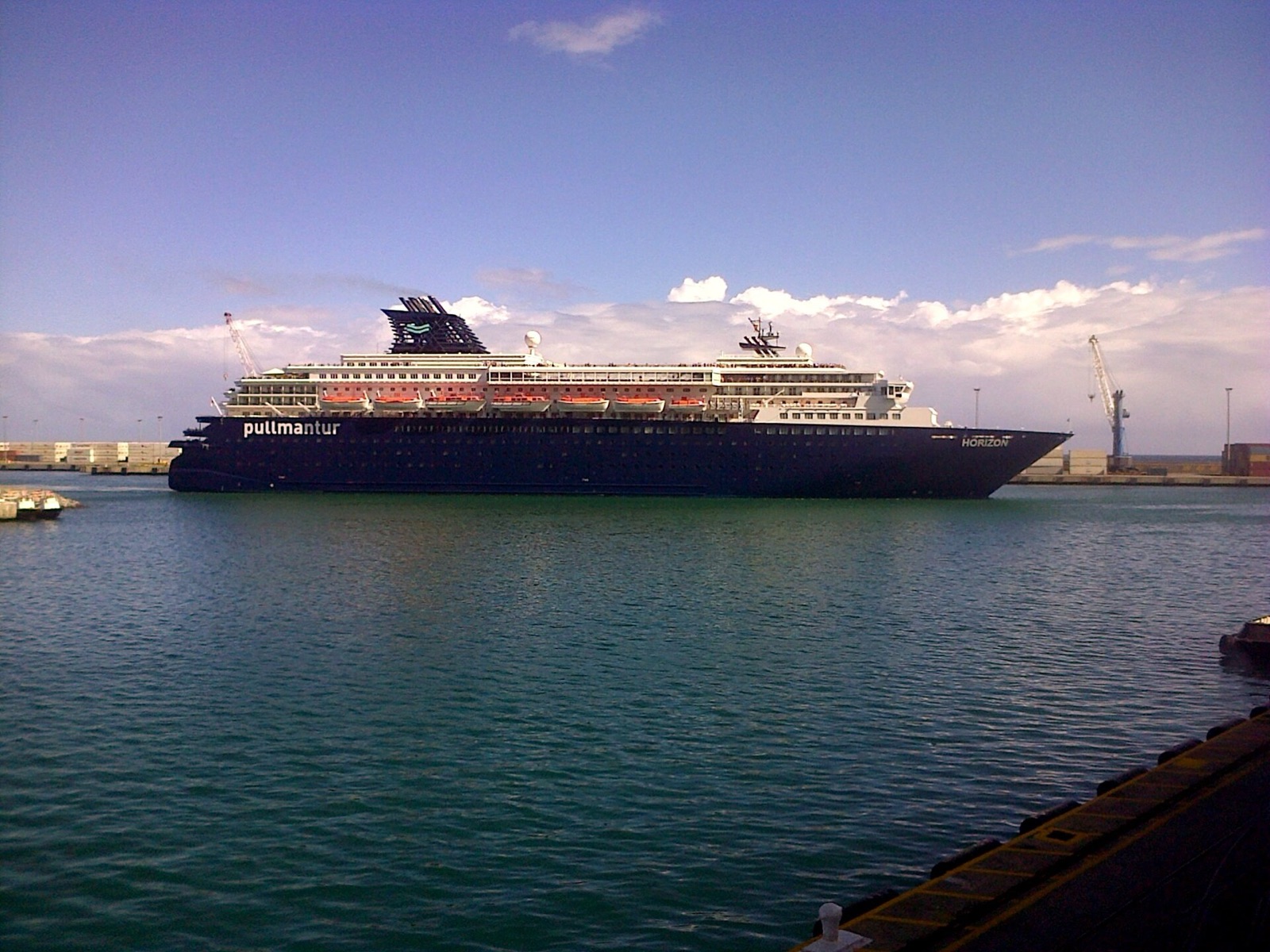
Photo: Port of La Guaira, Venezuela. Annia Pedreira, CC BY-SA 3.0, via Wikimedia Commons.
Ready to ship your freight?
