
On this page14
You ship to Trinidad and Tobago by ocean (FCL, LCL or breakbulk) into Port of Spain or Point Lisas, or by air into Piarco (POS); LCL from Miami takes about 8 days, and Customs and Excise clears entries on ASYCUDA World, charging CARICOM CET duty plus 12.5% VAT. Trinidad and Tobago is an industrial economy, not a tourism island, and that shapes its freight. Imports are weighted toward machinery, spare parts, chemicals and inputs for the energy sector, alongside the food and consumer goods that any island needs. The twin-island state has two serious cargo ports on Trinidad (Port of Spain for containerized consumer goods and Point Lisas for industrial, breakbulk and project cargo), a fully electronic customs regime on ASYCUDA World with the TTBizLink single window, and a firm rule that commercial imports go through a customs broker. Add the CARICOM Common External Tariff, 12.5% VAT, an import licensing negative list and customs user fees that doubled on January 1, 2026, and the planning question for Trinidad is less about whether cargo can get there and more about which port, which classification and which licence.
Trinidad and Tobago Shipping at a Glance: Transit Times and Options
Miami to Point Lisas is the reference LCL lane into Trinidad and Tobago at about 8 days; FCL from US ports takes 6 to 12 days, air 1 to 3 days and Asia 30 to 45 days.
| Route & mode | Transit | Indicative cost | Best for |
|---|---|---|---|
| Miami to Point Lisas, LCL (5 CBM / 1,500 kg) | about 8 days | about $985 (IWF published LCL rate, September 2026; excludes destination duties, taxes and local charges) | spare parts, MRO supplies, distributor restocks |
| USA (Miami, Gulf, East Coast) to Port of Spain or Point Lisas, FCL 20ft/40ft | 6 to 12 days | quote on request | full loads, chemicals, equipment |
| USA to Trinidad, breakbulk or project cargo | per vessel schedule | quote on request | oversized equipment, skids, heavy lifts |
| Miami to Piarco (POS), air | 1 to 3 days | quote on request | urgent spares, AOG-style shutdown parts, pharma |
| China / Asia to Trinidad, FCL or LCL | 30 to 45 days | quote on request | factory orders, steel products, consumer goods |
| Europe to Trinidad, FCL or LCL | 2 to 4 weeks | quote on request | EU and UK equipment, food and beverage |
Transit is port to port and depends on sailing day and transshipment connections. Whatever the lane, the shipment runs through the same eight steps.
How to Ship to Trinidad and Tobago: Step by Step
Shipping to Trinidad and Tobago follows eight steps, and the licence and port decisions come before the booking.
- Classify the goods and check the negative list. Assign the HS code under the CARICOM Common External Tariff and confirm whether the goods need a Trade Licence Unit licence, applied for through TTBizLink before shipment.
- Choose the mode, Incoterm and port. LCL from Miami covers 1 to 15 CBM, FCL covers larger or dense loads, breakbulk covers out-of-gauge equipment and air into Piarco covers shutdown-critical parts; route industrial cargo to Point Lisas and consumer goods to Port of Spain.
- Book from Miami or origin. Deliver LCL cargo to a Miami CFS for consolidation to Point Lisas, or book FCL, flat-rack or breakbulk space from the US, Asia or Europe.
- Prepare the documents. The supplier completes the CARICOM Area Invoice and commercial invoice; add the packing list, certificate of origin, any sanitary certificate, licence and waiver approval, plus IMDG or IATA DGR papers for chemicals.
- File the US export record. For US-origin cargo, the exporter or forwarder files Electronic Export Information (EEI) in AES when a Schedule B line exceeds US$2,500 or the goods need an export licence.
- Lodge documents early and ship. The broker lodges shipping documents through TTBizLink on the date the goods ship, while the cargo sails (about 8 days from Miami to Point Lisas for LCL).
- File the customs declaration. The broker lodges the C75 or C76 declaration, signed by the importer, in ASYCUDA World; commercial imports cannot be self-filed.
- Pay duty, VAT and fees, then take delivery. CET duty, 12.5% VAT and customs fees (doubled from January 1, 2026) are paid before release, and the cargo moves to the plant, warehouse or Tobago connection.
Steps 2 and 3 are decided mainly on the US leg, which carries Trinidad's largest share of imports.
Shipping From the USA to Trinidad and Tobago
US cargo for Trinidad and Tobago moves fastest through Miami, where the IWF published LCL lane discharges at Point Lisas in about 8 days. The US is Trinidad's largest supplier, and Miami is the most frequent consolidation point. The lane carries a reference rate of about $985 for 5 CBM / 1,500 kg (IWF published LCL rate, September 2026; excludes destination duties, taxes and local charges), quoted FCA Miami CFS to Point Lisas. For energy-sector consignees on the Point Lisas Industrial Estate or in south Trinidad, that discharge point puts the cargo next to the plants rather than an hour's truck run away in Port of Spain.
LCL works for the steady flow of spare parts, instrumentation, safety equipment and MRO supplies that refineries, plants and contractors order in small lots from multiple US vendors. Consolidating them in Miami produces one shipment, one customs entry and one broker fee. Once volume passes 15 CBM, or the cargo is dense (pumps, valves, steel), FCL from Miami or the US Gulf costs less per unit. Interworld Freight runs container shipping to Trinidad in FCL and LCL.
Oversized and heavy items (compressor skids, heat exchangers, process modules) move as breakbulk or on flat racks and open tops into Point Lisas, which specializes in breakbulk, industrial chemicals and steel. Our project cargo team plans these moves, and the trade-offs between modes are laid out in breakbulk vs container shipping.
Air freight lands at Piarco International (POS), which has a dedicated cargo terminal and cold storage for pharmaceuticals and perishables. For a plant waiting on a failed part, Caribbean air freight from Miami is the fastest fix. Cargo from Asia takes a longer, relayed route.
Shipping From China and Asia to Trinidad and Tobago
Asian cargo reaches Trinidad and Tobago in 30 to 45 days port to port, by transshipment via Panama, Cartagena, Kingston or other Caribbean hubs. Port of Spain receives most Asian consumer goods; industrial cargo can be routed to Point Lisas. For Chinese origins, consolidation and FCL versus LCL from China, see our guide to shipping from China to Trinidad and Tobago.
Routing Asian goods through Miami first pays off when an order must be inspected, relabeled or combined with US-sourced components before it reaches the plant.
Shipping From Europe to Trinidad and Tobago
European cargo reaches Trinidad and Tobago in two to four weeks from North European ports on transatlantic services into the southern Caribbean. Trinidad has direct commercial ties with Europe through the energy industry, with European operators and equipment makers on the island. European compressors, valves, catalysts and specialty chemicals move FCL or as project cargo; smaller orders move LCL or by air into Piarco. All of it lands at a short list of Trinidadian gateways.
Which Ports and Airports Handle Cargo in Trinidad and Tobago?
Trinidad's general cargo moves through two ports, Port of Spain for containers and Point Lisas for industrial cargo, and by air through Piarco.
- Port of Port of Spain (TTPOS): government-owned, handling most containerized consumer goods and regional transshipment.
- Port of Point Lisas (TTPTS): jointly owned by the government and the Point Lisas Industrial Port Development Corporation (PLIPDECO); specializes in breakbulk, industrial chemicals and steel and sits beside the Point Lisas Industrial Estate.
- Scarborough, Tobago: the cargo and ferry port for Tobago; most Tobago freight connects via Trinidad.
- Specialized energy terminals: LNG, petroleum and petrochemical jetties (for example at Point Fortin and Point Lisas) handle bulk energy exports, not general cargo.
- Piarco International Airport (POS): Trinidad's air cargo gateway with a dedicated cargo terminal and cold storage.
- ANR Robinson International Airport (TAB), Tobago: limited air cargo.
At both ports and both airports, release runs through the same customs process.
How Does Customs Clearance Work in Trinidad and Tobago?
Commercial imports clear through the Customs and Excise Division of the Ministry of Finance on ASYCUDA World, and a customs broker is required to import and export commercial goods, according to the U.S. Commercial Service guide to Trinidad and Tobago import requirements. Shipping documents can be lodged online through TTBizLink, the government's single window, and can be sent for clearance on the date the goods are shipped, which speeds clearance for sea cargo.
- Broker requirement: the broker lodges every commercial entry; importers do not self-file.
- Declaration: the importer signs the declaration on form C75 or C76, lodged by the broker in ASYCUDA World.
- Supporting documents: lodged electronically before arrival; duties, VAT and fees must be paid before release.
- Customs fees: Legal Notice No. 472 of 2025 doubled several customs fees from January 1, 2026, including the standard customs (declaration) fee from TT$40 to TT$80 and Container Examination Station fees.
- Licences: items on the import negative list need a licence from the Trade Licence Unit before shipment, not after arrival.
- Waivers: tax and duty waivers (for approved investment, energy or other qualifying projects) are requested by letter to the Comptroller of Customs, with the broker completing forms C82 and/or C84, as set out by the Ministry of Finance.
What Are the Import Duties and Taxes in Trinidad and Tobago?
Goods from outside CARICOM pay CARICOM Common External Tariff (CET) duty, mostly up to 20%, and then 12.5% VAT on the CIF value plus duty, according to the U.S. Commercial Service summary of Trinidad and Tobago import tariffs. Some lines carry higher rates (for example auto parts, DVD players and jewelry at 30%), while books, CDs, computer hardware and software and scanners enter tariff-free. Customs duty is assessed on the value of the goods at the time they land, and qualifying CARICOM-origin goods enter duty-free with a certificate of origin. The same CET framework applies when shipping to Guyana or shipping to Suriname, so regional distributors can model all three markets on one tariff base.
- Import duty: CET rate by HS code.
- Value added tax (VAT): 12.5% standard rate on the aggregate of CIF value plus duty; some items, including specific food items, are zero-rated.
- Excise: high excise applies to distilled spirits, wine, tobacco products and motor vehicles.
- Customs fees: per-declaration and examination fees, doubled from January 1, 2026.
Energy-sector imports qualify for duty concessions under approved agreements, but only with documentation in place before clearance. For a regional view of how CET and VAT stack across islands, see Caribbean import duties and taxes. Every charge is assessed from the documents the broker lodges.
What Documents Are Required to Ship to Trinidad and Tobago?
A Trinidad entry needs the CARICOM Area Invoice, the supplier's invoice, the transport document and an importer-signed C75 or C76 declaration:
- CARICOM Area Invoice, completed by the supplier
- Supplier's commercial invoice
- Packing list
- Bill of lading or air waybill
- Customs declaration on form C75 or C76, signed by the importer
- Certificate of origin
- Health or sanitary certificate, if required
- Import licence from the Trade Licence Unit, if the goods are on the negative list
- Duty waiver or concession approval (customs forms C82 and/or C84), if claimed
The licence line on that list is set by the negative list.
What Are the Import Restrictions for Trinidad and Tobago?
Goods on the import negative list, including foreign used vehicles, need a licence from the Trade Licence Unit of the Ministry of Trade, Investment and Tourism before shipment, applied for online through TTBizLink.
- Negative list licensing: import licences, export licences and duty relief licences are all filed through TTBizLink and must be in hand before the goods ship.
- Used foreign vehicles: require a TLU licence and must meet age limits that vary by fuel type and class. Under the ministry's 2026 personal vehicle guidelines, gasoline, diesel and CNG personal vehicles cannot be more than eight years old, hybrids no more than three years and electric vehicles no more than two years from the year of manufacture; separate limits apply to pickups and trucks.
- Food, plants and animal products: sanitary or phytosanitary certification and inspection on arrival.
- Chemicals and dangerous goods: common on this lane for the energy and petrochemical sector; must be classified, packed and documented to IMDG or IATA DGR rules, and some chemicals are licensed.
- Oversized equipment: breakbulk or flat-rack cargo needs port and road surveys in advance; plan Point Lisas discharge for industrial-estate deliveries.
With licences in place, the mode decision comes down to volume, density and urgency.
LCL, FCL or Air Freight to Trinidad and Tobago: Which to Choose?
LCL from Miami to Point Lisas is the right mode for 1 to 15 CBM to Trinidad and Tobago, FCL above that, air for shutdown-critical parts and breakbulk for out-of-gauge equipment.
- Under 1 CBM or shutdown-critical: air to Piarco.
- 1 to 15 CBM: LCL from Miami to Point Lisas, about 8 days. Ideal for recurring MRO and spare-parts flows.
- 15 CBM and up, or dense cargo: 20ft FCL; heavy steel and valves hit weight limits before volume, so check payload.
- Out-of-gauge: flat rack, open top or breakbulk into Point Lisas.
Key Industries Shipping Freight to Trinidad and Tobago
Energy dominates freight to Trinidad and Tobago. The Point Lisas Industrial Estate hosts the country's ammonia, methanol and urea plants, and the country exports LNG, ammonia, methanol and urea alongside oil and gas. Those plants, upstream operators and their contractors import a constant stream of compressors, pumps, valves, instrumentation, catalysts, chemicals and safety equipment, with planned turnarounds producing peaks of project and spare-parts freight.
Beyond energy, Trinidad imports food, consumer goods, vehicles and construction materials for its domestic market and redistributes to smaller Eastern Caribbean islands (the markets covered in our guides to shipping to Grenada and shipping to St Vincent and the Grenadines), while manufacturers export food, beverages and building products across CARICOM. For plant operators and maintenance contractors, the next step is a dependable pipeline for critical parts, which our follow-up on shipping energy and petrochemical spare parts to Trinidad covers in detail.
Choosing a Freight Forwarder for Trinidad and Tobago
The right forwarder for Trinidad and Tobago should consolidate MRO orders without delay, route industrial cargo to Point Lisas, handle dangerous goods documentation correctly, and coordinate with a Trinidad broker so the C75 entry and any licence or waiver are ready on arrival. Interworld Freight was founded in Miami in 1992 and runs ocean FCL and LCL, air freight, project cargo and customs coordination from its Miami hub, with warehousing for staging parts and coverage on every major trade lane into Port of Spain, Point Lisas and Piarco. Quotes are answered within one business day.
Frequently Asked Questions
How long does shipping from Miami to Trinidad take?
LCL from Miami to Point Lisas takes about 8 days in transit on the IWF published lane. Full containers from US ports take 6 to 12 days, and air freight to Piarco 1 to 3 days.
How much does it cost to ship to Trinidad?
The IWF published LCL rate from Miami to Point Lisas is about $985 for 5 CBM / 1,500 kg (September 2026), quoted FCA Miami CFS to Point Lisas. It excludes Trinidadian duties, VAT and local charges. Full containers, air and breakbulk are quoted per shipment.
Do I need a customs broker in Trinidad and Tobago?
Yes. A customs broker is required to import and export commercial goods. The broker lodges the C75 or C76 declaration in ASYCUDA World and the supporting documents through TTBizLink.
What is the VAT rate on imports to Trinidad and Tobago?
The standard VAT rate is 12.5%, charged on the CIF value plus duty. Certain goods, including specific food items, are zero-rated.
What items are exempt from customs duty in Trinidad?
Books, CDs, computer hardware and software and scanners enter tariff-free under the CET, and qualifying CARICOM-origin goods enter duty-free with a certificate of origin. Approved projects and qualifying importers can obtain duty and tax waivers from the Comptroller of Customs, applied for in advance on forms C82 and/or C84.
What are the import restrictions for Trinidad and Tobago?
Goods on the negative list, including foreign used vehicles and certain regulated products, need a Trade Licence Unit licence before shipment. Food, plant and animal products need sanitary or phytosanitary certificates, and chemicals and dangerous goods must be documented to IMDG or IATA rules.
What are the new customs rules for 2026 in Trinidad and Tobago?
From January 1, 2026, Legal Notice No. 472 doubled several customs fees, including the standard customs fee from TT$40 to TT$80 and Container Examination Station fees. The 2026 vehicle import guidelines also cap hybrids at three years and electric vehicles at two years from manufacture.
Should I ship to Port of Spain or Point Lisas?
Ship consumer goods to Port of Spain and industrial cargo to Point Lisas. Port of Spain handles most containerized consumer goods. Point Lisas specializes in breakbulk, industrial chemicals and steel and sits beside the industrial estate, so it suits energy and manufacturing consignees.
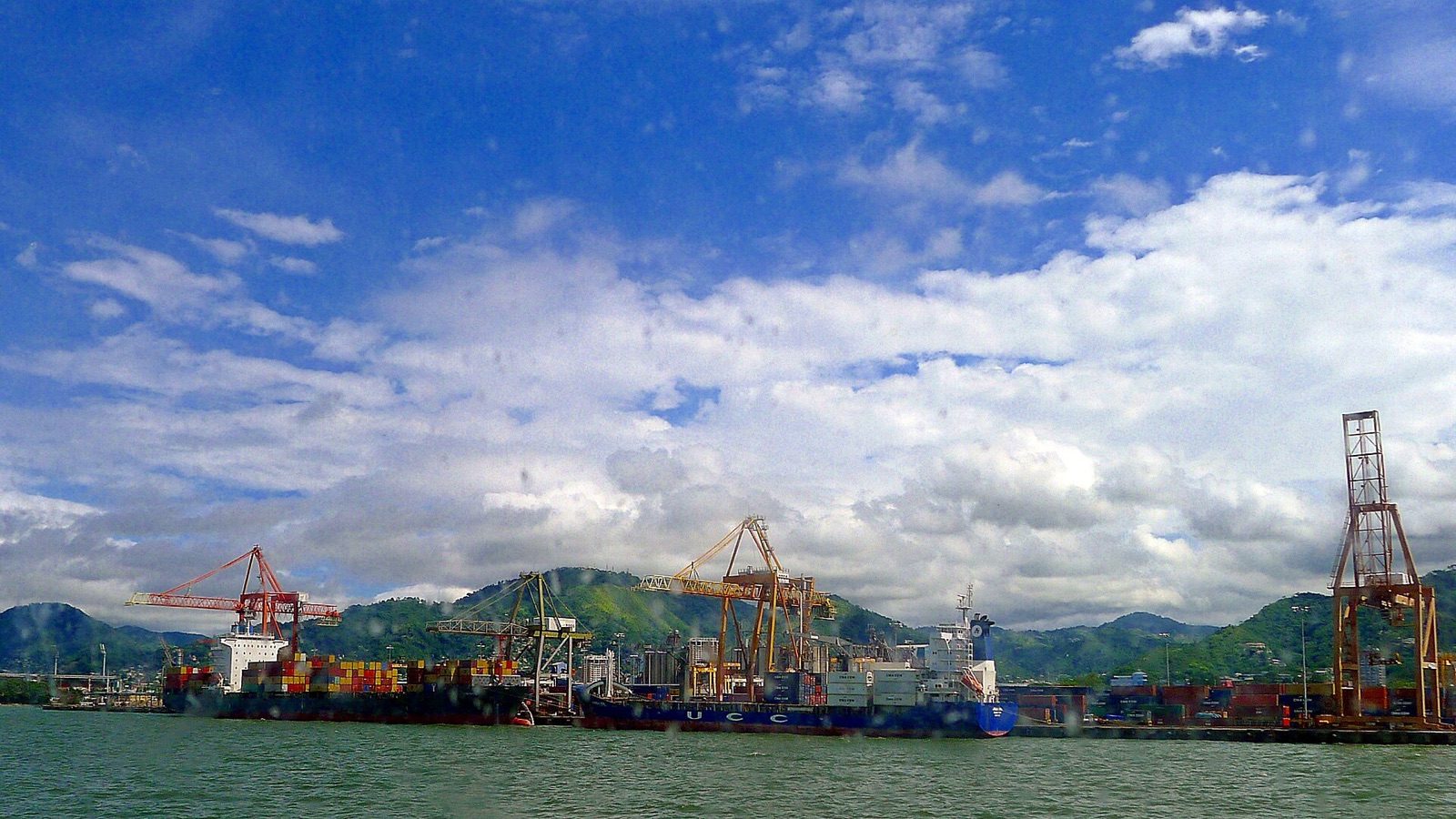
Photo: Container ships under gantry cranes at a terminal in Trinidad. Kalamazadkhan, CC BY-SA 4.0, via Wikimedia Commons.
Ready to ship your freight?
