
On this page14
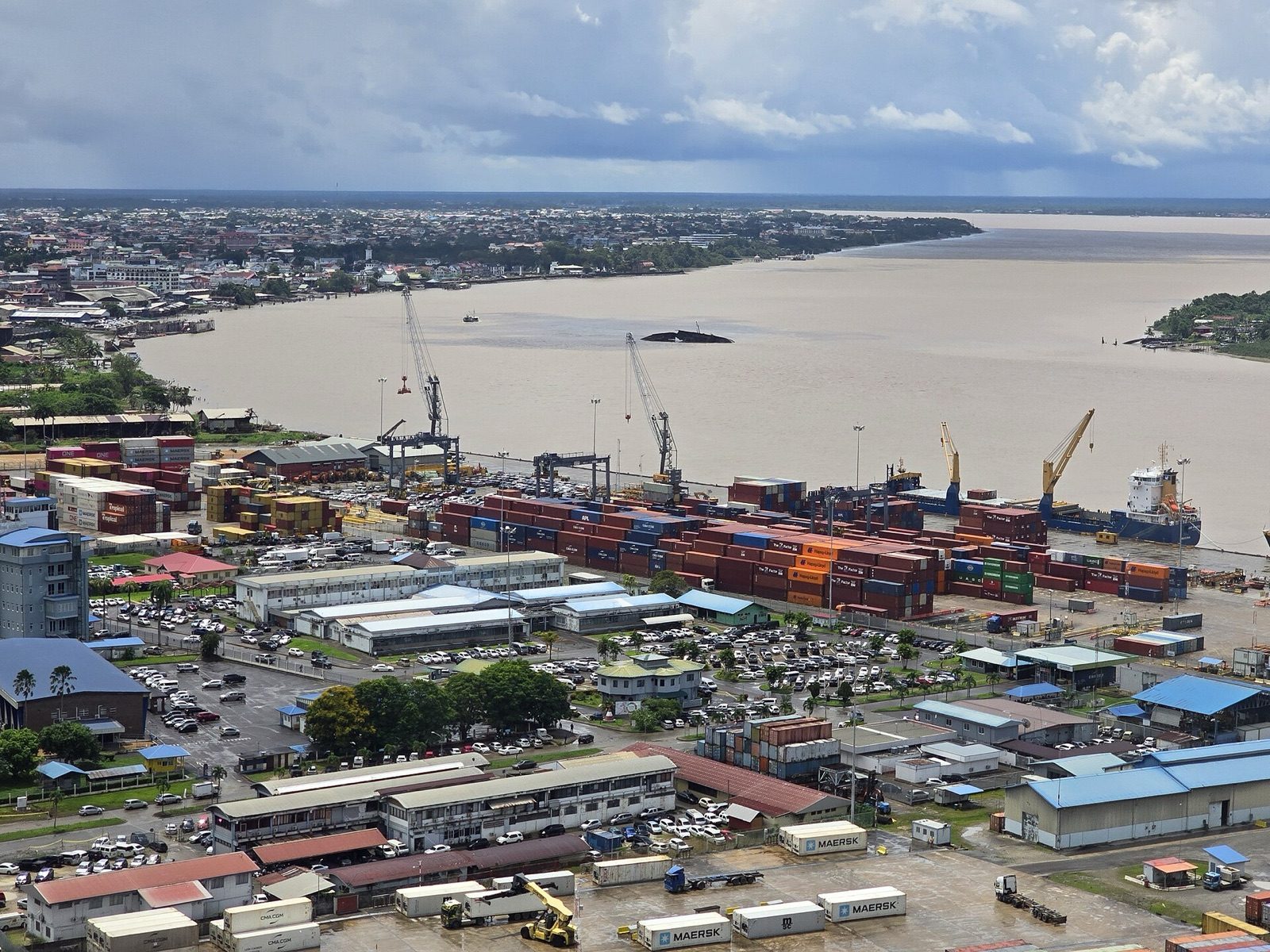
You ship to Suriname by ocean (FCL, LCL or breakbulk) into the Dr. Jules Sedney Haven in Paramaribo or by air into PBM; ocean freight from the USA takes two to three weeks, and Customs Suriname clears entries on ASYCUDA World, charging 0% to 50% duty plus 10% VAT. Suriname is a small market with a large project ahead of it, and both facts shape how freight moves there. Day-to-day imports (food, vehicles, building materials, consumer goods) flow through one main container port in Paramaribo, the Dr. Jules Sedney Haven, served by feeder and regional services rather than mainline vessels. Above that baseline, TotalEnergies' GranMorgu offshore oil development, approved in October 2024 with first oil now targeted for mid-2028, is bringing project cargo, marine equipment and contractor supply chains into a country that has not handled them at this scale before. On the regulatory side, Suriname is different from its English-speaking CARICOM neighbors: its nine-tier tariff runs from 0% to 50% on non-CARICOM goods, customs adds a statistical fee and a consent right fee, a 10% VAT replaced the old sales tax in January 2023, and goods on a negative list need an H-99 import licence before shipping. Dutch is the official language, so customs forms are in Dutch.
Suriname Shipping at a Glance: Transit Times and Options
Ocean freight from the USA to Paramaribo takes two to three weeks for both LCL and FCL; air takes 1 to 3 days, Europe 2 to 4 weeks and Asia 35 to 50 days.
| Route & mode | Transit | Best for |
|---|---|---|
| Miami to Paramaribo, LCL | 2 to 3 weeks | pallets, spares, retail restocks |
| USA (Miami, East Coast, Gulf) to Paramaribo, FCL 20ft/40ft | 2 to 3 weeks | food, building materials, vehicles, equipment |
| USA or Europe to Paramaribo, project or breakbulk | per vessel schedule | offshore and onshore oil and gas equipment, heavy lifts |
| Miami to Paramaribo (PBM), air | 1 to 3 days | critical spares, pharma, high-value goods |
| Europe (Rotterdam, Antwerp) to Paramaribo, FCL or LCL | 2 to 4 weeks | Dutch and EU food, equipment, consumer goods |
| China / Asia to Paramaribo, FCL or LCL | 35 to 50 days | factory orders, steel, building products |
Transit is port to port and depends on sailing day and transshipment. Rates are quoted per shipment. On every lane, the shipment follows the same eight steps.
How to Ship to Suriname: Step by Step
Shipping to Suriname follows eight steps, and the licence check comes before anything is booked.
- Classify the goods and check the negative list. Assign the HS code under Suriname's nine-tier tariff and, for negative-list goods, apply for an H-99 import licence at the Ministry of Economic Affairs before shipping.
- Choose the mode and Incoterm. LCL consolidated in Miami (or Rotterdam) covers 1 to 15 CBM, FCL covers larger or dense loads, breakbulk covers out-of-gauge project cargo and air into PBM covers operations-critical parts.
- Book from Miami or origin. Deliver LCL cargo to a Miami CFS for consolidation, or book FCL or breakbulk space from US, European or Asian ports to Paramaribo, with berth planning for heavy lifts.
- Prepare the documents. Collect the original supplier invoice with descriptions that match the HS code, packing list, bill of lading or air waybill, the IT form for non-licensed goods, any health certificate, and a certificate of origin and CARICOM invoice for CARICOM goods.
- File the US export record. For US-origin cargo, the exporter or forwarder files Electronic Export Information (EEI) in AES when a Schedule B line exceeds US$2,500 or the goods need an export licence.
- Transit to Paramaribo. The cargo sails two to three weeks from the USA, direct or via a Caribbean hub, and discharges at the Dr. Jules Sedney Haven.
- File the SAD in ASYCUDA World. A Surinamese customs broker files the Single Administrative Document and presents the IT form, invoice, bill of lading and any H-99 licence or health certificate to customs.
- Pay duty, fees and VAT, then take delivery. Import duty, the 0.5% statistical fee, the 1.5% consent right fee and 10% VAT are paid, selected cargo is examined, and the goods are released.
The US leg, through Miami, sets the schedule for most of these steps.
Shipping From the USA to Suriname
Ocean freight from the USA to Paramaribo takes two to three weeks port to port, longer when a transshipment connection is missed. US exporters reach Suriname mainly through Miami and Gulf and East Coast ports, on regional services that call Paramaribo directly or relay through a Caribbean hub. Because Surinamese volumes are modest, a large share of US-origin shipments move as consolidated LCL rather than full containers.
The working model for importers buying from several US suppliers is to deliver everything to a Miami CFS, consolidate, and ship one container load or one LCL lot with a single set of documents. That reduces per-entry customs fees in Paramaribo and keeps paperwork (the IT form, SAD and invoices) consistent. Interworld Freight books full and shared containers to Suriname through its Caribbean container shipping service, consolidating in Miami as described on our Miami to Caribbean freight forwarder page.
Full containers pay off from 15 CBM, or for dense cargo such as steel, cement products and generators. Oversized equipment for oil, mining and infrastructure projects moves as breakbulk or on flat racks and needs early vessel and berth planning in Paramaribo; our project cargo team handles that planning from origin to discharge.
Air freight lands at Johan Adolf Pengel International (PBM) at Zanderij, south of Paramaribo. Caribbean air freight from Miami is the route for critical spares, medical supplies and anything where days matter. Europe is the second major origin, and for Suriname a natural one.
Shipping From Europe to Suriname
European cargo reaches Paramaribo in two to four weeks from Rotterdam and Antwerp. Europe is a natural origin for Suriname: historic trade links with the Netherlands, Dutch-language documents and a business community used to buying from Dutch and Belgian suppliers. That Europe orientation is shared with the French Caribbean, covered in our guide to shipping to Martinique and Guadeloupe. Regular services from both ports serve Paramaribo. European food, beverage, machinery and consumer goods move FCL or LCL; offshore equipment manufactured in Europe for the oil program moves as project cargo.
Whatever the origin, invoice descriptions must match HS classification precisely, because Suriname's tariff spreads goods across nine bands with very different rates.
Shipping From China and Asia to Suriname
Asian cargo reaches Paramaribo in 35 to 50 days port to port, by transshipment through Caribbean or Panama hubs. Each relay adds connection risk, so the choice of hub matters; our overview of Caribbean transshipment hubs explains how routing affects time and reliability. Importers who need to inspect, relabel or combine Asian goods with US purchases can route them through Miami first and send a single consolidated shipment onward. All of these routings end at a short list of Surinamese gateways.
Which Ports and Airports Handle Cargo in Suriname?
Nearly all general cargo for Suriname enters through the Dr. Jules Sedney Haven in Paramaribo, and air cargo through Johan Adolf Pengel International (PBM).
- Dr. Jules Sedney Haven, Paramaribo (SRPBM): the main seaport for cargo ships, formerly Nieuwe Haven, on the Suriname River. NV Havenbeheer Suriname, a state-owned company, acts as landlord; cargo handling is done by private stevedores, including DP World Paramaribo, the largest container terminal operator there, and VSH Transport. The port handles containers, breakbulk and liquid bulk.
- Port of Nieuw Nickerie: the second port administered by Havenbeheer, in the west, serving rice and regional trade.
- Johan Adolf Pengel International Airport (PBM), Zanderij: the international air cargo gateway.
- Zorg en Hoop Airport (ORG), Paramaribo: domestic and light aircraft, relevant for interior and mining logistics.
Cargo through every one of these gateways clears under the same customs procedure.
What Are the Customs Import Procedures in Suriname?
Imports clear through Customs Suriname (Douane) under the Ministry of Finance and Planning on ASYCUDA World, with an IT form and a Single Administrative Document for every entry and an H-99 licence for negative-list goods, as set out in the U.S. Commercial Service guide to Suriname import requirements. Customs collects import duty, excise and the statistical and consent fees, and the government's 2025 budget commits to further evaluation and upgrades of ASYCUDA World.
- Licence check: confirm whether the goods are on the negative list. If so, apply for an import licence on the H-99 form at the Ministry of Economic Affairs before shipping.
- Trade form: for goods that do not need a licence, the importer completes the International Trade Form for Goods and Services (IT form).
- Declaration: a customs broker or declarant files the Single Administrative Document (SAD).
- Presentation: on arrival, the IT form, SAD, original supplier invoice, bill of lading, H-99 licence (if required) and health certificate (if required) are presented to customs.
- Assessment, payment and release: duty, fees and VAT are assessed and paid, selected cargo is examined, and goods are released.
Commercial importers use a Surinamese customs broker, who also handles Dutch-language correspondence with customs. The payment in step 5 follows Suriname's own tariff, not the CARICOM CET.
What Is the Standard Import Duty Rate in Suriname?
There is no single standard rate: Suriname charges goods from outside CARICOM duty under a nine-tier schedule from 0% to 50%, plus a 0.5% statistical fee, a 1.5% consent right fee and 10% VAT, according to the U.S. Commercial Service summary of Suriname import tariffs. CARICOM-origin goods fall in the 0% to 20% range and need a certificate of origin and a CARICOM invoice. Most semi-manufactured articles pay 10%, finished products 15% to 20%, and the highest bands (40% to 50%) cover alcoholic beverages, beer, tobacco, live animals, fish, eggs, honey, vegetables, fruit, coffee, cereals, precious stones and some motor vehicles.
- Import duty: by HS code under the national schedule.
- Statistical fee: 0.5% of CIF value.
- Consent right fee: 1.5% of CIF value.
- Value added tax (VAT): in force since January 1, 2023, replacing the former sales tax. The standard rate of 10% applies to the supply and the import of goods, with a 25% rate on luxury supplies and a 0% rate for many basic foodstuffs and essentials, according to the Suriname Tax Authority (Belastingdienst).
- Additional taxes: on tobacco and alcoholic beverages.
Duty relief on business assets is now partial, not full. Under a decree of the Minister of Finance and Planning valid from June 27, 2026 to June 26, 2027, qualifying machinery and equipment for sectors such as agriculture, mining, tourism and manufacturing can receive a 50% exemption from import duty (75% for the production sector), applied for at least one month before the goods arrive; building materials, tools, consumables and personal vehicles are excluded. The Belastingdienst exemption policy sets the application rules, which matters for investment and oil and gas projects. For a regional comparison of tariff and tax structures, see Caribbean import duties and taxes; the contrast with the CARICOM CET applied when shipping to Guyana or shipping to Trinidad and Tobago is the main reason regional distributors price Suriname separately. Customs assesses every charge from the documents below.
What Documents Are Required to Ship to Suriname?
A Surinamese entry needs the IT form, the SAD, the original supplier invoice and the bill of lading, plus a licence or health certificate where the goods require one:
- Original supplier commercial invoice
- Packing list
- Bill of lading or air waybill
- International Trade Form for Goods and Services (IT form)
- Single Administrative Document (SAD)
- H-99 import licence, for negative-list goods
- Health certificate, where required
- Certificate of origin and CARICOM invoice, for CARICOM-origin goods
- Duty exemption (partial) approval from the Minister of Finance and Planning, where granted
The licence line on that list is driven by the negative list.
Restricted Goods and Import Licences in Suriname
Goods on Suriname's negative list need an H-99 import licence before shipment; most other products have needed no licence since 1999.
- Negative list: the U.S. Commercial Service list of prohibited and restricted imports names pesticides, chemicals, used vehicles, weapons and ammunition, mercury, medicines, second-hand tires, CITES-listed animals and plants, seeds and fireworks; the list is not exhaustive, so confirm the full list with Customs.
- Licensing certificates: issued by the Ministry of Health or the Ministry of Agriculture, Animal Husbandry and Fisheries, depending on the product.
- Used vehicles: on the negative list, so the licence must be in hand before shipping; vehicles also fall in the highest tariff bands.
- Chemicals and dangerous goods: licensed and documented to IMDG or IATA DGR rules; this applies to drilling chemicals and mining reagents.
- Project cargo: heavy lifts need early coordination with the port and stevedore at Jules Sedney Haven.
With licensing settled, the mode decision comes down to volume and urgency.
LCL, FCL or Air Freight: What Is the Cheapest Way to Ship to Suriname?
LCL consolidated in Miami is the cheapest way to ship 1 to 15 CBM to Suriname, FCL wins above 15 CBM, and air for operations-critical cargo.
- Under 1 CBM or operations-critical: air to PBM.
- 1 to 15 CBM: LCL, consolidated in Miami (or Rotterdam for European goods).
- 15 CBM and up, or dense cargo: 20ft FCL; 40ft above 30 CBM of light cargo.
- Out-of-gauge: breakbulk or flat rack with port planning in advance.
- Licensed goods: whatever the mode, do not ship until the H-99 licence is issued.
Key Industries Shipping Freight to Suriname
Oil is the growth story for freight to Suriname. TotalEnergies took the final investment decision on GranMorgu on October 1, 2024, to develop the Sapakara and Krabdagu discoveries on offshore Block 58, about 150 km off the coast, with a floating production unit of 220,000 barrels per day and an investment estimated at about $10.5 billion at FID (since reported at about $12 billion). First oil is targeted for mid-2028. TotalEnergies operates with APA Corporation, and state oil company Staatsolie has the option to take up to a 20% interest. Construction of that program, plus Staatsolie's existing onshore operations, drives imports of marine, subsea, drilling and support-base equipment.
Gold mining is the other major industrial importer and exporter, alongside rice, bananas, timber and fisheries. Retail and construction depend on imports of food, vehicles and building materials from the US, the Netherlands and Asia. For contractors and suppliers to the offshore program, the next step is planning heavy and time-critical moves into Paramaribo, which our follow-up on offshore oil project cargo shipping to Suriname covers in detail.
Choosing a Freight Forwarder for Suriname
The right forwarder for Suriname has to manage thin feeder schedules, consolidate efficiently, keep the IT form, SAD and H-99 licence aligned with the invoice, and plan project cargo with the port well ahead. Interworld Freight was founded in Miami in 1992 and runs ocean FCL and LCL, air freight, project cargo and customs coordination from its Miami hub, with warehousing to consolidate and stage cargo and coverage on every major trade lane into Paramaribo. Quotes are answered within one business day.
Frequently Asked Questions
How long does shipping to Suriname take?
From the US, ocean freight to Paramaribo takes two to three weeks port to port, and air freight to PBM 1 to 3 days. From Europe, transit is two to four weeks; from Asia, 35 to 50 days because of transshipment.
What is the cheapest way to ship to Suriname from the USA?
For commercial cargo of 1 to 15 CBM, the cheapest way is LCL consolidated in Miami, which turns orders from several US suppliers into one shipment and one customs entry in Paramaribo. Full containers become cheaper per unit from 15 CBM. Rates to Suriname are quoted per shipment.
What is the standard import duty rate in Suriname?
There is no single rate: Suriname's tariff has nine tiers from 0% to 50% for non-CARICOM goods, with most semi-manufactured articles at 10% and finished products at 15% to 20%. Customs adds a 0.5% statistical fee and a 1.5% consent right fee on CIF value, and qualifying CARICOM goods pay 0% to 20%.
What is the VAT rate in Suriname?
The standard VAT rate is 10%, in force since January 1, 2023, and it applies to imports as well as local supplies. Luxury supplies are taxed at 25%, and many basic foodstuffs are zero-rated.
What documents do I need to import into Suriname?
You need the International Trade Form for Goods and Services (IT form), the Single Administrative Document, the original supplier invoice and the bill of lading or air waybill. Add the H-99 licence for negative-list goods, a health certificate where required, and a certificate of origin and CARICOM invoice for CARICOM goods.
What items cannot be imported into Suriname without a licence?
Negative-list goods such as pesticides, chemicals, used vehicles, weapons and ammunition, mercury, medicines, second-hand tires, seeds and fireworks need an H-99 licence from the Ministry of Economic Affairs. The licence must be approved before the goods are shipped.
What are the new import rules in Suriname?
Duty relief on business assets is now partial: a ministerial decree valid from June 27, 2026 to June 26, 2027 grants a 50% import duty exemption (75% for the production sector) on qualifying machinery and equipment. VAT at 10% has applied to imports since January 2023.
Can oil and gas equipment enter Suriname duty-free?
No, only partially under the current regime. Qualifying business assets can obtain a partial import duty exemption from the Minister of Finance and Planning, applied for at least one month before arrival; project-specific agreements should be confirmed before the goods are cleared.
Photo: Jules Sedney Harbour (Nieuwe Haven), Paramaribo, Suriname. NullAspect, CC BY-SA 4.0, via Wikimedia Commons.
Ready to ship your freight?
