
On this page13
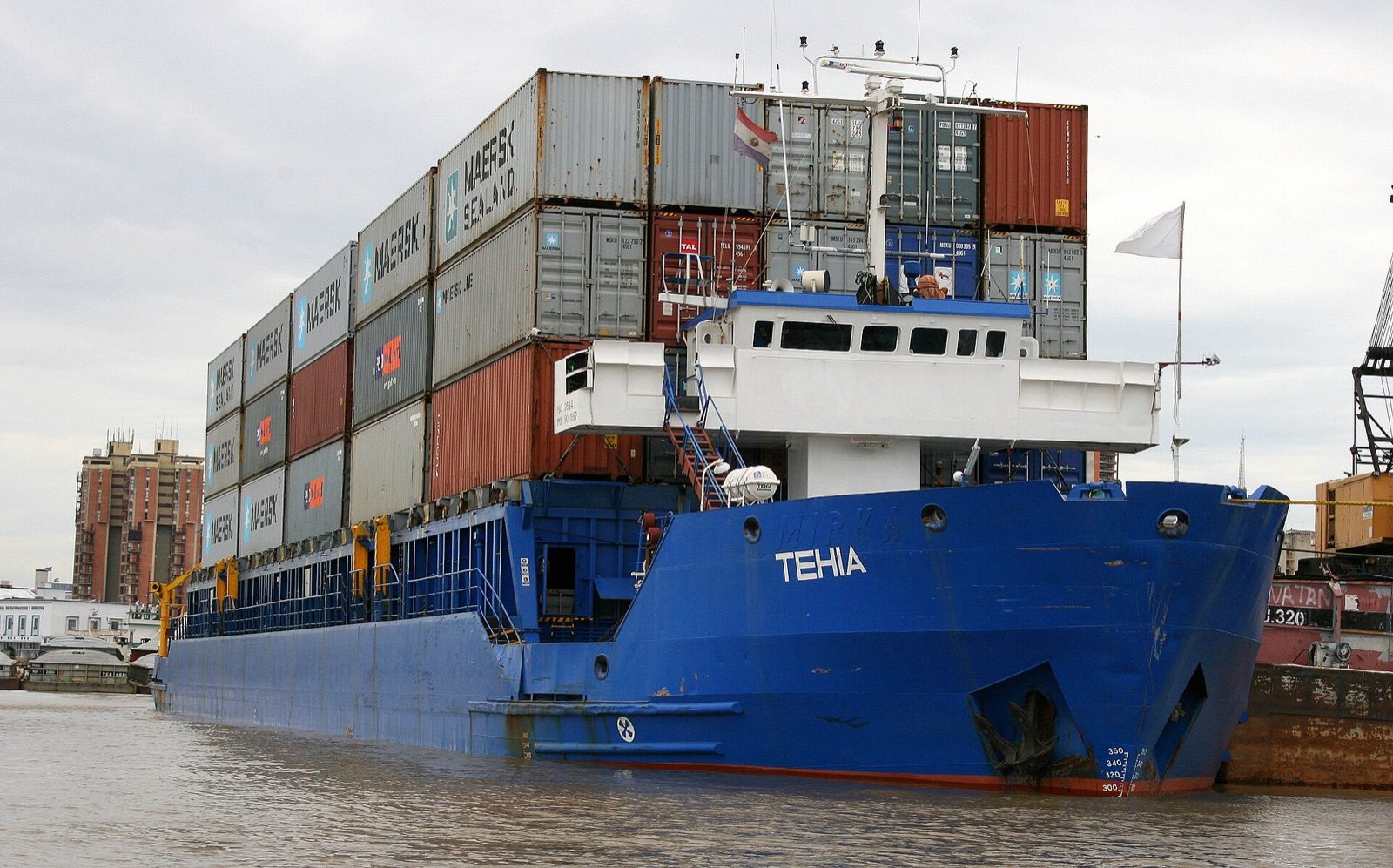
You ship to Paraguay by ocean FCL or LCL to Buenos Aires or Montevideo and then by river barge to Villeta or Asunción (30 to 45 days from Miami), or by air to Asunción (ASU), then clear customs with DNIT in SOFIA and pay Mercosur duty and 10% VAT. Paraguay has no coastline, and that single fact shapes every freight decision: ocean containers travel upriver on the Paraguay-Paraná waterway (Hidrovía), a 3,302 km river system that carries nearly 80% of Paraguay's trade, according to the U.S. Commercial Service waterway profile. The river leg adds time, a transshipment and exposure to water levels, and it also makes Paraguay one of the region's most competitive logistics platforms, with private river terminals multiplying around Villeta, south of Asunción. Customs is run by the DNIT, the 2023 merger of the tax and customs agencies, and a long-standing investment law can remove duty and VAT on capital goods. Correct routing and in-transit paperwork keep a container moving; errors leave it in a foreign port waiting for the next barge.
Paraguay Shipping at a Glance: Transit Times and Options
| Route & mode | Transit | Best for |
|---|---|---|
| Miami to Villeta/Asunción, Ocean FCL via Buenos Aires or Montevideo plus barge | 30 to 45 days | full loads, machinery, building materials |
| Miami to Asunción, Ocean LCL via Montevideo or Buenos Aires | 35 to 50 days | shipments under 15 CBM |
| Miami to Asunción (ASU), Air freight | 2 to 4 days | spare parts, electronics, urgent cargo |
| China to Villeta/Asunción, Ocean FCL plus barge | 45 to 65 days | full containers of manufactured goods |
| Europe to Villeta/Asunción, Ocean FCL plus barge | 30 to 45 days | European machinery and components |
| Brazilian port (e.g. Paranaguá) to Paraguay by truck | varies by border crossing | time-sensitive containers, eastern Paraguay |
The river leg varies with barge schedules and water levels. Treat these ranges as planning figures and confirm at booking.
How to Ship to Paraguay: Step by Step
Shipping to Paraguay takes eight steps, and three of them exist only because the cargo crosses a neighbour's territory before arrival.
- Classify the goods and check permits. Confirm the NCM code with your despachante, check whether SENAVE, SENACSA or health authority approval applies, and secure a Law 60/90 resolution before shipping if you claim duty and VAT exemptions. The importer needs an active RUC and importer registration with DNIT.
- Choose the route and mode. Pick ocean via Buenos Aires or Montevideo plus barge, trucking from a Brazilian port such as Paranaguá, or air to Silvio Pettirossi (ASU); FCL fits above 15 CBM and air fits cargo under 500 kg.
- Book through to the river port. Consolidate US supplier cargo in a Miami warehouse and book a through bill of lading that names Villeta or Asunción, not the ocean port, as final destination.
- Prepare the documents. Issue the commercial invoice, packing list, through bill of lading, transit documentation for the Argentine or Uruguayan leg and a certificate of origin when a preferential rate is claimed.
- File the US export declaration. The exporter or forwarder files Electronic Export Information (EEI) in AES when the value per Schedule B number exceeds $2,500 or an export licence is required.
- Ocean transit and River Plate transfer. The container discharges at Buenos Aires or Montevideo in transit, transfers to a river barge without being imported there, and sails up the Paraná and Paraguay rivers.
- File the DAD in SOFIA. A licensed despachante de aduanas, mandatory for commercial imports, lodges the Digital Customs Declaration in DNIT's SOFIA system.
- Pay duties and taxes, then release. Mercosur CET duty, 10% VAT and customs fees are paid before release at the Villeta or Asunción terminal for final delivery.
The route chosen in step 2 starts, for most US cargo, in South Florida.
Shipping From the USA to Paraguay
US cargo for Paraguay leaves Miami, Port Everglades or other US East and Gulf Coast ports on a South America East Coast service, discharges at Buenos Aires or Montevideo, and is transferred to a river barge for the trip up the Paraná and Paraguay rivers to terminals at Villeta, Asunción or nearby private ports, 30 to 45 days in total for FCL. The bill of lading is issued through to the Paraguayan river port, with the cargo moving in transit through Argentina or Uruguay without being imported there. Montevideo has become a major transfer point, and recurring Paraguayan transfers are one of the drivers of its container growth, a role explained in our guide to shipping to Uruguay.
Miami is the natural gateway for this lane. Purchases from several US suppliers are received in one warehouse, checked and consolidated, then shipped together so the importer pays for one ocean booking, one barge transfer and one Paraguayan clearance. The logic is explained in the guide to shipping from Miami to Latin America. Full loads move as 20ft or 40ft FCL; smaller lots move as LCL consolidation, which means deconsolidation in Montevideo or Buenos Aires and a further river or road leg.
Air freight lands at Silvio Pettirossi International (ASU) in Luque, Greater Asunción, two to four days from Miami depending on the connection. It is the right mode for spare parts for stopped harvesters, electronics and documents with deadlines. Asian and European cargo joins the same river route after a longer ocean leg.
Shipping From Asia and Europe to Paraguay
Asian cargo reaches Paraguay in 45 to 65 days door to river port: it arrives at the River Plate on Asia to East Coast South America services and then follows the same barge route, so the long ocean leg is followed by a further transfer. European cargo, much of it agricultural or industrial machinery, reaches Villeta or Asunción in 30 to 45 days including the river leg. Paraguay also runs a substantial overland trade through Brazilian ports such as Paranaguá, trucking containers across the border to eastern Paraguay, which is faster for some origins; the Brazilian side of that route is covered in our guide to shipping to Brazil.
The key risk on every long route is the transfer at the River Plate. A missed barge connection or a container held in the transshipment port generates storage and equipment charges, which are explained in demurrage and detention. Book through-routing with a single bill of lading where possible, and make sure the documents show Paraguay as the final destination so the cargo is not treated as an import in Argentina or Uruguay. Bolivia, the region's other landlocked market, depends on the same in-transit discipline, as our guide to shipping to Bolivia explains.
Which Ports and Airports Handle Cargo in Paraguay?
Paraguay's containers arrive at private river terminals around Villeta and Asunción after transshipment in Buenos Aires or Montevideo, and its air cargo lands at Silvio Pettirossi (ASU).
- Villeta, Central Department: about 30 km south of Asunción, home to Paraguay's largest private container terminals, including Terport Villeta.
- Asunción: the capital's river port, operated by the Administración Nacional de Navegación y Puertos (ANNP), plus private terminals in the metropolitan area.
- Concepción and Encarnación: regional river ports on the Paraguay and Paraná rivers.
- Buenos Aires (ARBUE) and Montevideo (UYMVD): the ocean transshipment ports where containers transfer to barges. Routing through Buenos Aires follows the services described in our guide to shipping to Argentina.
- Silvio Pettirossi International (ASU), Luque: the main air cargo gateway.
- Guaraní International (AGT), Minga Guazú near Ciudad del Este: secondary airport serving the eastern border region.
Arrival at a Paraguayan terminal starts the customs process.
How Does Customs Clearance Work in Paraguay?
Customs in Paraguay is administered by the Dirección Nacional de Ingresos Tributarios (DNIT), created by Law 7143 of 2023 through the merger of the Dirección Nacional de Aduanas (DNA) and the Subsecretaría de Estado de Tributación, and since January 1, 2026 every import is cleared on a paperless Digital Customs Declaration (DAD), according to DNIT. Customs functions sit in DNIT's Gerencia General de Aduanas.
- Importer registration: commercial importers need a Paraguayan legal entity with an active RUC tax number, registered as an importer with DNIT.
- Electronic declaration: the declaration is filed in SOFIA, the customs information system, as a DAD. Under DNIT General Resolution 40/2025 the DAD replaced the preprinted security-paper forms, and it carries the goods description, packages, weight, tariff classification, transaction value and linked permits.
- Customs broker (mandatory): Article 22 of the Customs Code (Law 2422/2004) requires importers to act through a licensed despachante de aduanas. Intervention is optional only in narrow cases such as traveler baggage, non-commercial postal items and simplified clearance below a set FOB value.
- Classification and valuation: goods are classified under the Mercosur Common Nomenclature (NCM) and valued on CIF.
- Inspection and release: risk-based channels decide inspection; duties and taxes are paid before release.
The in-transit leg through Argentina or Uruguay must be documented correctly so that customs in those countries treats the cargo as transit, not import. Goods nationalized in another Mercosur country before reaching Paraguay can end up paying the CET twice, once at each border, which makes the duty calculation below the second half of the same problem.
What Are the Import Duties and Taxes in Paraguay?
Imports into Paraguay pay the Mercosur Common External Tariff (applied rates average 10.1%) and VAT at 10% on most goods, plus selective consumption tax on specific products.
- Import duty under the Mercosur Common External Tariff (CET): Paraguay applies the CET to goods from outside Mercosur. The CET ranges from 0% to 35%, and Paraguay's applied tariffs range from 0% to 30% with an average of 10.1%, according to the U.S. Commercial Service guide to Paraguay's import tariffs.
- VAT (IVA): 10% general rate and a 5% reduced rate for listed goods, under Law 6380/2019. At import the tax base is the customs value plus duties and other charges levied at clearance, and the VAT is paid in full at clearance. Ten percent is one of the lowest standard VAT rates in South America.
- Selective consumption tax (ISC): applies to specific goods such as tobacco, alcoholic beverages, fuels and certain luxury items.
- Customs service charges and fees: additional administrative charges apply at clearance.
- Law 60/90 investment regime: approved investment projects can import capital goods not produced in Paraguay with 0% tariff and 0% VAT, a key incentive for agro-industrial and manufacturing plants, as set out by the Ministry of Industry and Commerce.
Confirm duty, VAT and fees for your exact NCM code before quoting a landed cost. Every rate above is applied to the values shown in the import documents.
What Documents Are Required to Ship to Paraguay?
A Paraguayan import needs a commercial invoice, packing list, a through bill of lading or air waybill naming Paraguay as final destination, and transit documents for the Argentine or Uruguayan leg.
- Commercial invoice with Incoterm, origin and description consistent with the NCM code
- Packing list
- Through bill of lading (ocean plus river) or air waybill, showing Paraguay as final destination (see the overview of bill of lading types)
- Transit documentation for the Argentine or Uruguayan leg
- Certificate of origin where a preferential rate is claimed
- Sanitary, phytosanitary or technical certificates for regulated goods
- Law 60/90 resolution where duty and VAT exemptions are claimed
Restricted Goods and Import Permits in Paraguay
Paraguay restricts few goods outright, but food, agricultural, health and hazardous products need agency approval, and used machinery should be checked before purchase.
- Used agricultural machinery: imports of used machinery are subject to specific conditions; confirm eligibility with your broker and DNIT before buying used harvesters or tractors abroad.
- Agricultural, plant and animal products: subject to the plant and animal health authorities (SENAVE and SENACSA).
- Pharmaceuticals, food and cosmetics: require registration with the health authorities.
- Hazmat: needs IMDG documentation, carrier acceptance and acceptance on the barge leg, which can be more restrictive than the ocean leg.
- Oversized equipment: barge and terminal limits apply; flat racks and breakbulk cargo should be confirmed with the river carrier before booking the ocean leg.
Barge limits and handling also shape the choice between LCL, FCL and air.
LCL, FCL or Air Freight to Paraguay: Which to Choose?
LCL is the right choice for Paraguay below 8 to 10 CBM, with more handling than on a direct lane because consolidated cargo is devanned and moved again in Montevideo or Buenos Aires. From 10 to 15 CBM, request both quotes: on this multi-leg route a 20ft FCL lands close to the LCL price and avoids extra touches. Above 15 CBM, or for anything heavy, fragile or high-value, ship FCL. Air freight fits cargo under 500 kg and urgent spare parts, where six weeks of transit would cost more than the air premium. Interworld Freight quotes the full route from Miami, ocean, barge and air, within one business day.
Key Industries Shipping Freight to Paraguay
Paraguay is one of the world's leading exporters of soybeans and a large exporter of beef and corn, and the river system that brings imports upriver carries those exports down to the Atlantic. Farm economics drive imports of harvesters, tractors, sprayers, grain storage equipment, fertilizers and agrochemicals, as well as the spare parts that keep machinery running through the harvest.
Beyond agriculture, Paraguay imports vehicles, electronics, consumer goods and machinery for a growing maquila manufacturing sector, much of it handled through Ciudad del Este and Greater Asunción. Machinery, new and used, remains one of the heaviest and most time-sensitive categories, and the industry follow-up on shipping agribusiness machinery to landlocked Paraguay covers routing, barge limits and the used-equipment rules in detail.
Choosing a Freight Forwarder for Paraguay
The right forwarder for Paraguay plans the whole route, not just the ocean leg: through bills of lading to the river port, correct transit documents for Argentina or Uruguay, a booked barge connection and a Paraguayan broker ready before arrival. Interworld Freight, founded in Miami in 1992, runs ocean FCL and LCL, air freight and customs coordination for Paraguay from its Miami hub, where cargo from several US suppliers is received and consolidated before export, and it coordinates the River Plate transfer on routes via Buenos Aires, as on its container shipping to Argentina service. With coverage on every major trade lane, Asian and European origins are handled as well. Quotes are answered within one business day.
Frequently Asked Questions
How does cargo reach landlocked Paraguay?
Cargo reaches Paraguay on ocean vessels to Buenos Aires or Montevideo, then on river barges that sail up the Paraná and Paraguay rivers to terminals at Villeta and Asunción. Some cargo moves overland from Brazilian ports such as Paranaguá by truck.
How long does shipping to Paraguay take?
From Miami, plan for 30 to 45 days for FCL, including the barge leg. From China, plan for 45 to 65 days. Air freight to Asunción (ASU) takes two to four days.
Who handles customs in Paraguay?
The DNIT, which merged the former customs directorate (DNA) and the tax undersecretariat in 2023. Since January 2026 declarations are filed as a Digital Customs Declaration (DAD) in the SOFIA system through a licensed customs broker, whose intervention is mandatory for commercial imports.
What is the VAT rate on imports into Paraguay?
The general VAT rate is 10%, with a 5% reduced rate for listed goods, applied on the customs value plus duties and charges. Selective consumption tax applies on top for specific goods such as tobacco, alcohol and fuels.
What documents are required to import into Paraguay?
A commercial invoice, packing list, through bill of lading or air waybill showing Paraguay as final destination, transit documents for the Argentine or Uruguayan leg, and a certificate of origin when a preferential rate is claimed. Regulated goods also need SENAVE, SENACSA or health authority certificates.
Can I import capital goods into Paraguay without duty?
Yes, if the investment project is approved under Law 60/90. Approved projects can import capital goods not produced in Paraguay at 0% tariff and 0% VAT.
Does low water on the river affect shipments?
Yes. During dry periods, lower water levels on the Paraguay River can reduce the load barges can carry and slow transits, so build buffer time into delivery dates.
How much does it cost to ship to Paraguay?
The cost of shipping to Paraguay depends on mode, volume and origin, and the river leg adds a barge freight and a transfer charge to the ocean rate. Ask for a through quote to Villeta or Asunción that separates ocean freight, the barge leg and Paraguayan duties and taxes; for small volumes, compare LCL with a 20ft FCL, which lands close to the LCL price from 10 CBM upward.
Photo: Container vessel at the Port of Asunción, Paraguay. FF MM, CC BY-SA 3.0, via Wikimedia Commons.
Ready to ship your freight?
