
On this page13
Ship to Guatemala by ocean from Miami to Santo Tomás de Castilla (3 to 7 days) or to Puerto Quetzal, or by air into La Aurora (GUA) in 1 to 3 days; a licensed agent files the DUCA with SAT, and imports pay 12% IVA plus duty unless CAFTA-DR-qualifying. Guatemala is the largest economy in Central America and the one with two coasts that both matter. Cargo from the US East Coast, Florida and Europe lands on the Caribbean side at Santo Tomás de Castilla or Puerto Barrios, while Asian cargo and much of the US Gulf and West Coast flow arrive at Puerto Quetzal on the Pacific, closer to Guatemala City. Choosing the right coast is the first freight decision, because the inland truck leg to the capital differs sharply. On the customs side, Guatemala is a CAFTA-DR member, applies the Central American common tariff to non-preferential goods, charges 12% IVA at import, and commercial imports are filed by a licensed customs agent on the regional DUCA declaration. Under CAFTA-DR most US goods already enter duty free, so the costs that move are freight, valuation reviews and documents that do not support the preference claimed.
Guatemala Shipping at a Glance: Transit Times and Options
Ocean freight from Miami to Guatemala's Caribbean ports takes 3 to 7 days, air freight to Guatemala City 1 to 3 days, and full containers from China to Puerto Quetzal 30 to 45 days.
| Route & mode | Transit (typical) | Best for |
|---|---|---|
| Miami / US East Coast to Santo Tomás de Castilla or Puerto Barrios, ocean FCL | 3 to 7 days | distributors, used clothing bales, industrial inputs |
| Miami to Guatemala, ocean LCL | 7 to 14 days | mixed purchases under about 15 CBM |
| US Gulf / West Coast to Puerto Quetzal, ocean FCL | 5 to 14 days | cargo for Guatemala City and the Pacific coast |
| USA to Guatemala City (GUA), air freight | 1 to 3 days | urgent parts, pharmaceuticals, samples |
| China to Puerto Quetzal, ocean FCL | 30 to 45 days | Asian-sourced consumer goods, machinery |
| Europe to Santo Tomás de Castilla, ocean FCL | 20 to 35 days | equipment, chemicals, food ingredients |
Transit depends on carrier rotation and transshipment, so treat these as planning ranges and request a firm quote.
How to Ship to Guatemala: Step by Step
Shipping to Guatemala follows eight steps, and the coast you choose in step 3 sets both the sea transit and the inland truck leg.
- Classify the goods under the Central American tariff (SAC), and check whether they qualify for CAFTA-DR treatment and whether they need a sanitary registration or permit.
- Register the importer and appoint the agent: the importer needs a NIT and SAT registration, and gives a licensed agente aduanero a power of attorney or mandate.
- Choose coast, mode and Incoterm: Santo Tomás de Castilla or Puerto Barrios for short sailings from Miami, Puerto Quetzal for Pacific and Asian services, or air freight into GUA.
- Prepare the documents: commercial invoice with real transaction prices, freight and insurance, packing list, the CAFTA-DR certification of origin with the correct preference criterion, and sanitary or phytosanitary certificates.
- File the US export data: the exporter or forwarder files the Electronic Export Information (EEI) in AES when the shipment requires it, and the cargo sails or flies.
- Transit and arrival: ocean freight from Miami reaches the Caribbean ports in 3 to 7 days, and air freight lands at La Aurora in 1 to 3 days.
- Customs declaration on the DUCA: the agent files the DUCA-D electronically with SAT, the declaration goes through risk selection and valuation review, and duties and 12% IVA are paid.
- Release and final delivery: the cargo leaves the port and moves by truck to Guatemala City or to warehouses along the Atlantic highway.
Most US cargo enters that process from Miami.
Shipping From the USA to Guatemala
From Miami, most cargo sails to Santo Tomás de Castilla or Puerto Barrios as FCL or LCL, and urgent freight flies into La Aurora (GUA). Short sailings from Florida to Guatemala's Caribbean ports make Miami the most practical US gateway. A arrives at Santo Tomás de Castilla or Puerto Barrios within a week of sailing, then moves by truck to Guatemala City or to warehouses along the Atlantic highway. Cargo for Guatemala City can also arrive at Puerto Quetzal, which is closer to the capital, though from Miami it means a longer sea route.
LCL consolidation is the right tool for distributors buying from several US suppliers: freight is received in Miami, combined, and shipped under one bill of lading. The constraint is the paperwork: each supplier's commercial invoice still has to support the value declared on the DUCA, and SAT will challenge values that look low.
For urgent cargo, air freight from Miami lands at La Aurora International (GUA) in Guatemala City in one to three days. Pharmaceuticals, spare parts and electronics are the core of this flow.
The lane runs both ways. Guatemalan exporters of apparel, coffee, produce and manufactured goods ship to the US through the same ports, and our Guatemala to USA container service covers that northbound flow.
Shipping From China, Asia and Europe to Guatemala
Asian cargo enters Guatemala on the Pacific at Puerto Quetzal in 30 to 45 days for a full container, and European cargo on the Caribbean side at Santo Tomás de Castilla in 20 to 35 days. Asian cargo arrives at Puerto Quetzal on transpacific services that call on the Pacific coast of Central America or transship in Panama or Mexico, with LCL at the long end of the range. Some importers route Asian goods through Miami instead, to combine them with US purchases and simplify the arrival in Guatemala.
European services to Santo Tomás de Castilla run direct or with a transshipment in the Caribbean or Panama. Guatemala also has a trade agreement with the European Union through the EU and Central America Association Agreement, so EU-origin goods with valid proof of origin qualify for preferential rates. Each of these lanes ends at one of the gateways below.
Which Ports and Airports Handle Cargo in Guatemala?
Guatemala's freight gateways are Santo Tomás de Castilla and Puerto Barrios on the Caribbean, Puerto Quetzal on the Pacific, and La Aurora International (GUA) for air cargo.
- Santo Tomás de Castilla, Izabal (GTSTC): the main Caribbean port, run by Empresa Portuaria Nacional Santo Tomás de Castilla, for US East Coast, Caribbean and European services.
- Puerto Barrios, Izabal: Caribbean port next to Santo Tomás, with container and fruit traffic.
- Puerto Quetzal, Escuintla (GTPRQ): the main Pacific port and the closest to Guatemala City, for Asian, US West Coast and Gulf services.
- La Aurora International, Guatemala City (GUA): the main international air cargo gateway.
- Land borders: integrated border posts with Honduras (such as Agua Caliente, El Florido and Corinto) and with El Salvador link Guatemala to its customs union partners.
Those land crossings tie Guatemala's supply chains to its neighbors: see our guides to shipping to El Salvador and shipping to Honduras.
How Does Customs Clearance Work in Guatemala?
Imports into Guatemala are cleared by the Superintendencia de Administración Tributaria (SAT), which runs both taxes and customs, on the electronic DUCA filed by a licensed customs agent. The DUCA (Declaración Única Centroamericana) has been in force since 2019 across the six Central American integration countries, managed with SIECA, in three versions: DUCA-D for imports and exports with countries outside the region, DUCA-F for trade in originating goods inside it, and DUCA-T for transit, as the Diario de Centro America explains.
- Customs agent: the use of a licensed agente aduanero is mandatory for some customs regimes, under the Central American Uniform Customs Code (CAUCA) and its regulation (RECAUCA), according to Guatemala's notification to the WTO Trade Facilitation Agreement database. Commercial imports are filed by an agent, who must pass SAT's exams on classification, valuation and customs procedures to be authorized.
- Importer registration: the importer must be registered with SAT and have a tax ID (NIT).
- Declaration: the agent files the DUCA electronically with classification under the Central American tariff (SAC), value and origin.
- Risk selection: the declaration is assigned to documentary or physical inspection or released directly.
- Payment and release: duties and IVA are paid and the cargo leaves the port.
Valuation is the frequent sticking point. Customs compares declared values against a three-month price reference database, and a revaluation adds both time and extra IVA, according to the U.S. Commercial Service. When a shipment is flagged, release under bond is an option, typically within 48 hours. Invoices that show real transaction prices, freight and insurance are the best protection, and they also set the base for the taxes below.
What Are the Import Tax Rates in Guatemala?
Most US goods enter Guatemala duty free under CAFTA-DR, and every import pays 12% IVA, the single rate set by Article 10 of the IVA Law (Decreto 27-92) and administered by SAT.
- US goods under CAFTA-DR: about 5,263 of 6,307 tariff lines for US industrial and consumer goods enter duty free, according to the U.S. Commercial Service's Guatemala tariff guide, and the agreement is described in full by the Office of the U.S. Trade Representative. The preference requires a CAFTA-DR certification of origin with the correct preference criterion (a, b or c); importers have been denied the preferential rate for errors in that field.
- Non-preferential goods: duty under the Central American common external tariff, from zero to 15% for most agricultural and industrial goods, with exceptions up to 40% for alcoholic beverages. Some agricultural products, such as white corn, move under tariff-rate quotas.
- IVA (value added tax): 12% at import, applied on the customs value plus duties.
- Other levies: excise taxes apply to specific goods such as alcoholic beverages, tobacco and fuels, and vehicles have their own taxes.
Because duties are zero for qualifying US goods, the certification of origin is worth as much as the freight rate on this lane, so check it before the cargo sails. Guatemala's neighbors to the north work under different regimes (USMCA and the Mexican tariff in one case, the CARICOM tariff in the other), as our guides to shipping to Mexico and shipping to Belize explain.
What Documents Are Required to Ship to Guatemala?
A Guatemalan import needs a commercial invoice, packing list, bill of lading or air waybill, the DUCA filed by the agent, and origin or sanitary documents where they apply.
- Commercial invoice with description, quantities, unit and total values and Incoterm
- Packing list with weights and package counts that match the bill of lading
- Bill of lading (ocean) or air waybill (air)
- CAFTA-DR certification of origin, or other proof of origin for preferential treatment
- Sanitary or phytosanitary certificate for food and agricultural products
- Sanitary registration or import permit for regulated products (medicines, food, cosmetics)
- Power of attorney or mandate for the customs agent
Restricted Goods and Import Permits in Guatemala
Food, pharmaceuticals and cosmetics are the main regulated categories in Guatemala, and each needs its documents before the cargo sails.
- Food and agricultural products: according to the U.S. Commercial Service's import requirements guide, imports need the corresponding US certificates (APHIS phytosanitary, FSIS or USDA sanitary, AMS for dairy and eggs, NOAA for seafood) and must meet Guatemalan standards, which are the same for local and imported products.
- Pharmaceuticals: require sanitary registration before import, supported by a free sale certificate from the country of origin, and processing times are long, so applications should be filed well ahead of the first shipment.
- Cosmetics: the holder of the sanitary registration must be a Guatemalan entity, so foreign suppliers need a local registrant, and labels must be in Spanish.
- Used clothing: moves in compressed bales, mostly from the US. Accurate description, weight and value on the invoice and packing list are what keep these shipments moving at the port.
- Wood packaging: must meet ISPM 15.
- Hazardous materials: move under IMO and IATA rules with the required declarations.
LCL, FCL or Air Freight to Guatemala: Which to Choose?
For Guatemala, use air under 2 CBM or when time matters, LCL from 2 to 15 CBM, and FCL above 15 CBM.
- Under 2 CBM, or urgent: air freight to GUA.
- 2 to 15 CBM: LCL from Miami, consolidated with other shippers.
- 15 CBM and above: compare a 20ft FCL; above 25 CBM, a 40ft is the cheaper unit per cubic meter on most lanes.
- Dense cargo (used clothing bales, tiles, steel): plan by weight, since a container hits its payload limit before it fills.
- Port choice: Caribbean ports for short sailings from Florida; Puerto Quetzal when the cargo comes from the Pacific or must reach the capital with the shortest inland leg.
Key Industries Shipping Freight to Guatemala
Fuels, machinery, consumer goods and secondhand clothing lead Guatemala's imports. Guatemala imports fuels, machinery, vehicles and parts, electrical equipment, plastics, chemicals, pharmaceuticals and processed foods, with the United States as its main supplier. Its textile and apparel industry imports fabric and trims and exports finished garments to the US, and agricultural exports (coffee, bananas, sugar, cardamom, fresh produce) move through both coasts.
A less visible but large flow is secondhand clothing. In 2023, Guatemala imported 131.25 million kilograms of used clothing, 98.6% of it from the United States, mostly as unsorted bales that are graded and sold within the country by retailers and market traders. How to ship those bales from the US, from consolidation to documents, is covered in our follow-up guide, along with the HS codes for clothing and textiles that apply to them.
Choosing a Freight Forwarder for Guatemala
The right forwarder for Guatemala picks the right coast for each shipment, consolidate cleanly in the US, and deliver documents that support both the value and the CAFTA-DR claim before the agent files the DUCA. Interworld Freight was founded in Miami in 1992 and operates a Miami hub with warehousing, ocean FCL and LCL, air freight and customs coordination with licensed Guatemalan agents, with coverage on every major trade lane from Asia and Europe. For wider regional routing, see our guide to shipping from Miami to Latin America. Send your shipment details and you will receive a quote within one business day.
Frequently Asked Questions
How long does shipping to Guatemala take?
From Miami or the US East Coast, ocean freight to the Caribbean ports takes 3 to 7 days, and air freight to Guatemala City takes one to three days. From China to Puerto Quetzal, a full container takes 30 to 45 days.
Do US goods pay import duty in Guatemala?
US goods that meet CAFTA-DR rules of origin enter duty free with a valid certification of origin. IVA at 12% still applies at import.
What is the DUCA?
The DUCA (Declaración Única Centroamericana) is the single electronic customs declaration used across Central America since 2019, managed with SIECA. Imports from outside the region use the DUCA-D, filed in Guatemala with SAT by a licensed customs agent.
Do I need a customs agent to import into Guatemala?
Yes, for commercial imports. Guatemala's rules make a licensed agente aduanero mandatory for some customs regimes, and agents file the DUCA and represent the importer before SAT.
What are the tax rates on imports in Guatemala?
IVA is 12% on imports, and non-preferential duties under the Central American common tariff run from zero to 15% for most goods, up to 40% for alcoholic beverages. Qualifying US goods enter duty free under CAFTA-DR, and excise taxes apply to fuels, alcohol and tobacco.
Can I ship used clothing to Guatemala?
Yes. Guatemala is one of the largest markets for US secondhand clothing, which moves mostly as compressed bales in full containers. Describe the goods, weight and value accurately on the commercial invoice and packing list to avoid valuation holds.
Why was my CAFTA-DR preference denied?
The most common causes are errors in the certification of origin, particularly the preference criterion, or goods that do not meet the rules of origin. SAT then applies the non-preferential tariff and can add penalties.
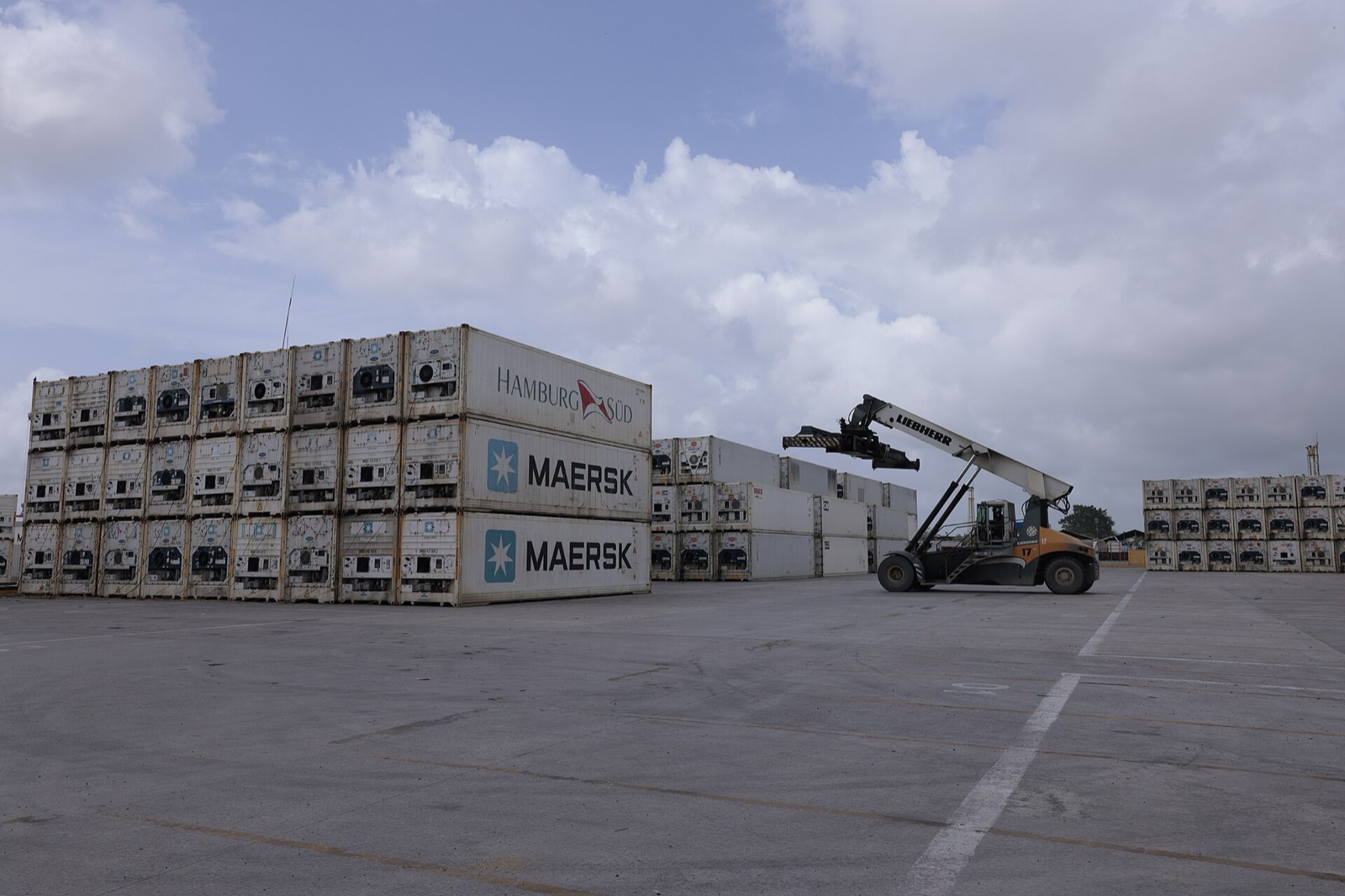
Photo: Santo Tomás de Castilla port, Guatemala. Gobierno de Guatemala, Public domain, via Wikimedia Commons.
Ready to ship your freight?
