
On this page9
How shipping from China to Curaçao works
No carrier runs a direct China-to-Curaçao service in our network. Cargo leaves a Chinese port on a mainline transpacific vessel, reaches Miami, and continues to Willemstad on a second leg.
Interworld Freight has no fixed Miami to Curaçao transit time on file, so that leg is quoted per sailing. The China to Miami leg is fixed by the origin port. The structural picture is in Caribbean transshipment hubs.
How long it takes, leg by leg
What sets the range. The range comes from the Chinese port of loading: in Interworld Freight's LCL tariff of July 21, 2026, Shanghai reaches Miami in 18 days, Qingdao and Shenzhen in 35 and Ningbo in 37. The Miami to Curaçao leg is quoted per sailing because it is not in the published tariff, so the total is confirmed on the booking. The totals are port-to-port sailing days. They exclude the cargo cut-off at the origin warehouse, the wait in Miami for the next sailing and customs clearance on arrival.
The China to Miami leg takes 18 days from Shanghai, 35 from Qingdao, 35 from Shenzhen and 37 from Ningbo. The Miami to Curaçao leg is quoted per sailing, so no end-to-end total is stated here.
- Origin consolidation, 3 to 7 days. LCL only.
- Chinese port to Miami. Shanghai 18 days, Qingdao 35, Shenzhen 35, Ningbo 37.
- Miami to Willemstad. Quoted per sailing.
- Deconsolidation, 2 to 5 days. LCL only.
- Customs clearance, 1 to 5 days.
Comparative timings are in China to Caribbean transit times.
What it costs and what drives the number
| Component | Basis | Notes |
|---|---|---|
| Ocean freight | Per CBM (LCL) or per container (FCL) | Routed through Miami |
| Origin and destination CFS | Per shipment or per CBM | LCL only |
| Terminal handling, both ends | Flat | n/a |
| Customs brokerage | Per entry | n/a |
| Import duty | Curaçao's own tariff by HS code | Not the CARICOM CET |
| OB sales tax | 6% standard, 9% on certain categories, on the CIF value | Levied at import |
The CIF base is the mechanic to plan around. The OB is levied on the value of the goods including shipping costs, so freight and insurance are inside the taxable amount. Reducing freight reduces both the freight bill and the tax bill, which is the strongest argument for buying FOB and booking your own carriage rather than accepting a supplier's CIF price with an unpriced freight component. See Incoterms for importing from China.
One caution on the rate. Curaçao's sales tax has been under revision since 2023, and published sources differ on which rate applies to which import category. Treat 6% and 9% as planning figures and confirm the applicable rate for your HS code with a local broker before pricing a shipment. The regional comparison, with the same caveat applied consistently, is in Caribbean import duties and taxes.
LCL, FCL or air: choosing for Curaçao
Willemstad is a working commercial port with adequate handling infrastructure, but the container freight station market is small, which pushes deconsolidation charges up and the breakeven earlier than the generic regional numbers.
- Below 10 CBM: consolidated shipping.
- 10 to 14 CBM: consolidated shipping, unless a container quote prices lower.
- 14 to 20 CBM: price both ways.
- Above 20 CBM: a full container, which lowers the cost per cubic meter and removes the 5 to 12 days of consolidation and deconsolidation (3 to 7 at origin plus 2 to 5 at destination).
Interworld Freight runs the consolidated option as a single service from origin CFS in China through Curaçao clearance: LCL shipping from China to Curaçao. Where the volume justifies a full container, container shipping to the Caribbean covers the FCL side, and where speed matters more than cost, air freight to the Caribbean. The mode decision itself is in LCL vs FCL for Caribbean imports.
Ports of entry in Curaçao
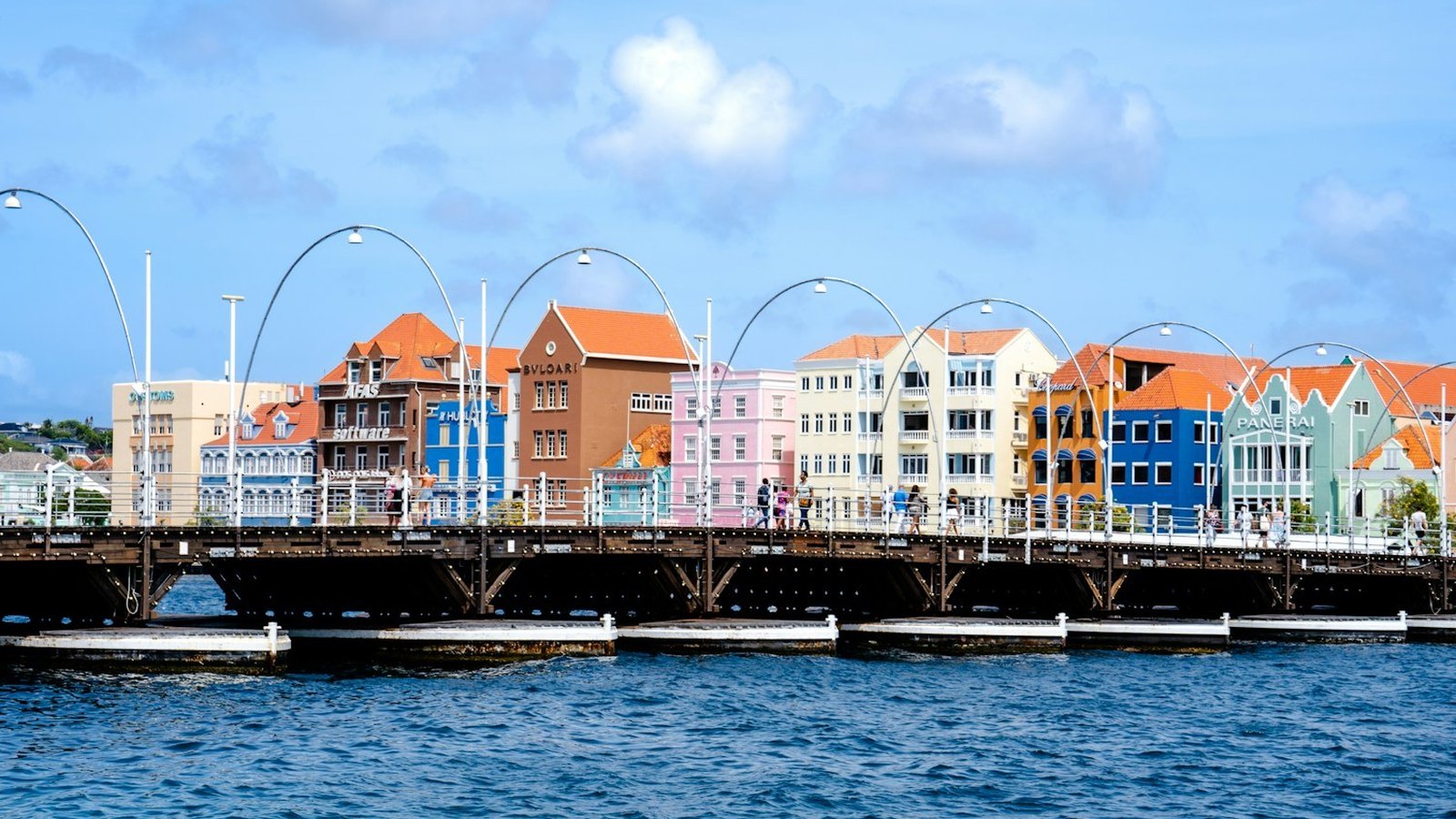
Willemstad handles the island's containerised trade, under the Curaçao Ports Authority. The harbour complex around the Schottegat is one of the better natural deep-water facilities in the region and has long served as a bunkering and transshipment point as well as a destination port.
For an importer, the practical point is that there is a single relevant gateway and no port-selection decision to make. Effort belongs on the Miami connection and on clearance preparation instead.
Customs clearance in Curaçao
Imports are administered by Douane Curaçao.
- The importer needs a CRIB number, the nine-digit Centraal Registratie Informatie Belastingplichtige identifier issued by the Inspectie der Belastingen. Douane Curaçao has required it on every import declaration since April 2017, and entering it auto-populates the consignee's details on the entry. Individuals who do not reside in Curaçao are exempt and present a valid passport instead.
- The declaration is lodged in ASYCUDA World, the online system Douane Curaçao operates, which also accepts the invoice and bill of lading alongside the entry. Commercial cargo is normally filed by a local broker.
- Duty is assessed by HS code under Curaçao's own tariff. There is no Common External Tariff here and no CARICOM origin regime to consider.
- OB sales tax is levied on the CIF value at import, at 6% standard with 9% applying to certain categories.
Curaçao operates free-zone regimes intended for trading and re-export activity, which can change the duty and tax position for goods that will not enter the local market. Whether a given operation qualifies is a question for a local advisor rather than a forwarder, but it is worth asking if your cargo is destined for onward distribution rather than domestic sale. For importers whose regional distribution is larger than one island, the better-documented alternative is staging in Panama, covered in Colón Free Zone re-export.
What importers actually bring in from China
The Curaçao import mix from China reflects a small domestic market with tourism, refining-related industry and a regional trading tradition: consumer goods and household items, construction and finishing materials, electronics and appliances, auto parts, hospitality equipment, and packaging.
The trading tradition matters commercially. Curaçao has historically functioned as a redistribution point for the southern Caribbean and the Venezuelan trade, so a share of the cargo arriving is not destined for local consumption. If that describes your operation, the free-zone question above is worth pursuing before you build a landed-cost model around full domestic clearance.
Where these shipments fail
- Applying CARICOM assumptions. Curaçao is Dutch Caribbean. There is no CET and no CARICOM origin relief, and a regional duty rate for your HS code tells you nothing about the Curaçao rate.
- Using a stale OB rate. The sales tax has been under revision since 2023 and published sources disagree. Confirm the rate for your category rather than copying a figure from a shipping guide.
- Accepting a supplier's CIF price. The OB is calculated on CIF, so an unpriced freight component is taxed as well as inflated.
- Accepting a transit time without the Miami leg. The Miami to Curaçao leg is quoted per sailing. Ask for it in writing before committing to a delivery date.
- Booking at the LCL cutoff rather than before it. A missed sailing carries the cargo past its Miami connection as well.
- Clearing domestically when the goods are destined for re-export. Worth checking the free-zone position first.
Interworld Freight is a global freight forwarder headquartered in Miami, running transpacific consolidation from China alongside its transatlantic, Middle East and Oceania trades, and booking the China leg and the Miami leg into Willemstad as a single movement. The wider lane picture is in shipping from China to the Caribbean, and the neighbouring Dutch Caribbean market, which now taxes imports on a different basis, in shipping from China to Aruba.
Frequently Asked Questions
How long does shipping from China to Curaçao take?
The China to Miami leg takes 18 days from Shanghai, 35 from Qingdao, 35 from Shenzhen and 37 from Ningbo. There is no direct service, so cargo continues from Miami to Willemstad, and that leg is quoted per sailing. Origin consolidation adds 3 to 7 days on LCL, deconsolidation 2 to 5 and customs clearance 1 to 5.
What tax do I pay on imports into Curaçao?
Import duty by HS code under Curaçao's own tariff, plus the OB sales tax levied at import on the CIF value, at 6% standard with 9% applying to certain categories. Because the tax is computed on CIF, freight and insurance are inside the taxable amount. The sales tax has been under revision since 2023, so confirm the applicable rate for your goods with a local broker rather than relying on a published figure.
Is Curaçao part of CARICOM?
No. Curaçao is a Dutch Caribbean territory and applies its own tariff schedule. There is no Common External Tariff and no CARICOM origin regime, so duty rates and rules that apply in Jamaica, Barbados or Trinidad do not transfer. Rules of thumb from the anglophone Caribbean are not usable here.
Which port do shipments from China arrive at in Curaçao?
Willemstad, under the Curaçao Ports Authority. The harbour around the Schottegat is one of the better natural deep-water facilities in the region and serves as a bunkering and transshipment point as well as a destination port. It is the only relevant gateway, so there is no port-selection decision on this lane.
Which route does cargo from China take to Curaçao?
Through Miami. Interworld Freight moves the cargo from the Chinese port to Miami (18 days from Shanghai, 35 from Qingdao and Shenzhen, 37 from Ningbo) and then on to Willemstad, with the Miami leg quoted per sailing. Booking both legs as one movement gives the connection an owner.
Should I use a consolidated shipment or a full container to Curaçao?
Consolidated shipping is the choice below 10 CBM, and up to 14 CBM unless a container quote prices lower. Between 14 and 20 CBM, price both. Above 20 CBM a container wins. The breakeven sits earlier than the regional generic because the container freight station market in Willemstad is small, which keeps deconsolidation charges higher than at the region's major gateways.
Ready to ship your freight?
