
On this page11
Costa Rica clears imports through the Servicio Nacional de Aduanas of the Ministerio de Hacienda, with every declaration filed by a certified customs broker in the TICA system. Duties run from 1% to 15% ad valorem, 13% IVA applies to nearly all imports, and US-origin consumer and industrial goods enter duty free under CAFTA-DR.
The real question on any tariff line is how many charges stack up. Duty is only the first layer. A 1% levy and, on certain goods, a selective consumption tax come next, and the 13% IVA is then calculated on the sum of all of them. Interworld Freight moves full containers from Miami under its container shipping to Costa Rica service, and the customs steps below apply to that cargo.
Costa Rica Customs at a Glance
The table covers a commercial import from the United States. Rates depend on the HS code, so confirm the tariff line before quoting a landed cost.
| Item | Costa Rica |
|---|---|
| Customs authority | Servicio Nacional de Aduanas, Ministerio de Hacienda |
| Electronic system | TICA |
| Tariff framework | Central American Import Tariff, with a 1% to 15% ad valorem band |
| Trade agreement with the US | CAFTA-DR, in force in Costa Rica since January 1, 2009 |
| Valuation basis | Customs value (valor aduanero), CIF basis for IVA |
| VAT | 13% IVA on most goods and services, including imports |
| Other import levies | 1% Ley 6946 levy, selective consumption tax on listed goods, specific taxes on some products |
| Importer ID | Registration in the customs system, confirmed by your broker before the first entry |
| Broker requirement | Mandatory: a certified customs broker files the declaration |
| Inspection model | Traffic light: green (release), yellow (documents), red (physical) |
How Does Customs Clearance Work in Costa Rica?
Costa Rican clearance is broker-driven. The importer supplies the commercial documents, and the customs agent builds the declaration in TICA, which generates the DUA, the customs declaration of the import.
According to the U.S. Commercial Service guide to Costa Rican customs, the Servicio Nacional de Aduanas operates under the General Law of Customs and the Central American Uniform Customs Code, and its director reports to the Treasury Ministry. The same guide states that all import processing should be carried out by a certified customs broker. The steps, in order:
- Classify the goods. Assign the HS code under the Central American tariff. The code sets the duty, the selective tax, any technical notes and the permits required.
- Obtain permits before shipment. Health, agriculture and security permits must exist before the cargo arrives, because they are checked at declaration.
- Appoint the customs broker. The agent receives the invoice, the transport document and the proof of origin, and acts on the importer's behalf before customs.
- Transmit the declaration in TICA. The agent declares value, classification, origin and the preference claimed, and the system assigns the inspection level.
- Receive the selectivity result. Green means release without inspection, yellow means documentary review, red means physical inspection of the goods.
- Pay the tax obligation. Duty, the 1% levy, selective tax and IVA are settled before release, using the exchange rate fixed for the declaration.
- Obtain release and move the cargo. Once payment clears and any inspection ends, customs releases the goods to the importer or the transport company.
Under the Hacienda instructions the importer hires a customs agent to act on its behalf, and a serious one questions value and origin before transmitting anything.
Documents Required for Costa Rica Customs
The Country Commercial Guide lists commercial invoices, bills of lading and airway bills for the entry of goods. The declaration in TICA then draws on the following set.
- Commercial invoice with a complete product description, unit prices and Incoterm. See our note on commercial invoice requirements for what customs authorities look for.
- Bill of lading for ocean cargo or air waybill for air cargo.
- Packing list matching the invoice line by line.
- Proof of origin for CAFTA-DR preference. The guide sets no fixed format, but the claim must be supported.
- Phytosanitary certificate for bulk agricultural products.
- Import permit from the Ministry of Health for cosmetics, pharmaceuticals, vitamin supplements, medical devices, chemicals, insecticides and pesticides. Applicants supply quality analysis, good manufacturing practice and free-sale certificates from the foreign exporter.
- DUA generated by the customs agent in TICA.
Mail shipments need only postal documentation, but that regime is outside the commercial freight this guide covers.
Costa Rica Import Duty Rates by Product Category
Costa Rica applies duties of 1% to 15% ad valorem, according to the Costa Rica import tariffs chapter of the Country Commercial Guide. The exact rate sits in the Central American tariff for the 8 or 10 digit code, so read the table as the structure, not a quote.
| Product category | Duty or tax (MFN, non-preferential) | CAFTA-DR, US origin |
|---|---|---|
| Raw materials, bulk grains, oilseeds | 1% duty | 0% |
| Most consumer and industrial goods | Within the 1% to 15% band, set by HS code | 0% since January 1, 2015 |
| Apparel (Hacienda calculation example, cotton trousers) | 14% duty | 0% when origin rules are met |
| Agricultural products | Set by HS code | 0%, except potatoes and onions under tariff-rate quotas |
| Beer, wine and whiskey | 10% selective consumption tax in addition to duty | Duty 0%, selective tax still applies |
| New and used vehicles | 30% to 50% selective consumption tax, depending on model | Duty 0%, selective tax still applies |
| Refrigerators and some other appliances | 30% to 40% selective consumption tax | Duty 0%, selective tax still applies |
Selective consumption tax is not a duty, and no trade agreement removes it. A US-origin vehicle clears at 0% duty and still pays the selective tax and IVA. Costa Rica has also cut selective taxes over time, with a five-year partial exemption for electric vehicles, so check the current schedule in TICA.
How to Calculate Import Duty and Taxes in Costa Rica
The Dirección General de Aduanas publishes its own cascade in its instructions for calculating the customs tax obligation (Instructivo MH-DGA-PRO09-INS-004). The order matters because each tax uses the previous subtotal as its base.
- Duty (DAI): customs value x duty rate.
- Selective consumption tax (SC): (customs value + duty) x SC rate, only for listed goods.
- Ley 6946 levy: customs value x 1%.
- Other levies where they apply: for example INDER, IFAM, specific taxes and, for some tariff codes, an estimated margin added to the IVA base.
- IVA: (customs value + duty + SC + Ley 6946 + other levies) x 13%.
When a trade agreement preference applies, the preferential rate replaces both the duty and the Ley 6946 levy, as the Hacienda instructions explain.
Illustrative example (round numbers, not a quote). A non-preferential shipment with a customs value of USD 10,000, duty of 14%, no selective tax:
- Duty: 10,000 x 14% = USD 1,400
- Ley 6946: 10,000 x 1% = USD 100
- IVA base: 10,000 + 1,400 + 100 = USD 11,500
- IVA: 11,500 x 13% = USD 1,495
- Total taxes: USD 2,995
The same goods of US origin under CAFTA-DR, with duty and the 1% levy at 0%, pay only IVA: 10,000 x 13% = USD 1,300. That USD 1,695 gap is why the certificate of origin has to be right. The Hacienda instructions add IVA to the CIF value, so include freight and insurance when the sale terms leave them out, and ask your broker to confirm the build-up before the declaration.
Importer Registration and Customs Brokers in Costa Rica
An importer needs to be registered in the customs system before the first declaration, and the broker confirms that status at onboarding. The broker side is stricter. Declarations in TICA are filed by a certified customs agent, and the agent acts on the importer's behalf.
Choose the broker for your commodity first and price second. Food, medical and agricultural lines depend on permit sequencing, and a broker who knows the Ministry of Health and MAG procedures saves days at the border. Interworld Freight coordinates with licensed brokers at destination, and our glossary entries on customs clearance and the customs broker explain the roles.
Exemptions, Free Zones and Special Regimes in Costa Rica
The Hacienda instructions list the regimes that change the tax calculation: the free zone regime (Zona Franca), the Golfito free trade deposit (Depósito Libre Comercial de Golfito) and active processing (perfeccionamiento activo), which suspends taxes on inputs that are processed and re-exported. Each has its own calculation rules when goods enter the local market.
The preference regime matters most for US suppliers. CAFTA-DR took effect in Costa Rica on January 1, 2009 and has given duty-free access to 100% of US-originating consumer and industrial goods since January 1, 2015. All agricultural products except potatoes and onions also enter duty free. Hacienda also lists the General Treaty of Central American Economic Integration and the Central America-Panama free trade agreement among the treaties in force, and a treaty preference replaces duty and the 1% levy.
How Costa Rica Relates to DUCA
The Central American Uniform Customs Code (CAUCA) and its regulation (RECAUCA) form part of the Costa Rican customs framework, and COMEX lists them, along with the DUCA (Declaración Única Centroamericana) and the General Treaty, among the Costa Rican legal instruments for Central America. Importers moving goods inside the region should read our explainer on DUCA, the Central American single customs declaration. Ask your broker which declaration format applies to your shipment in TICA, and claim CAFTA-DR with a certification of origin.
Import Permits and Licensing Agencies in Costa Rica
Permits depend on the product, not the origin. According to the import requirements chapter of the Country Commercial Guide, these agencies control the main categories.
- Ministry of Health: permits and registration for pharmaceuticals, drugs, cosmetics, medical devices, certain chemicals and dietary supplements. Food products need registration on first import. Pharmaceutical permits are valid for five years.
- Ministry of Agriculture and Livestock (MAG): sanitary and phytosanitary certificates from the exporting country. The Costa Rican importer obtains the permits.
- SENASA: animal health registration, for example for US dairy facilities.
- Ministry of Public Security: licenses for arms and munitions.
- Central Bank: registers imports for statistical purposes.
Plant health authorities are also testing pesticide residues on fresh produce and grains, and the guide reports rejected shipments of rice, fruit and potatoes.
Common Customs Delays in Costa Rica and How to Avoid Them
Four problems cause most delays.
- HS misclassification. The code drives the duty, the selective tax and the technical notes. A wrong code changes the tax obligation and invites a post-clearance claim.
- Missing permits. Health and agriculture permits must be in hand when the declaration is filed. Shipping first and permitting later leaves the container in the terminal.
- Weak origin evidence. A CAFTA-DR claim without support is denied at the border or reviewed later, and the importer pays the full duty plus the 1% levy.
- Red channel inspections. Physical inspection adds days. Accurate descriptions and complete paperwork lower the odds of a yellow or red result.
Demurrage and storage start before the broker finishes, so send the final document set before the vessel arrives. The Country Commercial Guide warns that documentation violations carry heavy fines.
Clearing Cargo to Costa Rica With Interworld Freight
Interworld Freight has operated from Miami since 1992. The Miami hub and warehouse receive and consolidate US cargo for ocean FCL and LCL and for air freight, and we coordinate customs with licensed brokers at destination. Our guide to shipping to Costa Rica covers the freight side. We answer quotes within one business day.
Frequently Asked Questions
What is the import duty in Costa Rica?
Duties run from 1% to 15% ad valorem, depending on the HS code. Raw materials and bulk grains pay 1%. US-origin consumer and industrial goods enter at 0% under CAFTA-DR when origin is documented.
What is the import tax in Costa Rica?
The IVA is 13% and applies to most goods, including imports. Basic staples and school uniforms are exempt. The IVA base includes the customs value, duty, the 1% Ley 6946 levy, selective tax and other levies.
Do I need a customs broker in Costa Rica?
Yes. All import processing is carried out by a certified customs broker, who files the declaration in TICA on the importer's behalf.
What is TICA?
TICA is the electronic customs system of Costa Rica. Customs brokers use it to declare imported and exported goods, and it generates the DUA and assigns the inspection level.
What does the traffic light inspection system mean?
Green means the goods are released without inspection. Yellow means a documentary review. Red means a physical inspection of the cargo.
Does Costa Rica have a free trade agreement with the United States?
Yes. CAFTA-DR took effect in Costa Rica on January 1, 2009, and since January 1, 2015 all US-originating consumer and industrial goods enter duty free. Selective consumption tax and IVA still apply.
Does Costa Rica use the DUCA?
The DUCA is one of the Central American legal instruments COMEX lists for Costa Rica, alongside CAUCA, RECAUCA and the General Treaty. Your broker confirms the declaration format for a given shipment, and US goods claim CAFTA-DR with a certification of origin.
Which permits does a food or cosmetics import need?
Food needs registration with the Ministry of Health on first import, and cosmetics need a Ministry of Health import permit. Agricultural products also need sanitary and phytosanitary certificates under MAG.
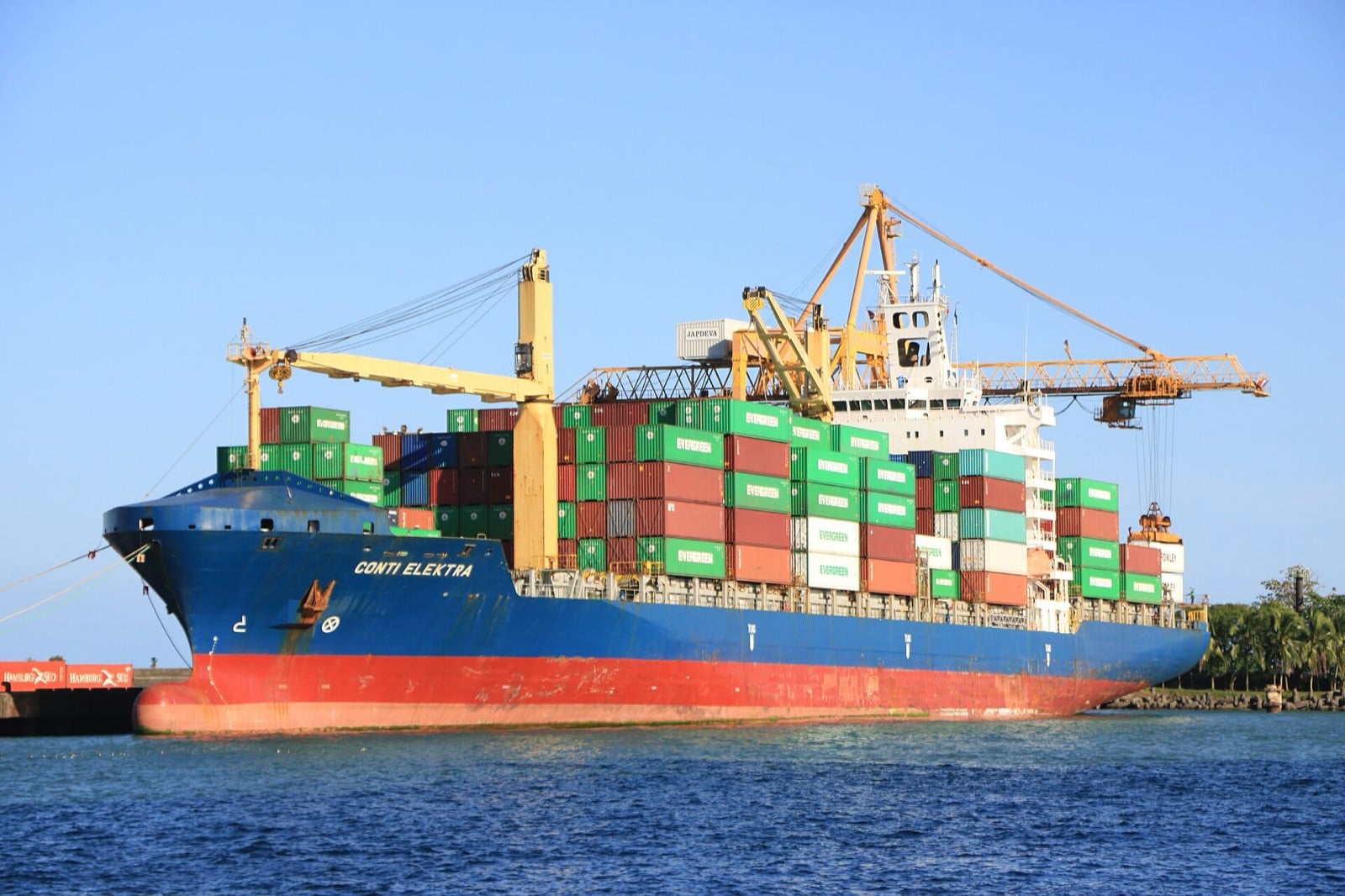
Photo: Port of Moín, Limón, Costa Rica. ImagePerson, CC BY 4.0, via Wikimedia Commons.
Ready to ship your freight?
