
On this page11
Cayman Islands Customs and Border Control (CBC) clears imports through its Customs Online System (COLS). Every shipment needs an entry within 7 days of arrival, duty is assessed on the CIF value at the rate of the tariff code in the Customs Tariff Act, and CBC's published list of import charges names no VAT or sales tax.
With no VAT in the picture, Cayman duty comes down to classification. Three things set the bill: the HS line, the CIF value declared and the permits that other government departments attach to the goods. For routes, ports and transit, see our Cayman Islands shipping guide. For smaller orders from Asia, our LCL shipping from China to the Cayman Islands service consolidates through Miami.
Cayman Islands Customs at a Glance
| Item | Detail |
|---|---|
| Customs authority | Customs and Border Control (CBC), Cayman Islands Government |
| Electronic system | Customs Online System (COLS) |
| Tariff framework | Customs Tariff Act (2026 Revision): tariff codes and rates in the First Schedule, exemptions in the Second Schedule |
| Trade agreements with the US | None described in the CBC guidance reviewed; the entry records country of origin and country whence consigned |
| Duty valuation basis | CIF: cost of goods plus insurance and freight, at an open-market price |
| VAT / sales tax | None listed among CBC's import charges |
| Other import levies | Package tax and warehouse fees (air arrivals only); Environmental Impact Fee on vehicles, batteries and tyres |
| Importer ID required | Trader Identification Number (TIN), free, issued by CBC |
| Broker requirement | Optional: the importer or a duly authorized agent files; the importer stays responsible |
| De minimis | Not published by CBC; every import must be entered, dutiable or not |
How Does Customs Clearance Work in the Cayman Islands?
CBC sets out the import process in five steps in its Quick Guide for Importers. In practice:
- Register for a TIN. Businesses and individuals register with CBC before importing commercial goods. The import/export account is free and issued quickly.
- Check permits and restrictions. CBC administers the import requirements of other government departments. Controlled goods need permits, certificates or inspection before entry.
- Prepare the documents. Invoices and the bill of lading or airway bill must accompany every entry, and the person making the declaration accepts responsibility for its accuracy.
- Submit the entry in COLS. The importer or a duly authorized agent files it electronically. The CBC then determines the rate of duty and assesses the duty payable.
- Inspection and payment. After the entry is checked and accepted and the duty is paid, CBC can require the goods to be opened to confirm that they were declared correctly, contain no prohibited or restricted articles and are correctly invoiced.
The deadline is firm. The Customs and Border Control Act requires the entry within 7 days of arrival, according to CBC's import entry guidance, and importers must enter all goods whether dutiable or not. Warehouse fees at the airports begin to accrue after the seven-day clearance period.
Documents Required for Cayman Islands Customs
- Commercial invoice. Enter the invoiced cost, converted to Cayman Islands dollars (KYD) at the exchange rate in force on the arrival date, and the actual freight cost, whether or not it is included in the invoice.
- Bill of lading (ocean) or airway bill (air)
- The entry itself, with each tariff code listed as a separate item even when two codes carry the same duty rate
- A description detailed enough for an officer to identify the goods
- Quantity in the unit the tariff code specifies, for specific-duty goods such as liquor, fuel and cigarettes
- Country of origin (where the goods were produced) and country whence consigned (where they were shipped from)
- Dutiable value declaration, signed by the importer or authorized signatory. A branch, subsidiary or agent of the consignor who cannot sign it should consult a CBC officer.
- Duty waiver or exemption claim, declared on the entry with an undertaking to meet any conditions
- Permits from other government departments for controlled goods
Rework usually starts with an invoice that does not match the entry, so keep the invoice detailed and consistent with it. Our glossary entry on CIF shows the cost elements that make up the declared value.
Cayman Islands Import Duty Rates by Product Category
CBC states that duty is either ad valorem (a percentage of value, the most common type) or specific (a fixed amount per unit of weight or quantity), and that the duty depends on the commodity code, the quantity or the customs value. Tariff headings and rates sit in the First Schedule to the Customs Tariff Act. Rates vary by HS line, and the table shows the ones CBC publishes in its own guidance.
| Category | Duty |
|---|---|
| Motor vehicles | 0% to 42% by type and value (CIF) |
| Pick-up trucks | 29.5% |
| Vessels over 18 feet | 12% of CIF |
| Boats up to 18 feet | Duty free |
| New pneumatic tyres, engines, air conditioning machines, lithium-ion accumulators (vehicle-parts lines in CBC's vehicle guide) | 22% |
| Safety glass, rear-view mirrors, locks, ignition and starting equipment (vehicle-parts lines) | 27% |
| Ships, yachts and aircraft used exclusively on international voyages | No import duty |
The vehicle bands come from the Customs Tariff Act (2026 Revision), revised as at December 31, 2025: passenger cars under subheading 8703.20 pay 29.5% up to CI$20,000 CIF, 32% from CI$20,001 to CI$25,000, 37% from CI$25,001 to CI$30,000 and 42% above CI$30,000, while electric and hybrid lines sit lower. The parts lines come from CBC's Vehicle Import Guide and show ad valorem rates of 22% and 27% of CIF on common goods. For food, furniture, apparel, electronics or building materials, take the rate from the First Schedule of the current Customs Tariff Act rather than from a summary. Non-commercial aircraft, including company-owned executive aircraft, are dutiable.
How to Calculate Import Duty and Taxes in the Cayman Islands
The cascade is short, since CBC's list of import charges has no VAT:
- CIF value: invoiced cost converted to KYD at the arrival-date rate, plus insurance and actual freight.
- Duty: CIF times the ad valorem rate of the tariff code (or the specific amount per unit).
- Additional fees: the Environmental Impact Fee where it applies, and package tax and warehouse fees on air arrivals.
Illustrative example, one pickup truck with a CIF value of CI$25,000 (assumed value), arriving by ocean:
- Duty: 25,000 x 29.5% = CI$7,375
- Environmental Impact Fee for a motor vehicle other than a motorcycle: CI$250
- Total payable to CBC: CI$7,625
The Environmental Impact Fee is charged under section 57 of the Public Health Law and collected through Customs at the time of import. It is CI$250 for motor vehicles other than motorcycles, CI$75 for motorcycles, CI$5 for lead-acid batteries and CI$2 for motor vehicle tyres when imported separately, according to CBC's page on customs duty and other fees. CBC's vehicle guide also lists an Environmental Tax of $1,000 (collected for the Department of Environment) on used automobiles and other mechanically propelled vehicles with a CIF value of not more than CI$12,000.
Package tax (Section 51 and Schedule 3 of the Customs and Border Control Act) and the Government Warehouse Regulations fees apply only to goods arriving by air. The sources state no amounts, so confirm them with CBC for an air shipment.
Importer Registration and Customs Brokers in the Cayman Islands
Importing commercial goods requires a Trader Identification Number from CBC, obtained through COLS or the CBC Help Center. The account is free. You can file your own entries or authorize a customs broker as agent, and CBC publishes a guide on how to appoint one in COLS.
Hiring a broker does not move the liability. CBC states that the importer remains ultimately responsible for the accounting documentation, the payment of duties and taxes and later corrections to classification, origin and valuation, even when a broker files. Our glossary entry on the customs broker role explains the split. An importer that cannot use the online system is directed to a broker.
Exemptions, Free Zones and Special Regimes in the Cayman Islands
Duty relief is claimed on the entry. Waivers and exemptions must be declared with an undertaking to observe any conditions. Exemptions sit in the Second Schedule of the Customs Tariff Act. A waiver not listed there requires a letter from the Governor or Cabinet. COLS has dedicated quick guides on delegating a duty relief and on submitting a declaration with one.
Other reliefs CBC lists:
- Ships, yachts and aircraft used exclusively on international voyages pay no import duty.
- Boats up to 18 feet are duty free.
- Passengers' personal effects in accompanied baggage do not go through full entry procedures, but must be declared on the Passengers Customs Declaration card if there is anything to declare.
- Postal importations are cleared against the sender's declaration, without formal entry, unless the CBC Postal Depot officer asks for one, for example for high-value goods or goods eligible for duty relief.
CBC's guidance reviewed here does not describe free zones or inward processing regimes, and describes no preferential tariff by origin. Ask CBC before building a plan around either.
Import Permits and Licensing Agencies in the Cayman Islands
CBC administers the import requirements of other government departments, and controlled goods need permits, certificates or inspection. More than one department can have a role for the same product, so CBC advises importers to contact each department concerned. CBC publishes a reference list titled "Other Government Departments and Agencies: Reference List for Importers" for this purpose. For vehicles, CBC also publishes a notice that Cabinet approved an order continuing import restrictions on some categories of vehicles with a model year of eight years or older, in its Vehicle Importation Restrictions guide.
Common Customs Delays in the Cayman Islands and How to Avoid Them
- Entry filed after day 7. The Act requires entry within 7 days of arrival, and air warehouse fees run after the seven-day clearance period.
- No TIN. Register before the shipment lands.
- Several tariff codes on one line. Each code is a separate item on the entry, even at the same rate.
- Invoice without actual freight. The declared value must include freight and insurance, converted at the arrival-date exchange rate.
- Missing permit from another department. CBC will not release controlled goods on its own authority.
- Unsigned dutiable-value declaration. Branches and subsidiaries of the consignor need guidance from a CBC officer.
- Misclassified vehicle or part. Vehicle rates run from 0% to 42%, so a wrong line moves the bill sharply.
- Assuming the broker carries the liability. The importer stays responsible for corrections to classification, origin and valuation.
Clearing Cargo to the Cayman Islands With Interworld Freight
Interworld Freight was founded in Miami in 1992 and runs ocean FCL and LCL, air freight and customs coordination from its Miami hub, with Miami warehousing for consolidation. For the Cayman Islands we coordinate with licensed customs brokers at destination and check the invoice, the CIF value and the permits before the cargo sails. Importers buying in Asia can read shipping from China to the Cayman Islands and price smaller orders through LCL shipping from China to the Cayman Islands. A regional comparison is in Caribbean import duties and taxes. Quotes arrive within one business day.
Frequently Asked Questions
Who handles customs clearance in the Cayman Islands?
Customs and Border Control (CBC) clears imports through the Customs Online System (COLS). The importer or a duly authorized agent submits the entry electronically.
How long do I have to enter goods in the Cayman Islands?
The Customs and Border Control Act requires the entry within 7 days of arrival. Importers must enter all goods, whether dutiable or not.
What is the import duty in the Cayman Islands?
Duty depends on the tariff code in the First Schedule of the Customs Tariff Act and is either a percentage of CIF value or a fixed amount per unit. CBC publishes vehicle duty of 0% to 42%, pick-ups at 29.5% and vessels over 18 feet at 12%.
Does the Cayman Islands charge VAT on imports?
CBC's list of import charges names no VAT or sales tax. It lists duty, package tax and warehouse fees on air arrivals, and the Environmental Impact Fee on vehicles, batteries and tyres.
Do I need a TIN to import into the Cayman Islands?
Yes. Businesses and individuals register with CBC for a Trader Identification Number before importing commercial goods. The import/export account is free.
Is a customs broker mandatory in the Cayman Islands?
No. You can prepare your own entries or authorize a broker as agent. You stay responsible for the documentation, the payment of duty and later corrections.
How is duty valued in the Cayman Islands?
On CIF: the cost of the goods plus insurance and freight, at an open-market price. Foreign-currency invoices convert to Cayman Islands dollars at the exchange rate in force on the arrival date.
What is the Environmental Impact Fee?
A fee charged under section 57 of the Public Health Law and collected through Customs at import: CI$250 for motor vehicles other than motorcycles, CI$75 for motorcycles, CI$5 for lead-acid batteries and CI$2 for motor vehicle tyres imported separately.
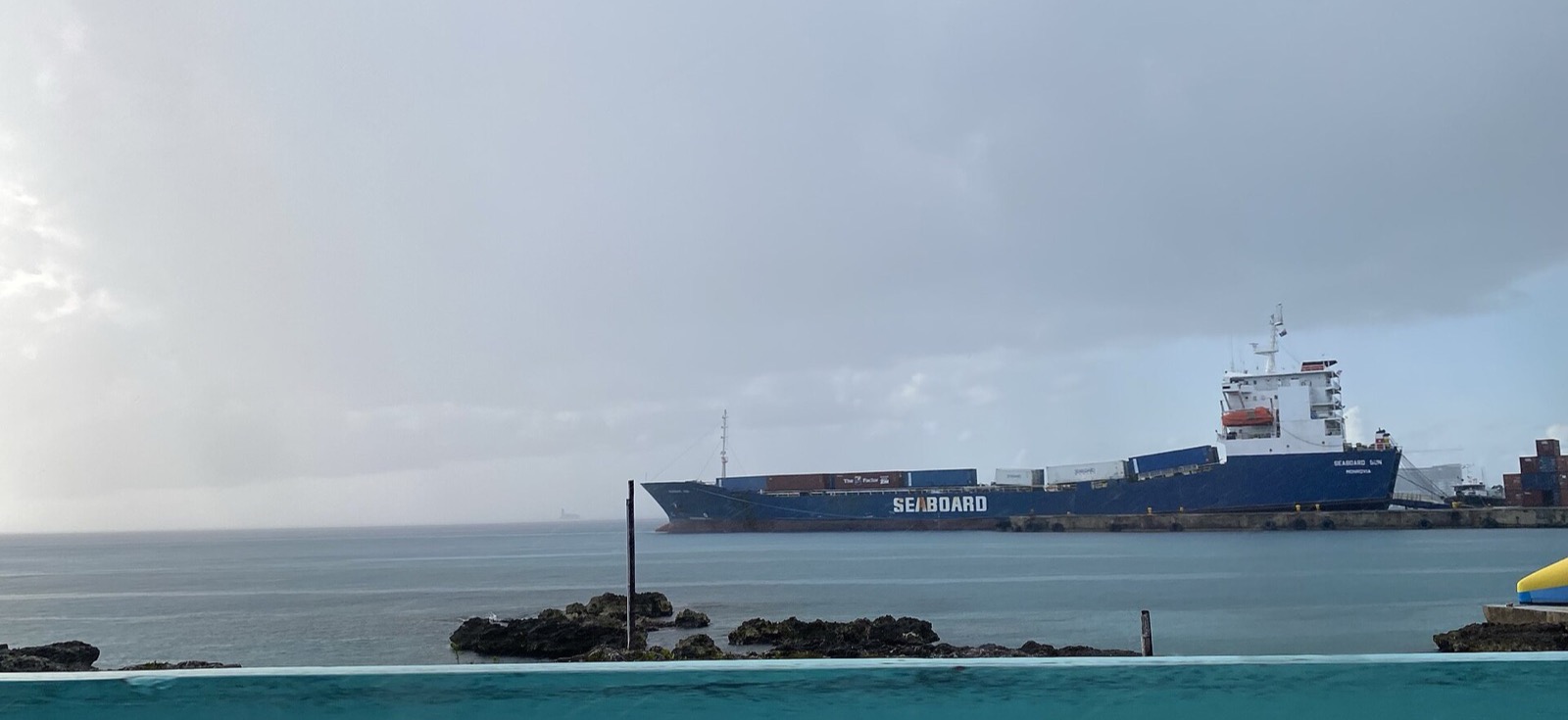
Photo: Cargo port, George Town, Grand Cayman. Jack Adamenko, CC BY 4.0, via Wikimedia Commons.
Ready to ship your freight?
