
On this page9
A flat rack container is a steel platform with end walls and no side walls or roof, built for cargo that is too wide, too tall or too heavy to load through a container door. Machinery, vehicles, boats, steel coils and pipe bundles go on flat racks; cargo that only needs to be lifted in from above goes in an open top.
Both units are booked like any other ocean container, on the same vessels and bills of lading as standard FCL shipping, but they carry their own rules on dimensions, lashing and surcharges. This guide compares the two box types side by side, with the specifications a carrier publishes and the questions to settle before you book.
What Is a Flat Rack Container and Which Types Exist?
A flat rack is a reinforced floor with a corner post at each end, rated for heavy, concentrated loads and fitted with lashing points along the side rails. It travels in the same container slots as a dry box, so it moves through ports, vessels and chassis like any other ISO unit.
Flat racks are built in two end-wall designs:
- Fixed-end flat rack: the end walls are permanent parts of the frame.
- Collapsible (folding-end) flat rack: the end walls fold down onto the floor when the unit is empty.
The design matters to you mainly through availability: carriers mix both in their fleets, and the unit you receive depends on what is positioned at the load port. Flat racks come in 20 ft and 40 ft lengths, and ONE also lists a 40 ft high cube flat rack. The carrier allocates the exact unit at booking, so the dimensions below are a reference, not a guarantee.
Flat Rack Container Dimensions and Payload
Flat racks carry more weight than any standard box, but they lose interior width between the side rails and height between the corner posts. Ocean Network Express (ONE) publishes these figures for its fleet on its container information page, noting that individual units differ:
| Specification | 20 ft flat rack | 40 ft flat rack |
|---|---|---|
| Inside length (between corner posts) | 5,568 mm (18'3") | 11,652 mm (38'3") |
| Inside width (between side rails) | 2,194 mm (7'2") | 2,208 mm (7'3") |
| Inside height | 2,213 mm (7'3") | 1,955 mm (6'5") |
| Tare weight | 3,100 kg | 6,200 kg |
| Maximum payload | 35,000 kg | 38,800 kg |
| Maximum gross | 38,100 kg | 45,000 kg |
Two numbers in that table drive most bookings. The 35,000 kg payload of a 20 ft flat rack exceeds what most US road moves allow once the chassis and truck are added, so a heavy unit needs an overweight permit or a port-side pickup; our guide to container weight limits covers the road limit and VGM in detail. And the inside height only matters when the end walls are up: cargo that sits on the floor can rise above the corner posts, at which point the unit becomes out-of-gauge.
Open Top Container: Dimensions, Tarpaulin and Top-Loading
An open top is a standard container with a removable roof, a tarpaulin cover and a swing header above the doors. It keeps full side walls, so cargo stays protected on all sides, while a crane or forklift can lower it in from above.
ONE lists these specifications for its open tops:
| Specification | 20 ft open top | 40 ft open top |
|---|---|---|
| Inside length | 5,898 mm (19'4") | 12,022 mm (39'5") |
| Inside width | 2,350 mm (7'8") | 2,350 mm (7'8") |
| Inside height | 2,348 mm (7'8") | 2,348 mm (7'8") |
| Roof opening (length x width) | 5,680 x 2,252 mm | 11,798 x 2,230 mm |
| Door opening (width x height) | 2,340 x 2,280 mm | 2,340 x 2,280 mm |
| Tare weight | 2,240 kg | 3,880 kg |
| Maximum payload | 28,240 kg | 26,600 kg |
Three features decide whether an open top works:
- The tarpaulin. It is secured by a cable through eyelets and sealed like a door. Cargo that stays below the top rails travels as a normal in-gauge container; cargo that pushes the tarpaulin up becomes over-height.
- The swing header. The beam above the doors swings out of the way, which lets a forklift load tall items through the end without hitting the frame.
- Payload. A 40 ft open top carries 26,600 kg on ONE's figures, far below the 38,800 kg of a 40 ft flat rack. Heavy, compact cargo belongs on the flat rack.
Flat Rack vs Open Top: Which Container Fits Your Cargo?
The choice comes down to three questions: is the cargo wider than the container, how heavy is it, and does it need side protection? This decision table covers the cargo we see most often:
| Cargo | Recommended unit | Why |
|---|---|---|
| Excavator, loader or tractor | Flat rack | Wider than a container door; driven or lifted on and lashed |
| Boat on a cradle | Flat rack | Beam exceeds container width |
| Steel coils, heavy plates | Flat rack (20 ft) | Concentrated weight needs a rated floor |
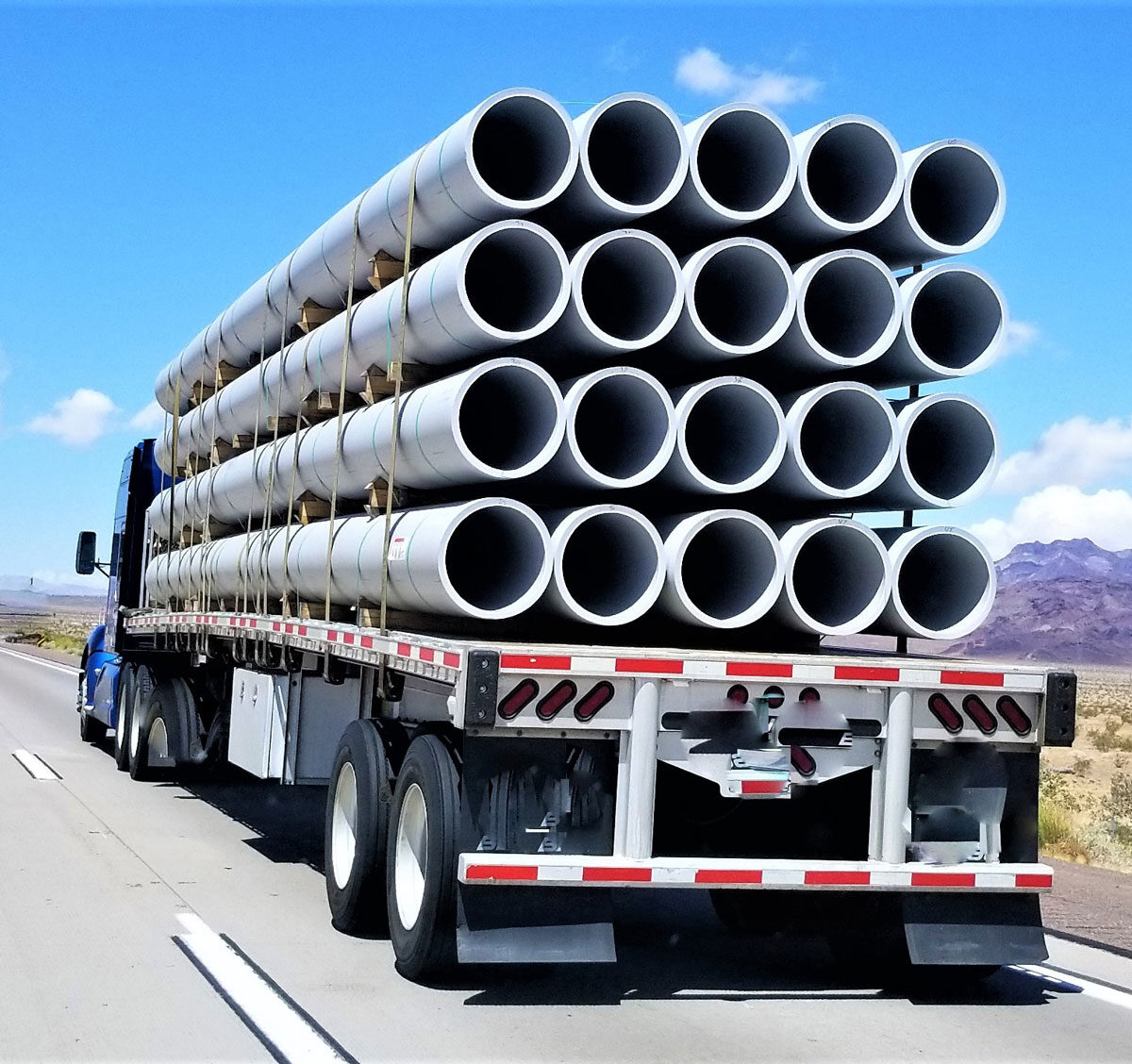
| Long pipe bundles, steel rods, lumber | Flat rack | Loaded from the side or above, lashed in bundles |
| Generator or transformer within container width | Open top | Lifted in by crane, protected by walls |
| Tall machinery under the top rail | Open top | Enters from above, stays in-gauge |
| Marble, granite or glass slabs on A-frames | Open top or crated on flat rack | Top-loading with side protection |
| Cargo wider and taller than any container | Breakbulk | No container fits |
When the cargo is too large even for a flat rack, the decision moves to non-containerized options; our article on breakbulk vs container shipping compares those routes.
Out-of-Gauge Surcharges: What Drives the Price
A flat rack or open top is priced as special equipment when the cargo stays within the container's outline, and as out-of-gauge (OOG) cargo when it does not. Carriers set OOG surcharges themselves, per sailing, so there is no standard tariff to quote here; what drives them is the space and handling the cargo takes away from the vessel and the terminal.
- Over-width cargo overhangs the side rails, which can leave the slots beside the unit unusable.
- Over-height cargo rises above the corner posts, which can leave the slot above it unusable and limits where the unit is stowed.
- Over-length cargo extends past the end walls toward the slots in front or behind.
- Terminal handling of an OOG unit can need slings, lifting frames or other gear beyond a standard spreader, which the terminal may charge separately.
To get a firm OOG rate, send the cargo's length, width and height in centimeters, the gross weight, the center of gravity and the lifting points. A rate quoted on estimated dimensions is open to revision once the cargo is measured.
Lashing and Securing Cargo on a Flat Rack
Cargo on a flat rack has no walls to lean on, so the lashing does the work the container structure does in a dry box. The IMO/ILO/UNECE Code of Practice for Packing of Cargo Transport Units (CTU Code), adopted in 2014, is the reference for loading and securing cargo in containers and other intermodal units across sea and land legs. It is non-mandatory, but carriers, surveyors and insurers measure packing against it.
The practical rules that come out of it for flat racks:
- Spread the load. Heavy items sit on timber dunnage or steel beams that distribute weight across the floor's cross members instead of point-loading the deck.
- Lash against movement in every direction. Chains, wire rope or rated web lashings run to the lashing points on the side rails, with enough capacity to hold the cargo in longitudinal, transverse and vertical motion.
- Block and brace. Wheeled cargo is chocked, and tracked machinery is blocked so it cannot slide under a hard roll.
- Protect from weather. Flat racks travel exposed. Engines, electronics and finished surfaces need shrink wrap or tarpaulins tied down so they cannot flap loose.
- Document it. Photos of the lashing before the unit leaves the warehouse settle most damage disputes at destination.
Flat Racks and Open Tops to the Caribbean and Latin America
Island ports and Latin American terminals receive flat racks and open tops, but destination rules, equipment and handling conditions change the plan.
Destination rules can require a flat rack. The Port Authority of the Cayman Islands sets loading rules for LCL containers that send lumber, sheetrock, plywood, metal pipes and steel rods to flat racks rather than closed boxes, and require fragile goods such as glass, granite and marble on flat racks to be crated. Building material shippers to Grand Cayman plan flat racks from the start; our container shipping to the Cayman Islands page explains how we load to those rules.
Terminals handle heavy and out-of-gauge cargo routinely. The Aruba Ports Authority lists wind turbines, diesel generators, yachts, heavy construction equipment and bundled lumber among the cargo its Barcadera terminal handles. Out-of-gauge freight to the islands is routine work, not an exception.
Equipment is the constraint. Flat racks and open tops are special equipment, and a carrier cannot always position one in Miami for the sailing you want. Three habits keep a Caribbean or Latin American booking on schedule:
- Request the equipment when you request the rate, not after the cargo is ready.
- Confirm free time at destination, because returning an empty flat rack from an island port takes longer than returning a dry box.
- Check that the consignee has a crane, forklift or lowboy to take the cargo off the rack, since few destination warehouses can unload a 30-ton machine by hand.
For machinery, energy equipment or plant components where the flat rack is one piece of a larger move, our project cargo service coordinates the rest of the logistics.
Booking Special Equipment With Interworld Freight
Interworld Freight has booked containers out of Miami since 1992 as a licensed NVOCC, and our Miami warehouse receives, measures and photographs out-of-gauge cargo before it is lashed. We quote flat racks and open tops on the same request as dry containers, with dimensions, weights and destination handling confirmed before the booking, and we reply within one business day.
Frequently Asked Questions
What is a flat rack container used for?
A flat rack carries cargo that is too wide, too tall or too heavy for a standard container: machinery, vehicles, boats, steel coils, pipe and lumber. It has end walls and a reinforced floor but no side walls or roof.
What are the dimensions of a 40 ft flat rack?
On ONE's published figures, a 40 ft flat rack has 11,652 mm inside length between corner posts, 2,208 mm width between side rails and 1,955 mm inside height. Units differ by owner, so confirm the allocated unit at booking.
How much weight can a flat rack carry?
ONE lists a maximum payload of 35,000 kg for a 20 ft flat rack and 38,800 kg for a 40 ft. Road weight limits in the US and at destination can be lower than the container's rating.
What is the difference between a flat rack and an open top container?
A flat rack has no side walls or roof and suits wide or very heavy cargo. An open top keeps its side walls, replaces the roof with a tarpaulin and suits tall cargo that is loaded from above.
Do flat racks cost more than standard containers?
Flat racks and open tops are special equipment, and cargo that extends beyond the container's outline adds an out-of-gauge surcharge set by the carrier for each sailing. Terminal handling of OOG units can also be charged separately.
Can a flat rack be shipped to Caribbean islands?
Yes. Island terminals such as Barcadera in Aruba handle heavy and out-of-gauge cargo routinely. Book the equipment early and confirm lifting equipment at the consignee's site.
Ready to ship your freight?
