
On this page14
You ship to Uruguay by ocean FCL or LCL into Montevideo (16 to 30 days from Miami) or by air into Carrasco (MVD), then clear customs with the Dirección Nacional de Aduanas in the LUCIA system and pay Mercosur duty, a consular fee of up to 5% and 22% VAT. Uruguay has a population of about 3.4 million, yet the Port of Montevideo works as a regional hub for the River Plate, handling transshipment cargo for Paraguay, Argentina and southern Brazil, and the country runs a mature free zone regime that distributors use to hold stock for the whole Mercosur region. That creates two playbooks: goods imported for consumption in Uruguay pay the Mercosur tariff, the consular fee and VAT, while goods moving into a free zone or in transit stay outside the customs territory. The choice changes the consignee, the documents and the landed cost, so it has to be made before the cargo sails.
Uruguay Shipping at a Glance: Transit Times and Options
| Route & mode | Transit | Best for |
|---|---|---|
| Miami to Montevideo, Ocean FCL | 16 to 30 days (direct or via Brazil) | full loads, equipment, building materials |
| Miami to Montevideo, Ocean LCL | 20 to 35 days | shipments under 15 CBM |
| Miami to Montevideo (MVD), Air freight | 1 to 3 days | spare parts, urgent and high-value cargo |
| China to Montevideo, Ocean FCL | 35 to 50 days | full containers of manufactured goods |
| China to Montevideo, Ocean LCL | 40 to 55 days | smaller Asian orders |
| Northern Europe to Montevideo, Ocean FCL | 20 to 30 days on direct services | European machinery and industrial components |
Transit depends on carrier rotation and transshipment. Confirm schedules at booking.
How to Ship to Uruguay: Step by Step
Shipping to Uruguay takes eight steps, and the first one, choosing the customs regime, shapes all the others.
- Choose the regime and classify the goods. Decide whether the cargo is imported for consumption, entered into a free zone or moved in transit, and confirm the eight-digit NCM code with your despachante de aduana.
- Check permits in the VUCE. Food, cosmetics, medical products and chemicals need MGAP or MSP authorization through the Ventanilla Única de Comercio Exterior, and non-automatic licences apply to listed products such as vehicles, textiles, shoes and structural steel.
- Choose the mode and the Incoterm. Use LCL below 10 to 12 CBM, FCL above 15 CBM and air under 500 kg; duty, consular fee and VAT are all calculated on CIF value, so freight and insurance enter the tax base.
- Book from Miami or origin. Deliver US supplier cargo to a Miami warehouse for consolidation and book a South America East Coast sailing to Montevideo, or a flight to Carrasco (MVD).
- Prepare the documents. Issue a commercial invoice with Incoterm, origin and an NCM-consistent description, a packing list, the bill of lading or air waybill and a certificate of origin when a preferential rate is claimed.
- File the US export declaration. The exporter or forwarder files Electronic Export Information (EEI) in AES when the value per Schedule B number exceeds $2,500 or an export licence is required.
- Lodge the declaration in LUCIA. After arrival, a licensed despachante files the entry in the DNA's LUCIA system for an importer holding a RUT, and the declaration is assigned a documentary or physical control channel.
- Pay duties and taxes, then release. CET duty, the consular fee, VAT and the VAT advance are paid before release from the terminal or bonded deposit; free zone cargo pays only when it leaves the zone for the Uruguayan market.
The routing behind step 4 differs by origin, starting with the US.
Shipping From the USA to Uruguay
US cargo reaches Uruguay on South America East Coast services from Miami, Port Everglades and other US East and Gulf Coast ports, with Montevideo as the discharge port and 16 to 30 days of transit by FCL. Many rotations call Brazilian ports first or combine Montevideo with Buenos Aires, the same strings used for shipping to Argentina, so transit varies with the service. Miami is the practical gateway: purchases from several US suppliers are received in one warehouse, checked against the invoices and shipped together, which matters in a market where many importers buy in smaller lots. The guide to shipping from Miami to Latin America explains how that consolidation model works across the region.
Full loads move in 20ft and 40ft dry containers, high cubes and specialized equipment as FCL ocean freight. Smaller volumes move as LCL consolidation, devanned at a bonded deposit in Montevideo before clearance. Air freight reaches Carrasco International Airport (MVD), Montevideo's airport, in one to three days from Miami, and suits spare parts, medical equipment and electronics. Asian cargo reaches the same port on a much longer route.
Shipping From China and Asia to Uruguay
Asia-origin cargo reaches Montevideo in 35 to 50 days port to port for FCL on Asia to East Coast South America services, and most of those services call Brazil before the River Plate, the same calls covered in our guide to shipping to Brazil. Consolidated cargo transships in Brazil on many routings. Because Uruguay values imports for duty under the Mercosur framework using the HS-based Mercosur Common Nomenclature (NCM), the classification agreed with the Asian supplier should be checked against the NCM code the Uruguayan broker will file.
Distributors serving more than one Mercosur country land Asian stock into a Uruguayan free zone and release it in smaller lots as orders come in. That model changes the paperwork: the consignee, the bill of lading and the customs regime at arrival must match the free zone operator's requirements, and duties and VAT are paid only when goods leave the free zone for the Uruguayan market. Booking LCL from Asia also means accepting a longer and less predictable transit, because consolidated cargo waits for a connection in Brazil, so order lead times should carry a buffer of one to two weeks.
Shipping From Europe to Uruguay
European cargo reaches Montevideo in 20 to 30 days on direct services from Northern European ports, and Europe is a major source of capital goods for Uruguay, especially industrial equipment for pulp, forestry, food processing and energy. Oversized European equipment moves as breakbulk or on flat racks rather than in standard containers when it exceeds container dimensions; the trade-offs are covered in breakbulk vs container shipping. All of these routes converge on a small set of Uruguayan gateways.
Which Ports and Airports Handle Cargo in Uruguay?
Uruguay moves almost all containers through the Port of Montevideo, uses Nueva Palmira and Fray Bentos for river and forestry cargo, and flies air freight through Carrasco (MVD).
- Port of Montevideo (UN/LOCODE UYMVD): the country's main commercial port, run by the Administración Nacional de Puertos (ANP) and operated as a free port under the 1992 Ports Law, so cargo in transit or in storage inside the port stays outside the customs territory until it is nationalized. Its main container terminal, Terminal Cuenca del Plata (TCP), is operated by Katoen Natie in partnership with the ANP and handles import, export and regional transshipment containers, including a significant volume of Paraguayan cargo.
- Port of Nueva Palmira, Colonia (UYNVP): river port at the mouth of the Uruguay River, focused on grain, forestry products and barge traffic from the waterway system.
- Fray Bentos, Río Negro: river port near the first UPM pulp mill.
- Carrasco International Airport (MVD), Montevideo: the main air cargo gateway.
Montevideo's transshipment role is the reason cargo bound for landlocked Paraguay transfers here to river barges, a route detailed in our guide to shipping to Paraguay. Cargo that stays in Uruguay moves on to customs.
How Does Customs Clearance Work in Uruguay?
Imports clear through the Dirección Nacional de Aduanas (DNA), under the Ministry of Economy and Finance, which applies the Uruguayan Customs Code (CAROU) in force since March 2015 and processes declarations electronically in the LUCIA system.
- Electronic declaration: declarations are processed in the LUCIA customs system, with permits from other agencies (agriculture, health, industry) routed through the Ventanilla Única de Comercio Exterior (VUCE).
- Importer registration: the importer needs a RUT (Registro Único Tributario) number issued by the DGI, Uruguay's tax authority, and must be up to date with tax and social security obligations.
- Customs broker: commercial imports are lodged by a licensed despachante de aduana, whose qualification requirements are set in Article 16 of the CAROU, acting for the importer.
- Classification and valuation: goods are classified under the eight-digit NCM, built on the HS code, and valued on a CIF basis under WTO valuation rules.
- Control channel: declarations are assigned a documentary or physical inspection channel by risk.
- Payment and release: duty, consular fee, VAT and other charges are settled before release.
Goods entering a free zone or moving in transit follow different procedures and are not nationalized until they leave for the Uruguayan market. For nationalized goods, the next question is the tax bill.
What Are the Import Duties and Taxes in Uruguay?
Imports into Uruguay for consumption from outside Mercosur pay the Mercosur Common External Tariff, a consular fee of up to 5% of CIF value and VAT at 22% (10% for listed essentials).
- Import duty under the Mercosur Common External Tariff (CET): Uruguay applies the CET to goods from outside Mercosur, with 19 rates from 0% to 35%. Mercosur Decision 8/2022 cut the CET by 10% on about 6,900 HS codes, lowering the average from 8.5% to 7.1%, according to the U.S. Commercial Service guide to Uruguay's import tariffs. Goods of Mercosur origin with a valid certificate of origin enter duty free.
- Consular fee (tasa consular): charged on CIF value under Law 19,535: 5% for most origins and 3% for goods from Mercosur and Chile, with Mexican-origin goods exempt.
- VAT (IVA): 22% basic rate and a 10% minimum rate for essential goods and medicines, as summarized by Uruguay XXI, the government's investment and export promotion agency. Registered importers also pay a VAT advance (anticipo de IVA) at clearance, credited later against their VAT return.
- IMESI excise tax: applies to specific goods such as vehicles, beverages and tobacco.
Preferential tariff treatment exists for agricultural equipment, capital goods and projects declared of national interest, so large equipment imports should be checked against those regimes before the duty is quoted. Claiming any of these rates depends on the paperwork.
What Documents Are Required to Ship to Uruguay?
A Uruguayan import needs a commercial invoice, packing list and transport document, plus a certificate of origin when a preferential rate is claimed and agency permits for regulated goods.
- Commercial invoice with Incoterm, origin and NCM-consistent description
- Packing list (see the post on packing list requirements)
- Ocean bill of lading or air waybill
- Certificate of origin where a Mercosur or other preferential rate is claimed
- Permits and certificates for regulated products (food, agricultural, health, chemicals), filed through the VUCE single window
- Broker authorization and importer tax registration (RUT)
Restricted Goods and Import Permits in Uruguay
Uruguay has few outright bans, but used vehicles are largely prohibited and food, health and chemical products need agency permits before arrival.
- Used vehicles: imports of used vehicles are prohibited under Law 17.887, with narrow exceptions (specialized vehicles not assembled locally, donations, classics over 20 years old) subject to ministry certificates.
- Non-automatic licences: apply to certain products, including motor vehicles, sugar, acetic acid, textiles, shoes and structural steel.
- Food, cosmetics and medical products: need prior registration or authorization from the MGAP (Ministry of Livestock, Agriculture and Fisheries) or the MSP (Ministry of Public Health), depending on the product.
- Prohibited items: include paint with excess lead, asbestos and asbestos products, and certain organochlorine insecticides.
- Hazmat: must travel with IMDG or IATA documentation and carrier acceptance.
Once the goods are cleared to ship, mode choice decides cost and lead time.
LCL, FCL or Air Freight to Uruguay: Which to Choose?
LCL to Montevideo is the economical option for Uruguay below 10 to 12 CBM. Between 12 and 15 CBM, compare an LCL quote with a 20ft FCL, because destination deconsolidation and deposit charges are per shipment. Above 15 CBM, or for heavy, fragile or high-value cargo, a full container is safer and cheaper per unit. Air freight fits shipments under 500 kg and anything where a month at sea is not acceptable. Oversized equipment belongs in a project cargo plan with flat racks or breakbulk. Interworld Freight prices LCL and FCL from Miami side by side, with quotes answered within one business day.
Key Industries Shipping Freight to Uruguay
Uruguay's exports are led by beef, pulp, soybeans, dairy and rice, and pulp has become one of the largest single export products since UPM's second mill at Pueblo Centenario (Paso de los Toros, Durazno) started up. That project brought the rebuilt 273 km Central Railway to the Port of Montevideo and a dedicated pulp terminal in the port. On the import side, the country buys vehicles, fuel, machinery, electronics, chemicals and consumer goods.
Industrial investment is the heavy-cargo story. Pulp mills, forestry equipment, renewable energy and food processing plants all depend on imported capital goods, much of it oversized and time-critical. The industry follow-up on pulp mill project cargo covers how industrial equipment is shipped into Uruguay.
Choosing a Freight Forwarder for Uruguay
The right forwarder for Uruguay understands the difference between nationalized imports, free zone stock and transit cargo, and gets the documents right for each. Interworld Freight, founded in Miami in 1992, runs ocean FCL and LCL, air freight and customs coordination for Uruguay from its Miami hub, where cargo from several US suppliers is received and consolidated before export. With coverage on every major trade lane, it also handles Asian and European origins into Montevideo. Quotes are answered within one business day.
Frequently Asked Questions
How long does shipping to Uruguay take?
Ocean FCL from Miami to Montevideo takes 16 to 30 days depending on the carrier rotation, and LCL takes longer. From China, plan for 35 to 50 days. Air freight to Carrasco (MVD) takes one to three days.
What taxes apply to imports into Uruguay?
Goods from outside Mercosur pay the Mercosur Common External Tariff for their NCM code, a 5% consular fee and VAT at 22% (10% for some essentials). Excise tax (IMESI) applies to specific goods such as vehicles and beverages.
What customs system does Uruguay use?
Uruguay uses the LUCIA system: the Dirección Nacional de Aduanas processes declarations in LUCIA, and permits from other agencies are handled through the VUCE single window.
Can I import a used vehicle into Uruguay?
No, with narrow exceptions. Law 17.887 prohibits imports of used vehicles, except cases such as specialized vehicles not assembled locally and classic vehicles over 20 years old, subject to ministry certificates.
Why do distributors use Uruguayan free zones?
Free zones let companies hold stock outside the customs territory and release it to Uruguay or other markets as orders arrive. Duties and taxes are paid only on goods that enter the Uruguayan market.
Is Montevideo a transshipment hub for Paraguay?
Yes. A large share of Paraguay's container trade transfers at Montevideo between ocean vessels and river barges on the Paraná and Paraguay rivers.
How much does it cost to ship to Uruguay?
The cost of shipping to Uruguay depends on mode, volume and origin, and for most commercial cargo the destination taxes weigh more than the freight. Budget for the CET duty, the consular fee (5% for most non-Mercosur origins) and 22% VAT on the CIF value, and ask for a quote that separates freight from destination charges.
Does Uruguay have a trade agreement with the US?
No free trade agreement exists: the United States and Uruguay have a Trade and Investment Framework Agreement, so US-origin goods pay the full Mercosur CET and the consular fee. Mercosur partners and countries with Mercosur agreements, such as Chile and Mexico, get preferential treatment with a valid certificate of origin.
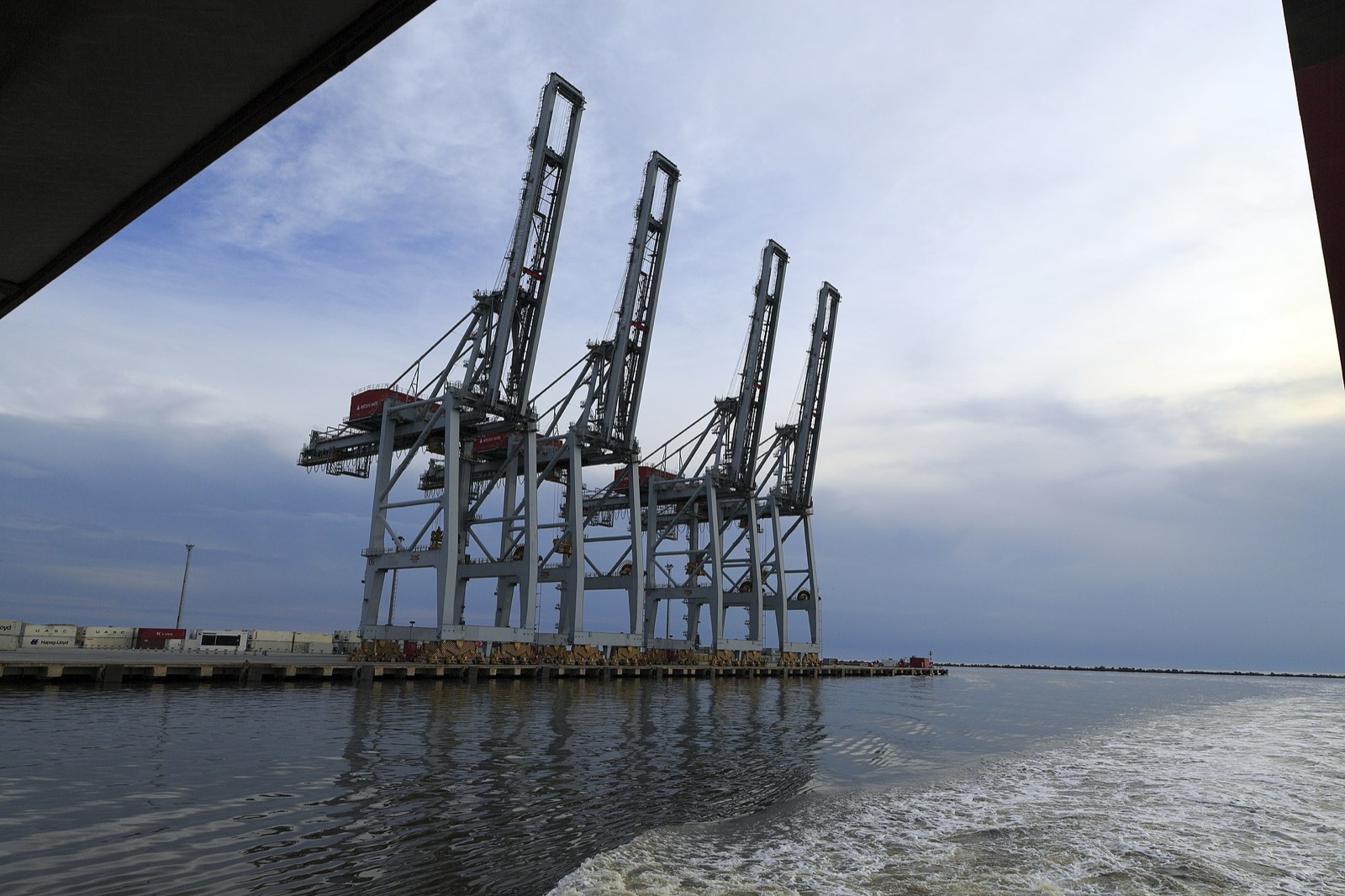
Photo: Container cranes, Port of Montevideo, Uruguay. Falk2, CC BY-SA 3.0 de, via Wikimedia Commons.
Ready to ship your freight?
