
On this page13
Ship to Mexico by ocean (FCL or LCL) from Miami to Veracruz (4 to 10 days) or Asia to Manzanillo, or by air into Felipe Ángeles (NLU) in 1 to 3 days; a broker files the pedimento with ANAM through VUCEM, and imports pay 16% IVA, DTA and non-USMCA duty. Mexico is the largest trading partner of the United States and a manufacturing platform with thousands of export plants, so most US to Mexico freight crosses the land border by truck and rail, and ocean and air shipments are the ones that come from Asia, Europe, the US Southeast and the Caribbean basin, or that cannot wait. Three rules shape every Mexican shipment: USMCA rules of origin decide whether US goods enter duty free, tariffs of up to 50% have applied since January 1, 2026 to goods from countries without a free trade agreement with Mexico (China among them), and the reformed Customs Law (Ley Aduanera), in force since the same date, makes customs brokers jointly liable for the data in every declaration. Correct origin, classification and documents clear fast; errors now cost everyone in the chain.
Mexico Shipping at a Glance: Transit Times and Options
Ocean freight from Miami or the US Gulf reaches Mexico's Gulf ports in 4 to 10 days, air freight lands in 1 to 3 days, and full containers from China reach the Pacific ports in 18 to 30 days.
| Route & mode | Transit (typical) | Best for |
|---|---|---|
| Miami / US Gulf to Veracruz or Altamira, ocean FCL | 4 to 10 days | full loads from the US Southeast, project and plant equipment |
| Miami to Mexico, ocean LCL | 7 to 14 days | distributor replenishment under about 15 CBM |
| USA to Mexico, air freight (NLU, GDL, MTY) | 1 to 3 days | urgent parts, line-down shipments, high-value goods |
| China to Manzanillo or Lázaro Cárdenas, ocean FCL | 18 to 30 days | plant inputs, components, consumer goods at volume |
| China to Mexico, ocean LCL | 25 to 40 days | smaller Asian orders and samples |
| North Europe / Mediterranean to Veracruz or Altamira, ocean FCL | 18 to 30 days | machinery, chemicals, European components |
The ranges shift with carrier schedules, transshipment and port congestion, so use them for planning and confirm a firm quote for your lane.
How to Ship to Mexico: Step by Step
Shipping to Mexico follows eight steps, and the first two (classification and importer registration) decide whether the rest runs on schedule.
- Classify the goods under the Mexican tariff (LIGIE) at eight digits plus the NICO suffix, and check the duty rate, NOM labeling, permits and the origin rule for that exact line.
- Confirm the importer of record: the consignee needs an RFC, registration in the Padrón de Importadores and an encargo conferido that authorizes its customs broker.
- Choose mode and Incoterm: FCL or LCL from Miami or the US Gulf to Veracruz or Altamira, air freight into NLU, GDL or MTY, or transpacific FCL to Manzanillo or Lázaro Cárdenas.
- Prepare the documents: commercial invoice with the importer's RFC, packing list, proof of origin for USMCA or other FTA preference, NOM evidence and permits.
- File the US export data: the exporter or forwarder files the Electronic Export Information (EEI) in AES when the shipment requires it, then the cargo is booked and loaded.
- Transit and arrival: the cargo arrives at a Mexican port or airport and moves into a bonded facility, where LCL is deconsolidated.
- Customs declaration: the licensed broker files the pedimento and value data through VUCEM, pays duties, 16% IVA and the DTA, and the shipment goes through customs selection.
- Release and final delivery: after release, the freight moves by truck or rail to the plant, distribution center or warehouse.
With the process mapped, the first routing choice for most US shippers is which gateway to use.
Shipping From the USA to Mexico
US shippers in the Southeast reach Mexico fastest by ocean FCL or LCL from Miami into Veracruz or Altamira, or by air into Felipe Ángeles, Guadalajara or Monterrey. Trucks and rail through Laredo and the other northern crossings carry most US to Mexico trade, but for shippers in Florida and the Southeast, and for cargo already consolidated in Miami from several US suppliers, ocean service from Miami and the US Gulf into Veracruz and Altamira avoids a long domestic truck haul to Texas and a border handoff. Miami also works as a consolidation point: suppliers deliver to a warehouse, the freight is checked against the purchase orders, and one shipment leaves for Mexico with one set of documents.
Container shipping to Mexico runs as FCL when you fill a box (a 20ft holds roughly 25 to 28 CBM of usable space) and as LCL when you do not. With LCL consolidation you pay by the cubic meter or by weight, whichever is greater, and share the container with other shippers. The trade-off is time: LCL adds consolidation at origin and deconsolidation at a Mexican bonded facility before your broker files.
For anything time-critical, air freight to Mexico lands in one to three days. Since 2023 a federal decree has moved dedicated cargo flights out of Benito Juárez International (MEX) to Felipe Ángeles International (NLU), 45 km northeast of the city. Belly cargo on passenger flights still uses MEX, freighter capacity into the capital is at NLU, and Guadalajara (GDL) and Monterrey (MTY) serve the western and northern industrial corridors.
Shipping From China, Asia and Europe to Mexico
Asian cargo reaches Mexico on direct transpacific services to Manzanillo or Lázaro Cárdenas in 18 to 30 days for a full container, and tariffs, not transit, now decide whether the lane pays. Manzanillo is Mexico's leading container port, and Lázaro Cárdenas is the second Pacific gateway with direct rail links toward central and northern Mexico. LCL from Asia runs longer (25 to 40 days) because of consolidation at origin and deconsolidation in Mexico.
Since January 1, 2026, Mexico applies higher general import tariffs, of up to 50%, on 1,463 tariff lines for goods from countries with which it has no free trade agreement, including China, under a Secretaría de Economía decree published in the Diario Oficial de la Federación on December 29, 2025. It covers the automotive, textile, apparel, plastics, steel, appliance, aluminum, toy, furniture, footwear, leather goods, paper and cardboard, motorcycle, trailer and glass industries. A further decree in April 2026 raised tariffs on additional finished goods and industrial inputs, with PROSEC sector programs keeping preferential access for qualifying manufacturers. Before booking Asian freight to Mexico, confirm the current rate for the exact tariff line (fracción arancelaria plus NICO) and whether a deferral program applies to your company: a shipment that made sense at the 2025 rate does not always make sense at the 2026 one.
European cargo arrives on the Gulf side, at Veracruz and Altamira, on direct services from North European and Mediterranean ports in 18 to 30 days. Mexico has a free trade agreement with the European Union, so EU-origin goods with valid proof of origin qualify for preferential rates, and origin documentation is the first thing to check on a European shipment. Each of these lanes lands at a different set of Mexican gateways.
Which Ports and Airports Handle Cargo in Mexico?
Mexico's main freight gateways are Manzanillo and Lázaro Cárdenas on the Pacific, Veracruz and Altamira on the Gulf, and Felipe Ángeles (NLU) for freighter flights into Mexico City.
- Manzanillo, Colima (MXZLO): Mexico's busiest container port, the main gateway for Asian cargo bound for central Mexico and the Bajío.
- Lázaro Cárdenas, Michoacán (MXLZC): second Pacific container port, deep water and rail-connected, strong in automotive and steel.
- Veracruz, Veracruz (MXVER): the main Gulf container port, serving US Gulf, Caribbean and European trades into central Mexico.
- Altamira, Tamaulipas (MXATM): Gulf port for the northeast industrial belt, chemicals and petrochemicals.
- Felipe Ángeles International (NLU): dedicated cargo flights serving Mexico City.
- Benito Juárez International, Mexico City (MEX): passenger flights with belly cargo.
- Guadalajara (GDL) and Monterrey (MTY): air gateways for the western and northern manufacturing corridors.
Mexico also shares a southern land border with Guatemala and Belize, so cargo for those markets follows its own rules: see our guides to shipping to Guatemala and shipping to Belize.
How Does Customs Clearance Work in Mexico?
Customs clearance in Mexico runs through a licensed customs broker who files a pedimento for nearly every commercial import, under the Agencia Nacional de Aduanas de México (ANAM) and the tax administration (SAT). The legal framework is the Ley Aduanera, reformed with effect from January 1, 2026. Declarations, permits and supporting data move through VUCEM, the single window for foreign trade.
- Importer registration: the importer of record must be registered in the Padrón de Importadores and hold a Mexican tax ID (RFC). Since January 1, 2025, every import declaration must carry the importer's RFC regardless of value or mode, according to the U.S. International Trade Administration.
- Licensed customs broker: commercial imports require an agente aduanal, who files the pedimento (the import declaration) on the importer's behalf.
- Value declaration: the manifestación de valor is moving to a mandatory electronic filing in VUCEM. Its start date was set for December 2025 and later extended, but the duty to support the declared value with invoices, freight and insurance documents applies either way.
- Classification: goods are classified under the Mexican tariff (LIGIE) at eight digits plus a two-digit NICO statistical suffix.
- Payment and selection: duties, IVA and DTA are paid, and the shipment goes through customs selection before release.
The 2026 reform matters for importers, not only brokers. Brokers are now jointly liable for duties and compliance on the operations they handle, they must keep verified files on every client, broker licenses (patentes) run for renewable 20-year terms with certification every three years, and fines for violations such as false supplier information reach 250% to 300% of the commercial value of the goods. The reform was published on November 19, 2025. Brokers now ask for more documentation up front and refuse incomplete files, so build that into your lead time. What the broker then pays on your behalf depends on origin.
What Are the Import Duties and Taxes in Mexico?
Import duty in Mexico depends on origin: USMCA-qualifying US goods enter duty free, while every import pays 16% IVA and the customs processing fee (DTA).
- US goods under USMCA: products made in the United States that meet USMCA rules of origin enter Mexico duty free. Autos, auto parts, chemicals and steel-intensive goods have specific rules, so origin must be supported for each product, not assumed.
- Other FTA partners: the EU, Japan and other agreement partners have their own preferential rates with their own proof-of-origin rules.
- Non-FTA origin (China and others): general tariff rates under the LIGIE, raised on 1,463 lines from January 1, 2026 to as high as 50%.
- IVA (value added tax): 16% at import, calculated on the customs value plus duties and other charges.
- DTA (Derecho de Trámite Aduanero): a customs processing fee of 8 per thousand (0.8%) of the customs value in the general case of definitive imports, under Article 49 of the Ley Federal de Derechos.
- Other levies: excise tax (IEPS) on specific goods such as fuels, alcohol and tobacco, and antidumping or countervailing duties on specific products and origins.
Programs such as IMMEX allow manufacturers to import inputs temporarily without paying general import duty, as long as the goods are processed and exported, with IVA handled under the program's certification rules. If you supply a plant in Mexico, ask which regime the consignee imports under before quoting a landed cost. Each of these preferences and regimes rests on the documents in the file.
What Documents Are Required to Ship to Mexico?
A Mexican import needs a commercial invoice, packing list, transport document, the pedimento filed by the broker, and origin, NOM and permit evidence where the tariff line requires it.
- Commercial invoice with full description, unit values, Incoterm and the importer's RFC
- Packing list with gross and net weights and dimensions per package
- Bill of lading (ocean) or air waybill (air)
- Proof of origin for USMCA or other FTA preference
- Encargo conferido or equivalent authorization that lets the broker act for the importer
- NOM compliance evidence (labeling and technical standards) where the tariff line requires it
- Import permits or prior authorizations for regulated goods
- Value declaration data transmitted through VUCEM
What Can Be Shipped to Mexico? Restricted Goods and Import Permits
Mexico prohibits a short list of goods and controls many more through permits from sector regulators, so check the tariff line before you buy. The U.S. International Trade Administration lists as prohibited narcotics, used clothing for commercial purposes, and electronic cigarettes, vaping devices and their components.
- Official Mexican Standards (NOMs): many consumer and industrial goods must show NOM compliance, including Spanish labeling where the NOM requires it, before clearance. Customs checks this at entry, not later.
- Used goods: commercial used clothing is prohibited, used vehicles must meet the import rules on age and origin, and some used goods (used tires among them) need a prior import permit from the Secretaría de Economía before arrival. Used machinery is not banned, but the broker should confirm the exact tariff line's requirements before purchase.
- Food, agricultural and animal products: sanitary and phytosanitary requirements apply through SENASICA, and health-regulated goods (medicines, medical devices, cosmetics) fall under COFEPRIS. Arms and explosives need SEDENA authorization, and CITES-listed wildlife needs SEMARNAT permits.
- Forced labor: since 2023 Mexico restricts imports of goods produced with forced or child labor.
- Hazardous materials: dangerous goods move under IMO/IATA rules, and regulated substances need additional permits from the authority in charge of that substance.
LCL, FCL or Air Freight to Mexico: Which to Choose?
For Mexico, use air under 2 CBM when time matters, LCL from 2 to 15 CBM, and FCL above 15 CBM.
- Under 2 CBM or a few hundred kilos, urgent: air freight. Line-down parts and samples belong here.
- 2 to 15 CBM: LCL. You pay for the space you use; allow extra days for consolidation and for deconsolidation in Mexico.
- 15 CBM and above: compare a 20ft FCL. Above 25 CBM, a 40ft is the cheaper unit per cubic meter on most lanes.
- Heavy, dense cargo (steel, machinery parts): weight limits a container before volume does, so plan by kilos as well as CBM.
On Mexico, the duty side comes first: a slower, cheaper mode does not offset a tariff line that jumped in 2026, so classify first and choose the mode second.
Key Industries Shipping Freight to Mexico
Manufacturing inputs for export plants drive most freight into Mexico. Automotive and auto parts lead Mexico's manufacturing imports, followed by electrical and electronic components, machinery, plastics, steel and chemicals. Much of this freight feeds export plants operating under IMMEX, which import components, assemble or transform them, and ship finished goods mostly to the United States. Nearshoring, the shift of production into Mexico to serve North American customers, has increased demand for plant equipment, tooling and raw materials on every lane into the country.
On the consumer side, Mexican distributors and retailers import appliances, furniture, apparel, cosmetics and household goods, a large share of them from Asia. That is the segment where the 2026 tariff increases change sourcing math the most, and where origin and classification decisions now drive landed cost more than freight rates. The supply side of the plants themselves, auto parts and manufacturing inputs moving into Mexican factories, is the subject of our follow-up guide on nearshoring logistics.
Choosing a Freight Forwarder for Mexico
The right forwarder for Mexico checks classification, origin and documents before the cargo moves: correct tariff line and NICO, valid proof of origin, complete invoice data and a broker who has everything needed under the stricter 2026 rules. Interworld Freight has worked out of Miami since 1992, with a Miami hub and warehousing for consolidating US-origin freight, ocean FCL and LCL, air freight and customs coordination with licensed Mexican brokers, plus coverage on every major trade lane from Asia and Europe. For broader regional routing, see our guide to shipping from Miami to Latin America. Send your shipment details and you will receive a quote within one business day.
Frequently Asked Questions
How long does shipping to Mexico take?
Air freight from the US lands in one to three days. Ocean freight from Miami or the US Gulf to Veracruz or Altamira takes 4 to 10 days, and full containers from China to Manzanillo take 18 to 30 days. LCL adds several days for consolidation and deconsolidation.
Do US goods pay import duty in Mexico?
Products made in the United States that meet USMCA rules of origin enter Mexico duty free. IVA at 16% and the customs processing fee (DTA) still apply, and goods that do not meet the rules of origin pay the general tariff rate.
What changed in Mexico's tariffs in 2026?
Since January 1, 2026, Mexico applies higher tariffs on 1,463 tariff lines for goods from countries without a free trade agreement with Mexico, such as China. Increases go up to 50%, with auto parts and vehicles at the top, while USMCA and other FTA-origin goods keep their preferential treatment.
What does the 2026 Customs Law reform mean for importers?
Importers face stricter document requests before filing, because customs brokers are now jointly liable for the duties and data in the declarations they file and must keep verified files on every client. Fines for violations such as false supplier information reach 250% to 300% of the commercial value of the goods.
Can I import used machinery into Mexico?
Yes, used machinery is not prohibited, but the exact tariff line decides whether a prior permit or NOM evidence is required. Used tires need a prior permit from the Secretaría de Economía, used vehicles follow separate age and origin rules, and commercial used clothing is prohibited. Confirm the requirements with the broker before you buy.
How much does it cost to ship freight to Mexico from the US?
The cost depends on volume, weight, mode and the tariff line more than on distance. LCL is priced per cubic meter or per 1,000 kg, whichever is greater, FCL per container, and air per chargeable kilo; duties, 16% IVA and the DTA come on top. Send dimensions, weight and origin for a firm quote.
What items cannot be imported into Mexico?
Narcotics, used clothing for commercial purposes, and electronic cigarettes and vaping devices are prohibited. Arms, chemicals, health products, animal and plant products and wildlife are restricted and need permits from the regulator in charge.
What are common mistakes at Mexico customs?
The most frequent problems are a wrong tariff line or NICO, missing proof of origin for USMCA preference, invoices without the importer's RFC, and goods that lack NOM labeling evidence at entry. Each one delays release, and under the 2026 rules it can also trigger heavy fines.
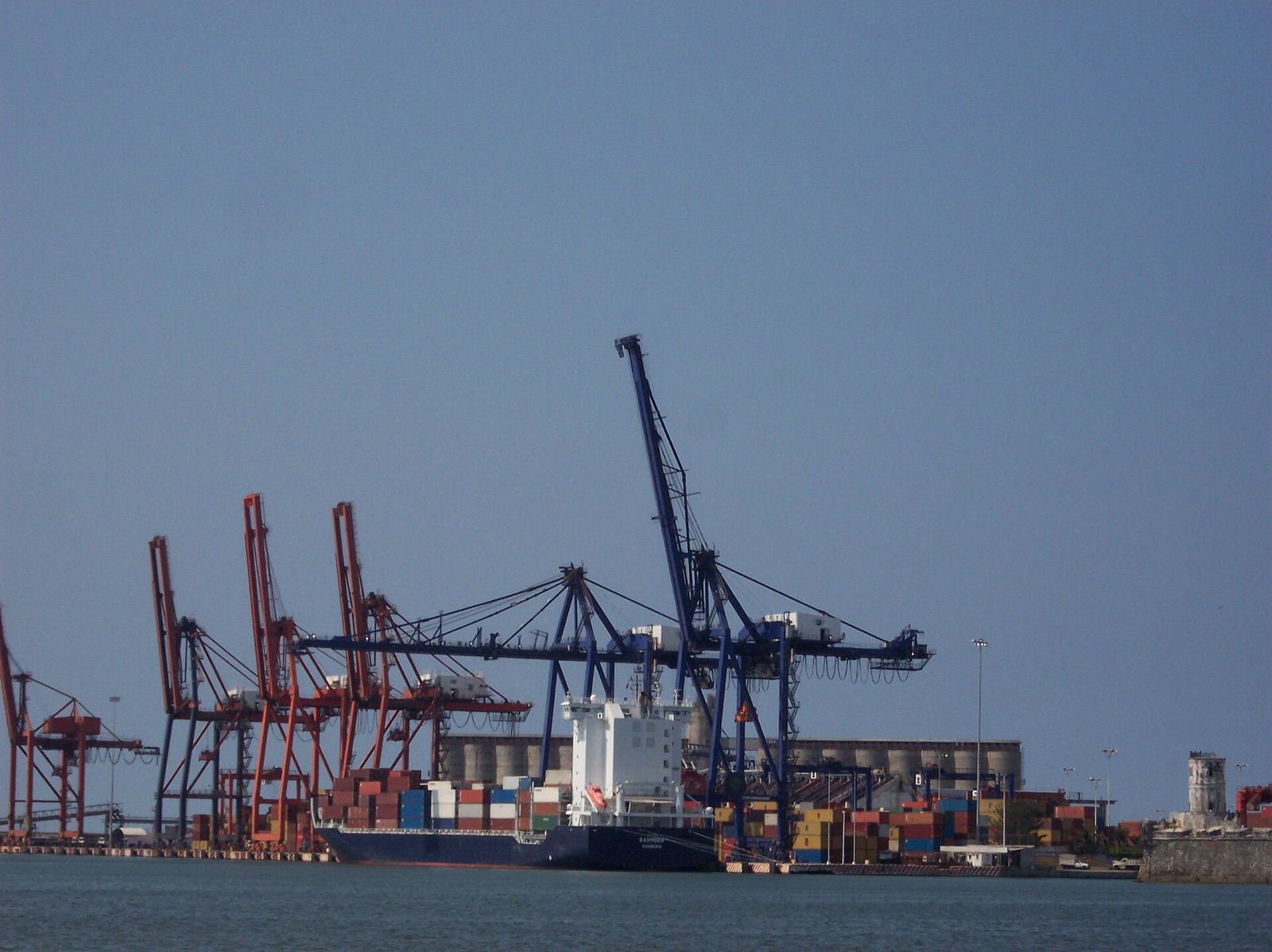
Photo: Port of Veracruz, Mexico. User:Gengiskanhg, CC BY-SA 3.0, via Wikimedia Commons.
Ready to ship your freight?
